
How to add more life to your years, not just more years to your life
A bird view and some basics
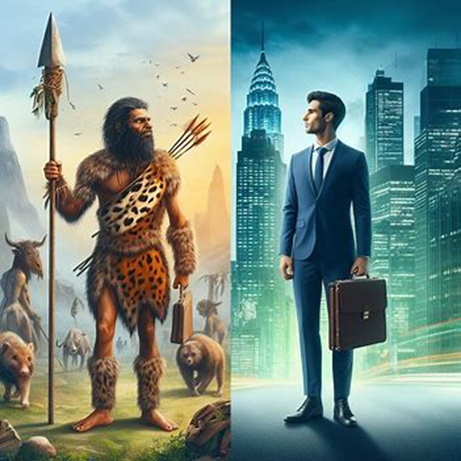
Nobody wants to die young, but everyone dreads the thought of getting old while spending the last years of their lives crippled by the maladies of old age, — cognitive decline, cancer, stroke, heart attack, diabetes, etc. Some lucky people mange to escape this fate. They stay healthy until the very end and die peacefully in their sleep of “old age”.
If you want to be that lucky, you might try to follow a few simple rules to make it happen.
Even if you did not win the genetic lottery, you have a lot of power to change your “genetic destiny”. As the saying goes, the genes only load the gun, but you are the one who pulls the trigger. How? By making your lifestyle choices.
Below is a high-level summary of some basic rules to keep in mind while making those lifestyle choices. It is not about elaborate diets, expensive super-foods or sophisticated gadgets to optimize your health.
To the contrary, it is all about basic rules, which we can learn (or review), by taking a bird-view on the root cause of many, if not most health issues of old (and young) age.
Sometimes, just reframing what we already know is enough to gain new understanding that will motivate us to make some simple but tangible lifestyle changes, which will lead to dramatic improvements in our health and longevity.
A bird view
From an evolutionary perspective, the biology of our bodies are identical to those ones of our paleolithic ancestors. Why? Because humans, as biological species, spent over two millions of years at that stage of development (and more millions if we count the previous stages). All the subsequent stages of human evolution, including the agricultural revolution, measured in thousands of years, and the modern days history, measured in centuries, did not last long enough to make any significant changes in the biology of the human body.
Therefore, from an evolutionary perspective, the “design” of the human body is optimized for the lifestyle of our paleo-ancestors.
Of course we cannot and should not imitate the lifestyle of our paleo-ancestors, but some basic understanding of their lifestyle is a great reference point to consult with when we make our lifestyle choices.
And what are some basic patterns of the lifestyle of our paleo-ancestors?
First of all, their daily routine relied on daylight. There was nothing to do except resting or sleeping when the sun was down because the sun was the only source of light at that time.
During the daylight hours, our paleo-ancestors spent most of their time and energy on getting food as there was no easily accessible food at that time. It needed to be hunted and found in wild nature, — meat, fish, plants, herbs.
It took a lot of time, and physical effort, — a lot of moving, running, chasing animals, — with hours and hours of making physical efforts before anybody could eat anything. So, it means they could eat only one big meal a day, or even in a few days.
It also means they got hours and hours of full exposure to natural daylight while hunting animals and gathering plants.
Now, let’s go back to the homo sapience of present days. In order to optimize our health, — I mean both physical and mental health, — we have to make our lifestyle optimal, or at least comfortable, for the body we live in. In other words, we should align out lifestyle choices with the relevant patterns of the paleo lifestyle.
Let’s take a look how to do that in practical terms.
Disclaimer: The information in this article is not medical advice. All information is provided for education purposes only.
***
“you are what you eat”, — but it is not about “diets”
It is not so much about what to eat but more about what not to eat. The truth is that about 95% of the foods cluttering aisles of modern supermarkets and grocery stores are not suitable for our bodies. No one should it those foods. They are ultra-processed foods full of sugar and/or toxic ingredients. We all know that, but many of us forget about it, or don’t even realize how bad it is.
For example, even some basic foods, such as all-purpose flour, is a highly processed product full of nasty chemicals (if its not organic). More often than not all-purpose flours are bleached and brominated. It makes this kind of flour, and the bread and other baked goodies made from it, literally poisonous for our bodies. And this is besides the fact that super-refined white flour, even if it is unbleached and not brominated, is not the best food for our bodies anyway.
Of course we can find a lot worse foods in our grocery stores, and if we don’t make conscious efforts, it is very easy to fill up our shopping carts with junk foods that makes us fat and sick.
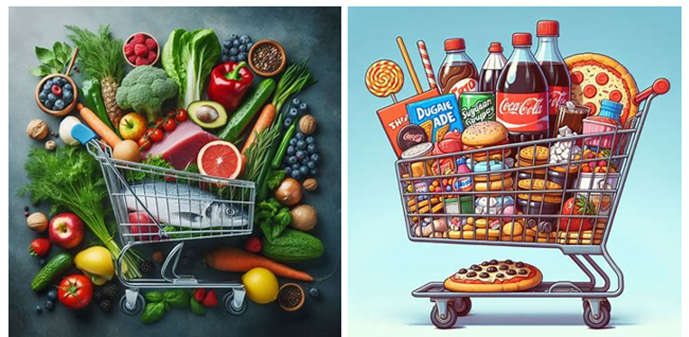
Therefore, the first practical step to prevent the doom of the nasty diseases of old age is to do your groceries right . And avoid or minimize eating out (you don’t really know what they serve you; it is often cheapest food made from cheapest ingredients). It is the best prevention “diet”, plain and simple.
When you eat matters, — it matters A LOT
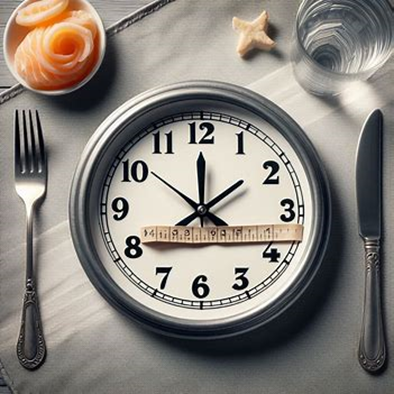
Think again about our paleolithic ancestors. They did not eat anything after the sunset and before the sunrise, that would make about 12 hours (on average) time interval between the last meal of the day and the next meal of the following day.
Therefore, the second practical step here is to try to follow, at least loosely, this meal time pattern.
For example if have your last meal of the day around 6–7 pm (some rare exceptions are okay), and the first meal of the next day around 7–8 am, you’ll easily get to the 12-hour “fasting” window, which is so beneficial for your body. This approach is often called “time-restricted eating”.
Similarly, if you have the habit of snacking, drop it. The snacking culture is a marketing trick to lure you into buying more food than you need, and mostly junk food. Stop eating all the time, stop munching mindlessly out of boredom. It is a sure path to develop insulin resistance, which is the most “common denominator” of diabetes, obesity, heart disease, Alzheimer, and the whole host of other chronic conditions of old age.
There should be absolutely no food between meals. If you feel hungry, have some water, or black coffee without any sugar or other nonsense.
If you follow this no-snack rule in combination with time-restricted eating, you’ll do a huge favor to your body.
Why? Because our bodies are optimized for this kind of meal pattern. For more detailed explanation, please consult this book and references therein.
Physical activity — why it is vital, literally
Biologically, the human body is “deigned” for high level of physical activity; this is how we’ve survived as species since the paleo-times by hunting and gathering, moving and making physical efforts all the time.
Therefore, there is no surprise that physical activity is vital for good health, especially given the sedentary life style, which most of us are confined to by office jobs, by pedestrian-unfriendly urban design, by our bad habits of having too much of screen time with TV, laptops, video games, etc.
Therefore, to optimist your health, you must increase the level of your physical activity of any kind. If you hate the idea of going to the gym, go for a walk. If you can’t bike, ride tricycle or a stationary bike at home while watching TV. If possible, walk to your grocery store or a local coffee shop, don’t drive. If you can’t go that far, walk around your neighborhood, or your backyard. Use staircase every time you can. I think you got the idea. Just start somewhere. After that it will be a lot easier to maintain this habit. Just start.
Circadian rhythm and daylight exposure, — try to follow the daylight “logic”
Of course it is impossible for us to replicate the sleeping patterns of our paleo-ancestors. However, just reminding ourselves that our bodes are optimized for those patterns would help us to follow the “logic” of this simple idea.
Try not to watch TV or stare at any other e-screens for the last 2 hours before your bedtime. Get a pair of blue-blockers from Amazon (disclose: no affiliation). They are very inexpensive but the health benefits of protecting your eyes and you sleep are huge.
In the morning get to your porch, backyard, balcony, to let the daylight shine into your eyes. Ideally, take a morning walk at sunrise time, but if it is too much for you, just take a few steps out of the door to let the natural daylight into your system. It helps align your circadian rhythm with the natural daylight cycle.
Besides protecting our circadian rhythm, which is vital for the ability of our bodies to get good quality restful sleep, spending more time outdoors to maximize our exposure to natural daylight is critical for another reason.
Natural daylight exposure is necessary for our body to produce vitamin D3, which is the cornerstone of our immune system. It also plays a key role in many physiological processes, including those ones, which maintain our bone density, which may become a health issue as we age.
Since none of us can spend as much time outdoors as our paleo-ancestors did, and we can’t get it from our diet, most of us are either deficient or insufficient in D3. And if we don’t have enough of D3 in our bodies, our immune system becomes weak and sluggish, we start catching all sorts of viruses (including covid), our bones began crumbling, etc.
Therefore, to optimize our health and prevent the maladies of old (and young!) age, we must maintain the optimal level of D3 in our bodies.
Please note: “optimal” and so called “normal” is not the same thing. Get the best you can, and it is really easy to do, — check this out — One simple way to boost your immune system
***
This is it for the “physical” side of your health. Of course there are many other helpful rules and practices (such as don’t smoke, avoid or limit your alcohol consumption, etc.), and I’m not saying I’ve covered all of them in this short article; not at all. And I’m sure you know most of them, at some level.
However, the main point here is to re-frame what we already know, to provide some new insights that will make it easier to follow those rules, if you want to increase your health-span, in addition to lifespan.
I hope you’ve got the idea, and it might help you adjust your daily habits accordingly (and you haven’t done that yet!) and add more life to your years, not just more years to your life.
As for the “mental” side of health, another article will follow.
Thanks for reading!
© RVB 2024. All Rights Reserved.