
Communication
How to Acquire Skills for More Successful Online Communication
The Mysterious Dance of Words Between Two People

When we were children, we used to play a game called “Broken Telephone”. We would line up and the first one would whisper a word to the child next to them, and so on until we got to the last one. Very often information would reach the last player that had nothing to do with the original.
And if that was fun then, now in the age of online communication, playing “broken telephone” often leaves people bitter, frustrated, and nervous because of the complexity of online communication.
Where does this problem come from?
Have you ever found yourself speaking the same language with someone but not coming to a mutual understanding? That’s because communication is much more than a dance of words between two people.
After a number of experiments in the field the renowned behavioral psychologist, and UCLA professor, Dr. Albert Mehrabian arrived at the development of the 7–38–55 rule whereby:
7% of communication is through words;
38% is the tonality of the voice; and
55% is expressed through body language and facial expressions.
This definitely explains why so often people communicating online can’t figure out what they want to say to each other. And yes, emoticons are not always enough.
In this article, I’ll introduce you to some of the most common misunderstandings I’ve encountered in online communication, as well as helpful practices you can implement to improve the intelligibility of your words.
Once upon a time, there was communication at a distance
When I was younger, one of my favorite things to do was to write letters to my pen friends. Many of them I’d only seen in pictures or not at all, and we’d exchange contact details because of common interests and because we’d featured in children’s magazines.

The feeling of getting a real letter made me shiver and I always associated it with pleasant emotions. I would read the letters in one breath and then sit down to write a reply because I couldn’t wait to share what had happened to me. Those innocent first childhood conversations set the stage for my first long-distance communication. I didn’t know then how far digital technology would evolve to make online conversations our blessing and curse.
Later came the era of forums and emails. Phones also evolved to the point that we could text each other and thus witness that we were thinking of someone even though they were far away.
Since that time, about 20 years ago, I have kept some of my best distance friends. It may be a wonder to somehow this is even possible, but to me, relationships have always been a notch higher than the distance that separates you from someone. One of my best friends lives more than 3,000 kilometers away and I’ve known him since I was 18. To this day we mainly chat and very often it only takes me one sentence to know if he is tired, happy, or lonely.
Unfortunately, online communication is more often challenging. In order to build close relationships that last over time, it takes a lot of effort and a mutual desire to keep the person in your life.
Why aren’t words enough?
Words are powerful tools, but they carry different meanings for each of us. Although the literary meaning can be found in the dictionaries of every language, people invest different emotions when they use them based on their temperament and life experiences.
The situation becomes even more complicated when we communicate in a foreign language that does not have as many separate words for a concept as our native language does, and we are often misunderstood. Take for example the word ‘love’, which can be interpreted as love between two lovers, but also between friends, parent and child, brother and sister, and we also have love for our native country, our favorite hobbies, and many others.
In this vast sea of meanings often the only way to understand us is by:
Speaking in specifics
This can often kill the casualness of the conversation and make it unnatural, but… better to be understood than to waste time explaining ourselves afterward, right?
Speaking in specifics involves long descriptive sentences that reveal the idea of our intentions as much as possible. For example, if we write:
“I want to go out” — this sentence does not give us enough information about the speaker’s intentions. This gives rise to the need for additional questions for clarification, which often costs us time we don’t want to waste.
Instead of the above sentence, which tortures the recipient of our message, we can write down the reasons and intentions for our action and thus save valuable time for another more urgent topic.
“I want to go out because working from home makes me feel exhausted all the time and as if I am separated from the whole world.”
When we give such fuller expression to our feelings, the person on the other side can give us ideas on how to feel better or outright join our walk if that’s possible.

Business online communication
When it comes to business, there’s no time for disrupted communication. Nowadays, many important decisions are made in online meetings, through email communication or live chat. The importance of the decisions made implies a high level of professionalism and adherence to business etiquette.
Setting a topic of conversation is of great importance for smooth communication with business partners. Whether it is a video conference call or a business chat, it is necessary to focus as much as possible on the set topic in the time slot you have agreed. This will avoid distractions with other topics not specifically related to the current one. Understandably, this can happen if you have prepared for the meeting itself, have notes, a list of pending questions, etc.
The scourge of social media communication
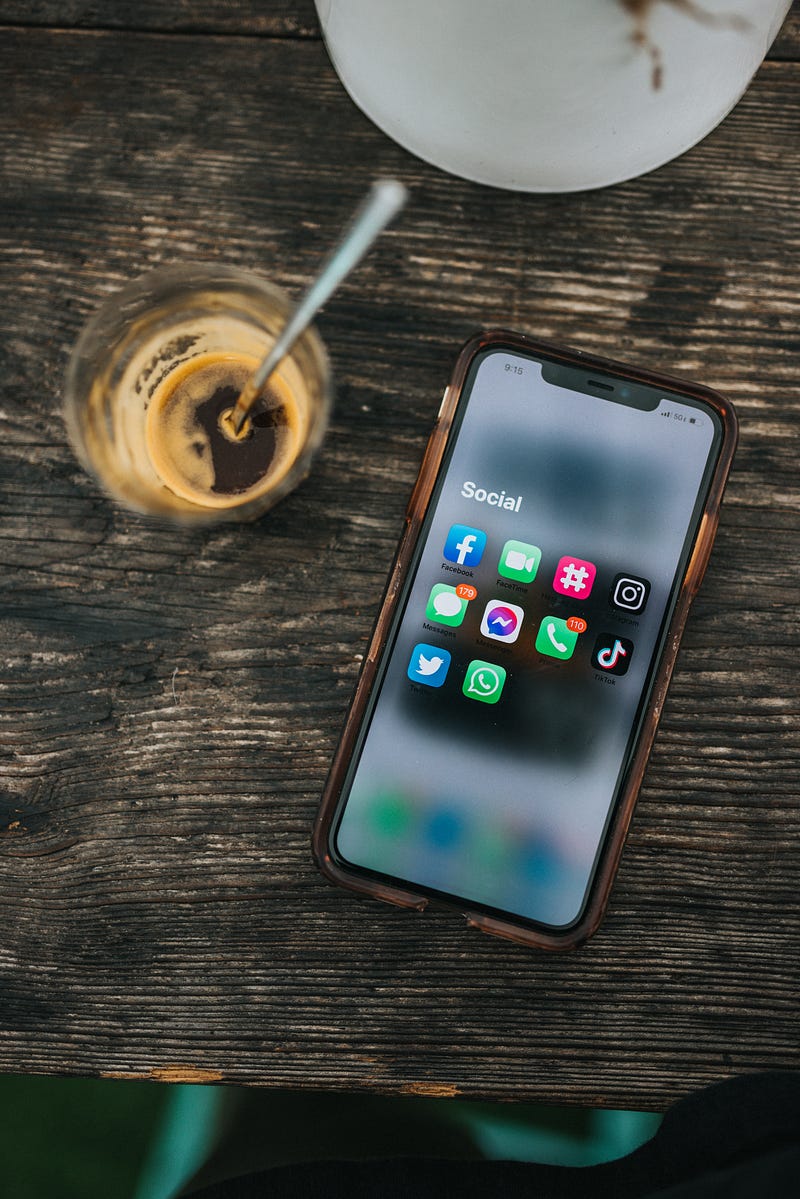
In an age where we spend more time talking online than in person, some of the biggest misunderstandings happen on social media.
I recently had a conversation with my best friend who is constantly involved in situations where she remains misunderstood. She’s not the only one, as in recent years I’ve often heard of cases of broken relationships and friendships because of poor online communication.
Communicating online has become about keeping track of people online — when they see your message when they are online, why they don’t reply to you right away but post on their profile page wall. I myself have been a participant in many tiring conversations that have remained ineffective.
One of my most annoying misunderstandings as a fictional writer over the years has been questions like, “Did you write the poem or story for me?” At that point, I wonder what to answer, as I don’t want to hurt anyone’s feelings, but I also don’t want to lie. Rarely do people distinguish between the fictional world and the real world. Just because someone writes in 1st person doesn’t mean that everything written applies to them with full force. Maybe the author was provoked by an action, a song, or a person, but there’s always a great deal of exaggeration and metaphor because that’s the nature of fictional writing.
I’ve written a lot of poems and stories in the last 20 years and I only have 10 that I’ve dedicated to someone and that person has always been the first to read the given text. Somehow I don’t understand this necessity people have to be the center of the universe and everything they see is somehow written for them. It kills the whole beauty of art. Not to mention that, if true, a given writer or poet should be insane if they have a number of contradictory feelings for many people at once.
In addition to speaking in specifics, I’d like to give you a few more tried-and-true practices that will greatly assist you during online communication.
Be sincere
Yes, it sounds simple, but it’s not always easy to open up to someone you don’t see and often don’t know that well. If you risk being yourself and share openly how you are by nature, it can become clear very quickly whether you and the person on the other side can have a romantic relationship, a friendship or do business. Breaking down the boundaries requires breaking down a lot of internal barriers that a number of people have, but only by breaking through them we can have a chance for a more fulfilling relationship.
Don’t leave each other unsaid
If there’s one thing I don’t like in any kind of communication, because I’m a pretty straightforward person, it’s beind unspeakable. I’ve never thought it was fun to try to second guess the other person’s thoughts — it’s exhausting and involves time for overthinking. And when overthinking is unlocked, we know that many things can be overdone unnecessarily.
It’s much easier to say what you’re thinking, because you may have the wrong impression and the other person may not guess at all. It’s always worth the risk to be yourself — you’ll either grow closer that way, or you’ll realize that you can’t be close to someone who doesn’t value that quality.
Ask questions
Ever since I was a child, I’ve always loved asking about everything I didn’t know, and it has never made me feel ashamed of my own lack of knowledge. Nowadays, people too often think about the opinions of others, and this stops their authenticity. If something is left unclarified, just ask.
It really doesn’t hurt. I have tried.
Repeat what the other person says, but use your own words
This is a practice I love and apply to my online work with colleagues and friends too. It works flawlessly and is an easy option to save time in explaining who misunderstood what.
Don’t get into long chats
The longer you chat with someone, the more likely you are to tire of that kind of communication and be left feeling uncomfortable. Besides, standing in front of a screen for hours is bad for your health, so stop yourself in time.
Final words
Communicating online can be one of the most enjoyable activities that can fill us with a sense of closeness, good mood, and motivation for positive inner change. I myself love to sit on a park bench with a cup of coffee and have a hearty laugh with a friend far away who connects their soul and life with mine. The feeling is unique and I am grateful that we live in a time where this is possible.
Like all communication, it requires care, patience, and understanding because it is often the only way to stay connected with a loved one.
If you learn how to make your words dance in your favor, you will enjoy beautiful online relationships that will create wonderful memories and even more wonderful friendships. Just take the first step…
If you like to support me on my writing journey, you can buy me a coffee.☕️ I’d really appreciate it! ❤️️🙏
If you want to receive an email each time I post on my profile, you can follow me and subscribe here. 📩 ✍️