
How to Achieve the Goals You Really Care About
You Need to be Committed
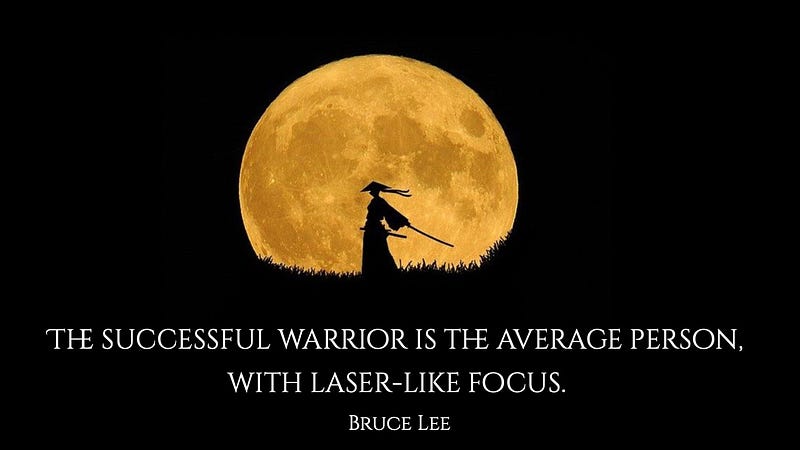
It is common to look at success from a place of lack:
- That person has more opportunities than I do.
- She is smarter than me.
- He has had more experience than I have.
And the list of excuses goes on and on.
However, success comes to those who put in the effort. Those who can single-mindedly focus on the tasks that move them towards their goals and mission. You don’t need special talent- you just have to have determination.
As a student, I always did poorly in English class. This was before the days of computers, and my spelling was atrocious. My dyslexia did not enhance my ability to remember grammar rules. Yet, I always longed to write creatively. To share ideas through the printed word. That led me to Medium a couple of years ago, and as I developed my craft, I gained the confidence to write a book. Not just a short book but a 260 page 55,000 word book, sharing techniques I used to conquer SADness (stress, anxiety, and depression). After all that writing, I have found a flow to my ability. And I can see a path to continual improvement. This occurred not through luck or smarts but commitment.
Now, I need to apply that laser-like focus to other areas of my life, namely building my business, creating and delivering workshops, learning Japanese, and playing guitar. The course has been set. I just need to commit to the journey.
You can do that too. Whatever you want to achieve is possible. You can do it by applying these four techniques: Set your goal. Break it down into the initial steps: Create a routine. And commit to taking action.
Set a Goal
You will find it difficult to achieve anything in life if you don’t create a plan to get there. While your plan will not be precise, no matter the effort you put into detailing your road map, you can’t succeed without one.
As Winston Churchill said, Plans are worthless, but planning is everything. We need to be flexible as we move towards our goals. We can not predict with 100% certainty what will happen tomorrow, or what the knock-on effect of completing a task will be. However, by having a plan, we still create a compass for guiding us to what comes next.
Break It Down
Achieving goals can seem overwhelming. There are so many things to do to get from where you are to where you want to go. Fret not-you can only do one thing at a time. So break down your goal into smaller tasks. For example, I wrote a chapter a week of my book. 30 chapters in the same number of weeks. Experienced authors told me that a personal development book should be 50–60 thousand words. So, I endeavored to make each chapter 2,000 words. I did not hit that target. Some were more and others less. But with the additional sections of the book, I was able to hit the target.
Writing a story is similar, this is how I break it down:
Task 1 — Choose a topic
Task 2 — Research
Task 3 — First draft
Task 4 — Spelling and grammar edit
Task 5 — Final edit
Task 6 — Post and format
Task 7 — Check the More Settings and add tags
Task 8 — Publish
Task 9 — Promote
That’s a lot of steps to publishing an article, but not doing any of these will negatively affect the success of a story. I know because I have seen the difference in a story’s success if I do all the steps or skip any of the tasks. Be committed to putting forth your best effort at every step of the process. Anyone can do that. It just takes effort.
Create a Routine
As you can see above, there are specific steps to my writing process. It is difficult to write well if I do all of them consecutively. Oscar Wilde once said, Write the first draft drunk and the final one sober. What I think he meant was that we should let that first draft flow freely from our soul, because there are later steps for refinement.
Routines help signal that it is time to start and transition to the end of a task, before moving on to the next one. We cannot multitask. Trying to do so equates to not giving your undivided attention to the work at hand. I find that doing specific things to start and end an important task, or group of them, helps to keep me focused on the work.
When I practice guitar, for example, I start with finger exercises and end with playing songs that I can play well. In the middle, I may work on technique, study theory, or challenge a more difficult song, but the beginning and ending tasks help me to glide in and anticipate a fun ending no matter how hard the middle may seem.
I find that when I don’t have a routine for working on goals, I become easily distracted. It’s a chore to get started, and I look for excuses to avoid working on the goal altogether. If you are not making progress, take some time to develop a routine. Then, fine-tune it until you flow through the activities.
Commit to Take Action
The only way you will reach your goals is to take action. Focused action will have you moving faster and in a more directed manner towards what you want to achieve. You can increase your commitment by scheduling your time, consistently evaluating your progress and the processes. If you are not taking the time to work on what you want to achieve, maybe it is not that important to you after all. Decide to commit, and don’t let excuses stand in your way.
That is easier said than done. I often backslide, and it seems like an amateur move. So I know I need to put up or shut up. I have seen the difference between committing 100% and paying lip service to my goals. In 2022, I am focused on keeping my promises to myself and actually achieving progress in the goals I’ve set but moved slowly to achieve. I know I can do it. I’ve done it before.
You can too. Decide what you want to achieve and make a plan. Then, break down your projects into manageable tasks, and get marching. When you feel that your focus is slipping or you are not getting the results you want, then create routines to refocus your efforts. When you slip, recommit to the goal, remembering why you wanted to achieve that in the first place.
With laser-focus and a commitment to yourself, you can achieve whatever you set your mind to.


