
Extreme productivity
How To Accomplish Anything. Yes, Anything!
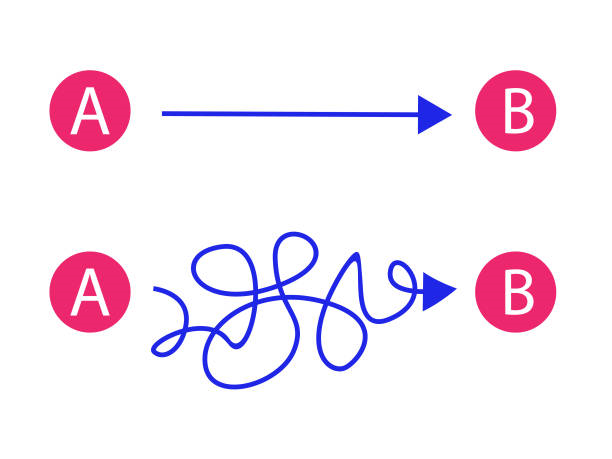
Going from point A to point B
Wow, that’s some pretty f%$king stupid advice, especially coming from a smart guy like you.
That’s what I thought after exiting my “career advice” meeting with my faculty adviser.
Duke University — I had nearly completed my Education and Faculty Development Fellowship. A one-year part-time seminar experience, it was part of my re-entry program into academic emergency medicine after nearly a decade in full-time clinical practice. Hudson Ballows* headed it.
Dr. Ballows was widely regarded as “wicked smart” especially by his three Fellows lucky enough to have his undivided attention and tutelage for four hours each week. Not only did he bring his incredible smarts to the Fellowship table, he brought wisdom and vision and challenge and strength and so much more to his younger colleagues seeking to enter or re-enter medical academia.
I’d asked his advice many times and he’d always come with great stuff. But today seemed to be different.
“How do I transition from my (lowly) Clinical Instructor position here at Duke to a Professor-track position back in California?” I’d asked Hudson during my one-on-one session with him.
“Well Michael” he’d answered. “Go home and write down where you are now. That’s point A. Then write down where you want to go. That’s point B. Then fill in the space between the two points with the steps you need to take to make the move.”
And that’s when I had my unkind thought about Dr. Bellows’ smarts.
Wow, that’s some pretty fucking stupid advice, especially coming from a smart guy like you.
Unhappy and unfulfilled, that was me leaving our meeting. Disappointed that my mentor, my guide, my know-it-all old wise guy had let me down.
But, at home that evening I replayed our discussion and reflected. After a time I thought, what would be the harm in following HB’s advice and doing exactly what he’d suggested.
So, I WROTE DOWN, “Point A — Duke Clinical Instructor,” on the left side of a sheet of notebook paper. On the right side of that same sheet, I WROTE DOWN, “Point B — Professor-track position in Emergency Medicine in California.” The space between Points A and B gaped, chasm-like as I pondered what to fill in.
As I considered the gap between where I was career-wise and where I wanted to be, it became clear to me.
What do others already at Point B have that I don’t?
Academic publications. I lacked those.
What else?
Presentations at scientific meetings.
And, since I’m in North Carolina and want to get a job in California …
Apply to academic emergency medicine jobs in California.
I can do this, I thought. And it suddenly dawned on me. There are just three steps to my goal. Publish, present and apply. Simple enough.
So I did.
I approached Duke’s Chair of Emergency Medicine and offered to co-author a semi-scientific article with her. She readily accepted my offer. After all she must have thought, who wouldn’t want a junior staff member doing all the work to get something published that I can sign on for? That took a few months but that article saw the light of day, becoming my first academic publication. And, it had a notable co-author too.
Simultaneously I offered my speaking services to a variety of local and regional medical conference organizers. Several accepted my offer and my “academic speaking career” was launched.
Then, after a time, as my academic chops grew and developed, I applied for suitable positions in the Golden State. University of California, San Francisco (UCSF) responded and invited me for an interview, but ultimately passed on my application. A good thing too, as it turned out.
Trying to live in the Bay Area on a newbie’s academic salary would have been impossible. Plus I hate traffic. UCSF/Fresno interviewed me and allowed me to lecture, a skill I was working on assiduously. Then they offered me a job. I took it and stayed for 20 years. That position alone allowed me the freedom to do everything I ever wanted to do in academic emergency medicine.
So, what’s in it for you?
- The A-to-B construct is simple, easy to apply, and clarifying.
- Writing it down makes it real. Dreams occur in the mind, in thoughts. Goals, objectives, and strategies are made real in the physical world. Write them down.
- If one slightly-less-than-immediately-perceptive-human (me) can learn from a wise old guy, so can you.
- Don’t over-complicate your quest.
- Going from Point A to Point B works.
Enjoy your journey.

*Not the Fellowship Director’s real name.


