
Coach Interview
How This Coach Helps You Conquer the Valley of Disappointment
Taylor Harrison believes you can have an incredible life—and knows how to get you through the obstacles you don’t even see coming
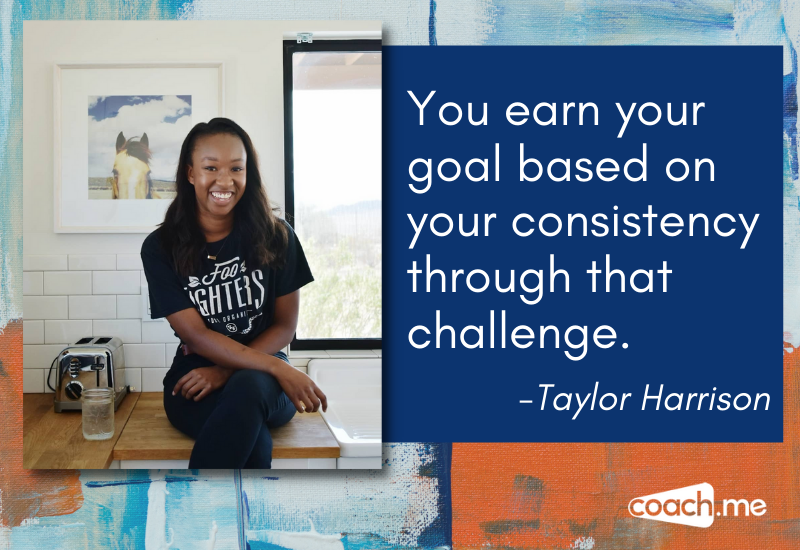
Coach Taylor Harrison gets rave reviews from her clients for her ability to help them create a practice of focus that makes them successful, whether they need it for a passion project or for a full-time startup.
I wanted to find out what makes her coaching so successful and enjoyed learning why her clients have been so successful.
Harrison: What most excites me about working with clients is the potential for them to feel fulfilled and proud of themselves because of what they accomplish. I hope to give people the courage to create their own path in life.
According to the book, The Top Five Regrets of the Dying, the number one regret people have is wishing they’d had the courage to live true to themselves instead of the life others expected of them. That piece of knowledge fuels me to support those who are ready to make a change in their lives.
We’ve got one life and I believe everyone has got something to give but I think a lot of people are afraid to step into their calling so they play it safe. Someone could be so close to reaching their goal but they experience a failure and choose to stay down instead of getting back up one last time. Sometimes a positive voice in their ear or reframing a tough situation can give them the courage to get up and try again.
So, I guess I’d say the most exciting times are when people accomplish something they didn’t think they could and when they choose to bet on themselves again and do one more attempt at a challenge.
Do you find clients tend to be closer to reaching their goal than they realize? How might that kind of disconnect occur?
Harrison: They are closer than they realize in the sense that success is usually reached by staying committed to the goal for a bit longer than they’re used to.
A common scenario is that the client experienced a challenge while building a habit in the past and they didn’t have the tools or support to move through it so they believed they couldn’t do the habit. Usually tweaking a few actions to create a better habit system and offering support helps them get to where they want to be. It was always possible for them to accomplish the habit, it was the system to getting there that wasn’t working.
I believe the disconnect tends to stem from their expectations about the process of change versus the reality of it. I send clients a graph that was originally featured in James Clear’s book Atomic Habits because it gives a visual representation of that process:
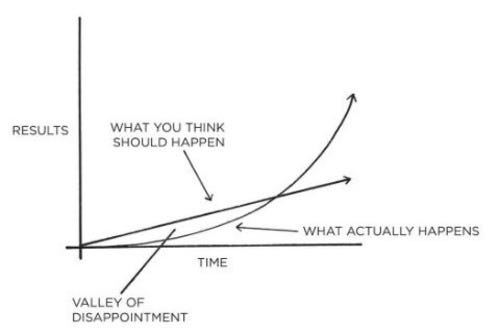
Many expect progress to be linear, with each attempt being perfect from the start. In reality, growth is more like a U-shaped curve, and the road may be bumpier than expected.
As you’re growing a new habit, you’re finding the kinks and working through them. The kinks don’t mean that something has gone wrong, it means you’re uncovering the places that tend to be most challenging to solve for them now and have a better chance of success for the next go.
The space between what’s expected and what’s actually occurring is called the Valley of Disappointment. This is where I support my clients the most to stay motivated through the dip.
This is also why I believe it’s so important to work on one new habit at a time because it can take a lot of focus to initially sustain that motivation. Just imagine how it would be with 3 to 5 valleys to get through at once!
As a coach, are there any tell-tale signs that a client might be falling into this valley of disappointment?
I’d first say that the valley is neutral. Everyone goes through the valley every time they try something new and it is neither inherently good nor bad. The valley either strengthens you or brings you down based on the mindset you have going into it.
The valley does weed out those who are not the most committed to the goal. You earn your goal based on your consistency through that challenge.
If someone is having a negative experience in the Valley of Disappointment, the one tell-tale sign would be that they are looking to be a master at the habit from the start. The clients will want to start with bigger habit goals and have a quicker timeline. However, there are very few things that people are good at right away, so in the beginning, they have to be willing to be a beginner. Once you allow yourself to start small, you earn the privilege of being a master.
Another is feeling disappointed that the habit didn’t catch on as quickly as they’d like it to. That feeling tends to stem from taking the failure personally and having it feel like a permanent stain on their character, instead of it just being feedback to notice what’s working and what’s not.
One symptom might be quitting because they believe that the failure at their first attempt means that they aren’t meant to do that goal or follow that dream at all. Many people have the belief that something should be natural and effortless if they’re meant to do it. But if that was the case, we’d probably never learn any new skills because it takes honest effort, resilience, and commitment to building any notable skill.
I support clients who are having a challenging time by:
- Creating a Long-term vision to keep up the motivation: Having the client be clear on why they are building this habit and the biggest benefit they receive when they master the habit can help them pull through tough moments even they can’t see the results yet. Also, a big motivator is adopting the identity of their future self now so every action they take is just more evidence that they are becoming their future self. For example, “I am a songwriter because I write new lyrics every day.” or “When I test a new recipe once a week, I’m proving to myself that I am a baker.”
- Starting small: Small commitments don’t freak our brains out so we’re more likely to follow through on them. The simpler the action is, the more likely you are to be consistent, and if you’re consistent, you grow.
- Keep it playful and experimental: Reframing the need to be perfect into the mindset of simply testing new ideas to see what works while taking none of it personally. The faster you can get back up, the faster you can test something else out that may work, and the faster you can reach your goal.
It’s important to equally celebrate and be grateful for the wins and the losses because there’s a lesson in it all if you look hard enough.
I hold the belief that everything is always happening for us, not against us. I share this with great humility as I am still this person, too, who has to actively use these tools to practice reframing my experiences into ones that serve me instead of bringing me down.
The more we practice those tools, the more they’ll become our default reaction to a challenge. We’re all imperfect, messy humans and I think that’s adds to the richness of life. The goal isn’t to be perfect, it’s to be willing and open enough to experience whatever it takes to make the goal a reality.
Ready to get the support you need to achieve your own big goals? Get habit coaching with Taylor to Develop a Practice of Focus. Use promo code TAYLORHARRISONWEEK to get your first week of habit coaching free!