
Mindful & Driven | Nick Wolny
How Thinking Like A Scientist Can Help You Grow
Fail fast and experiment
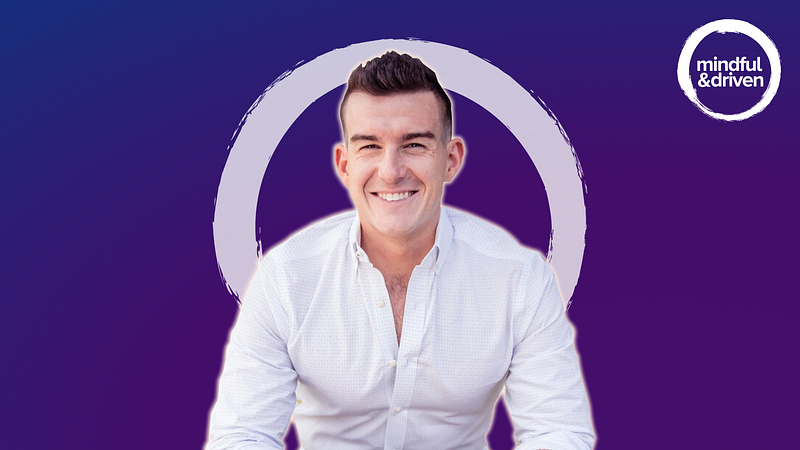
“Do what makes you happy” is common advice but not everyone agrees.
Nick Wolny, the Founder of the Hefty Media Group, followed his passions and lost his life savings because of it. He started his business with $30k in the bank but every month made a loss until he only had $100 left. The bank wouldn’t even let him take this out because they required it as collateral.
He had to abandon his entrepreneurial dream and return to the corporate world. The heartbreak taught him a crucial lesson that he used to grow his media empire and appear on NBC, FOX, and CBS.
The way he thinks about new ideas has changed dramatically and he credits this with his newfound success. Nick compares the way he thinks about new ideas to how scientists think about their experiments.
They have a hypothesis and test to gather information. If it fails then they adapt and try something else and repeat until they make progress. This way of thinking can help you grow without pressure because everything you try is just another experiment.
This article is based on the Mindful & Driven episode with Nick. You can listen here or find the YouTube video at the bottom of this article.
Emotional detachment
Scientists who make breakthroughs are problem solvers. They aren’t driven by proving their method is better than everyone else’s but by finding the solution. Someone else would beat them to it if they fail to adapt.
They collect data through their experiments which helps inform their future decisions. In this way, even failures are lessons so you can never lose. Thomas Edison was a champion of this ideology.
“I have not failed. I’ve just found 10,000 ways that won’t work.”
It’s a fantastic way to protect your own mental health too. Nick has it mastered and I’m trying to cultivate it myself. I can think more clearly when everything I do is just an experiment rather than part of my identity.
Keep a beginner’s mind
Dr. Rangan Chatterjee believes half of what we know about medicine today will be proven false in the future. The problem is we don’t know which half.
We work with the best information we have to help people as best we can. Yet it’s important to keep your mind open to new ideas if they prove closer to the truth than your current knowledge.
At school, I was taught there are nine planets but there are now only eight with five extra dwarf planets. As the technology at their disposal became more advanced, scientists updated their models. They didn’t sweep it under the carpet because it meant they were wrong in the past.
Disloyalty can pay off
Rebecca Romero won a silver medal in rowing at the 2004 Olympics. You’d think it was her greatest talent but then four years later she won gold at the 2008 Olympics.
Her story shows that just because you are incredible at one thing, it doesn’t mean you can’t pivot and be great at something else too. Rowing was causing her injury problems and she could have ignored the pain to attempt to defend her title. Instead, she listened to her body and experimented with other sports.
Like a scientist, don’t mix up what you do with your identity. Seek to find where you can make the biggest difference in whatever way your talents allow.
Validate your thinking
The final key aspect is testing fast and learning from the feedback. Before declaring yourself the next Beyonce, it’s a good idea to ask your friends if you’re any good at singing. This can save you a lot of heartbreak.
You want to avoid the sunk cost effect where you put so much effort into a task that it becomes harder to admit you were wrong. Nick has had many small failures but this is preferred to a handful of catastrophic ones!
Theranos is an example of where this went horrifically wrong. They claimed they had built a machine that could test for dozens of diseases all from a few drops of blood. The machine didn’t work at all but they lied to everyone around them.
Don’t be like Theranos. Test your ideas and make sure the path is worth following before investing your life savings.
I hope you found the idea of thinking like a scientist interesting and can see ways you can apply it to your own life. If you’d like to hear Nick talk about it with me in more detail, check out our conversation in the video below.