
How the US Government Nearly Made a Trillion Dollar Coin
America needs things. By things, I mean 1.5 million Big Macs a day, and over 6 million kettles a year. But these things have to come from somewhere. And by somewhere, I mean from the not-so-deep pockets of the federal government of the United States of America.

America is an economic superpower. America is the wealthiest country in the world. Well, America is also over $22 trillion in debt. Yep, mic drop.
But how they got to $22 trillion in debt is a whole other story. All you need to know is that every year the US needs to buy all these crucial things like Big Macs and kettles. And nearly every year, Congress sets a bigger debt ceiling for the federal government.
Except, in 2013. The Republican-led Congress refused to raise the debt ceiling, unless the president at that time, Barack Obama, got rid of ObamaCare (To cut it short, this meant children can stay on their parent’s healthcare plan until 26 and no one who is sick or has a medical condition can be denied insurance). Unsurprisingly, Obama didn’t want to do it.
So… Barack Obama and his lawyers started looking for loopholes. And they found one. They thought, if we can’t borrow more money, we could just make more money. And no, not make as in work a 9–5 on minimum wage. I mean make as in counterfeiting money. But it was completely legal. However, the treasury can’t just make a shitload of money. It has to sell a treasury bond equal to the new bill being made.

Except in a 1996 bill about commemorative coins, apparently they can.
The law, 31 U.S.C 5112(k), reads, “the Secretary may mint and issue platinum bullion coins and proof platinum coins in accordance with such specifications, designs, varieties, quantities, denominations, and inscriptions as the Secretary, in the Secretary’s discretion, may prescribe from time to time.”
This law was originally intended to let the federal government create commemorative platinum coins for special occasions, but technically, because of the bill’s unclear language, it meant that the Treasury could make a coin, and as long as it was made of platinum, they could declare that it was worth anything they wanted.
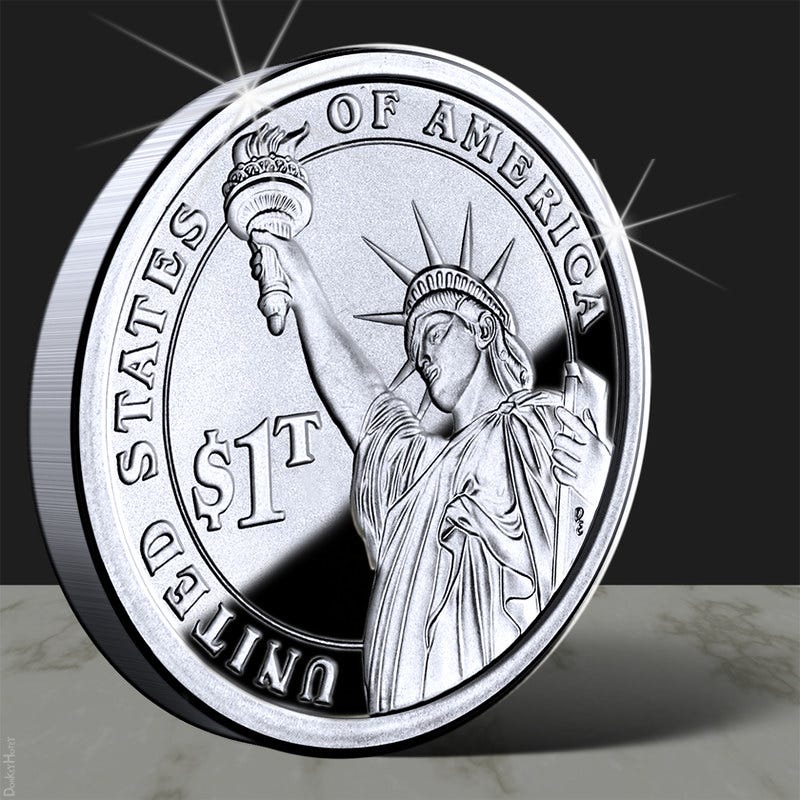
So…the genius plan was to make a platinum coin and then whack 12 0’s on it. Then, they would cash it in for a trillion dollars and consequently avoid the debt ceiling.
But here’s the catch- the idea was rejected by the Federal Reserve and the Treasury. Hence, the ‘nearly’. Maybe if you rummage through your change, you can spot a trillion-dollar…Ok, that’s a lie.


