
LIFE|FAMILY| GRIEF
How The US Army Destroyed My Father’s Life
He was a victim of the atomic bomb
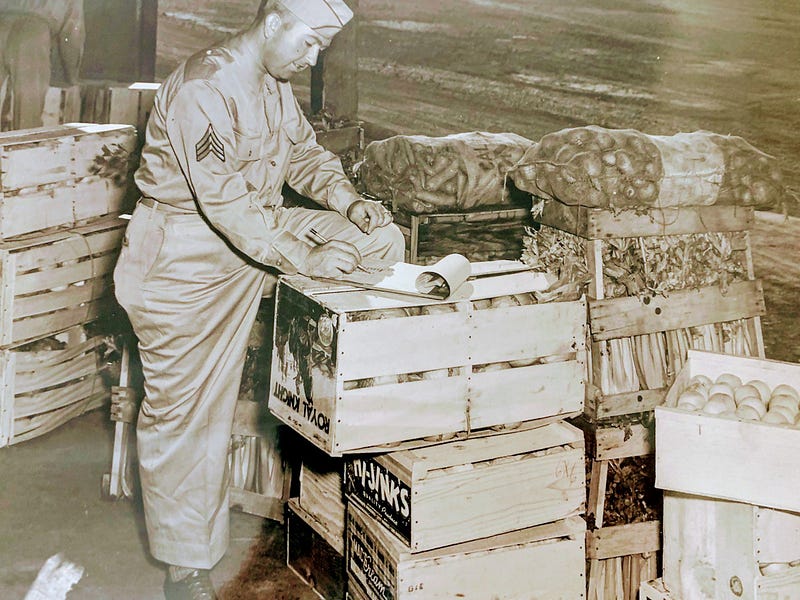
The last place my 31-year-old father dreamed he’d wind up was in Los Alamos, New Mexico. He’d been living his best life running his namesake neighborhood grocery store.
After toiling for over 20 years and learning to be a master butcher, he opened his store in 1940. The Army blew a hole in his life during the World War (WWII). He believed he’d be exempt from service. He was over 30 and the only breadwinner for his widowed mother and sisters.
It was shocking to everyone when he received his draft letter. My dad never imagined he would wind up on the classified Manhattan Project.
No time for goodbyes
My father, Michael Dennis, was born to destitute Irish immigrants in St. Louis, Missouri, in 1911. When he was eight, my dad started working for a close family friend in the grocery business who mentored him.
After 8th grade, he ditched school to help fully support his family of former potato growers. His lack of formal education didn’t hinder his ability to work hard to provide for his family.
Before recovering from his draft notice, he learned he had only a few days to report to basic training. He couldn’t find anyone to take over his store before he suddenly left for Fort Riley, Kansas.
When his regular credit customers discovered the Army had inducted him, they disappeared. He lost large sums of money from those stranded accounts. He had no choice but to abandon his beloved store. My dad lost everything he’d worked so hard to build.
After basic training, he received new orders. He was assigned to the sustainment and support (CSS) Quartermaster Corps. His assignment was at Los Alamos, New Mexico. The Army utilized his grocery procurement and meat-cutting skills. He didn’t realize he was reporting to a historic Army base that would change the world forever.
Toiling in the desert
It was a hard life in the desert at the top-secret pop-up base and surrounding town. My father and his squad worked around the clock. They procured and prepared all the required food. They were tasked with supporting the renowned scientists laboring at the highly classified Manhattan Project.
The project was directed by Dr. Oppenheimer and General Leslie R. Groves. The result was the development of the atomic bombs ultimately dropped on two Japanese cities in 1945.
In their quest to keep the Manhattan Project under wraps, the Army provided low-cost meals to everyone on base. This included the scientist’s families and local townies. No one could leave the area for high-level security reasons. There was a constant risk of infiltration by spies.
Dad believed he was lucky to be assigned to the hidden base. He avoided active combat, unlike many of his family and close friends who died in the WWII battles. My father didn’t understand that the Army had effectively issued his death sentence.
He was inadvertently exposed, along with the other site inhabitants, to radiation. That slow poisoning would be a much slower death than taking a fatal bullet in combat.
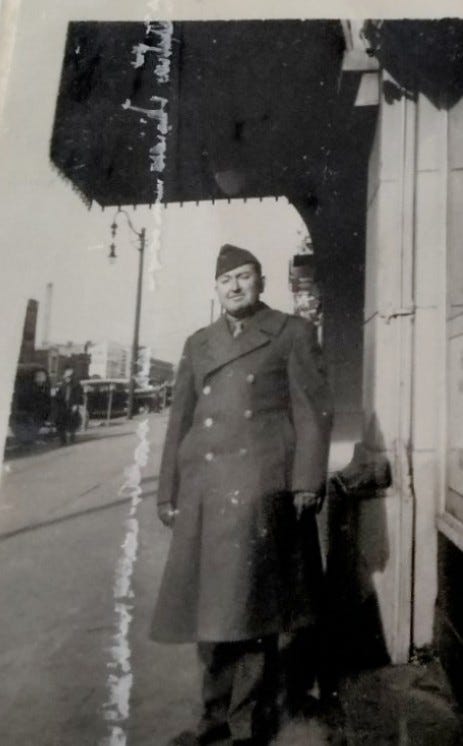
The second explosion in my father’s life
President Harry Truman directed the Army to rapidly develop a bomb. He wanted it to end the war and beat any attempts by Russia to overtake the United States on a similar project.
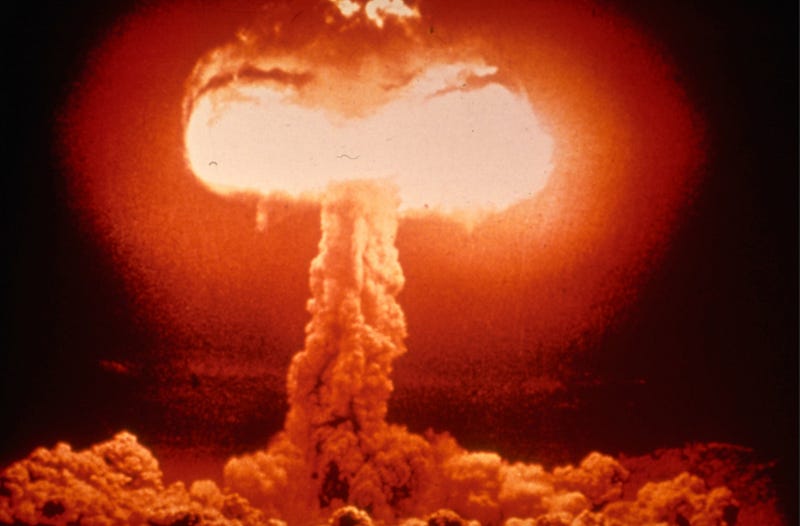
My father discovered the terrifying truth about the Army’s experiments at the testing site. He was nearby on July 16, 1945, at 5:29 a.m., when the first-ever nuclear device, the Trinity, was tested.
The implosion-type bomb was detonated at New Mexico’s remote desert Alamogordo Range. The estimated yield was 25 kilotons of TNT. The device was set off atop a hundred-foot metal tower. Approximately 500,000 residents lived in a 250-mile range of the test area. The blast results were much more robust than scientists anticipated.
The mushroom cloud that formed from the explosion extended 50,000–70,000 feet into the atmosphere. A vast blast wave occurred seconds after the explosion. Intense heat seared across the desert turning sand into glass. The bomb produced more light and heat than the Sun.
Dropping the first atomic bomb
No one could see the radiation generated by the Trinity explosion, but they knew it was there. As ash rained from the sky it covered everything in its wake, including nearby animals and food crops.
Truman ordered the Army not to evacuate nearby towns to avoid triggering panic. The cause of the giant fireball remained highly classified. As a result, many people, including the public and personnel, didn’t understand what caused it. Because the project was top-secret, there were no warnings to anyone before or after the device was tested.
A month after the successful plutonium Trinity explosion, the Little Boy and Fat Man atomic bombs were deployed for the attack on Hiroshima and Nagasaki, Japan. Various Manhattan Project personnel served as bomb assembly technicians and weaponeers on the attacking aircraft.
After my father learned the scientists at his Army base engineered the war’s end, he was proud. Much like Oppenheimer and many other Manhattan scientists, he was saddened by the terrible loss of life. Throughout the rest of his life, my dad was haunted by those thoughts and images and rarely talked about them with anyone.
Manhattan Project ends — and a new era begins
World War II ended quickly after the bombing of the two Japanese cities. The devastation from the Manhattan Project and the bombs it developed unleashed terrible long-term results.
Research shows the effects of the explosions in New Mexico and Japan triggered the development of several hundred types of tragic radiation-related malignancies around the world.
Many people in Japan died directly during the blasts, but others eventually succumbed to radiation-related carcinomas or illnesses. Thousands of people living in the Trinity blast area developed an array of diseases and terminal cancers. Those people became known as Downwinders®. My father and others who served at Los Alamos are known as Atomic Veterans®.
On February 18, 1967, 22 years after World War II ended, Dr. J. Robert Oppenheimer, 62, died of throat cancer. There was no doubt he had been exposed to a high dose of radiation. Even though his cause of death was linked to his lifelong smoking and drinking, it was believed his radiation exposure hastened his demise.
Dr. Oppenheimer was recently immortalized in the 2023 blockbuster movie about his work developing the atomic bomb. The movie has been nominated for thirteen Academy Awards, including Best Picture. More importantly, it has brought the history of world-changing events to many new generations.
My father’s life never recovered.
The Manhattan Project formally ended on August 25, 1947, but my father, who was promoted to Master Sergeant (MSG), was discharged with honors from the Army in 1946.
He returned to his hometown of St. Louis, married his wartime sweetheart, and saved to buy a house. His mother had tragically died before he could return from the war. Dad couldn’t qualify for credit to open his own grocery store because of his previous loss. He sucked up his devastation and was employed as a meat cutter by a national grocery chain.
After his time at Los Alamos, my father battled years of mental, emotional, and physical illness ranging from low levels of depression, anxiety, an eating disorder, and chronic colon disorders. He drowned his Army memories and sorrows in many bottles of beer, Bourbon, and Scotch.
Dad toiled night and day during his remaining post-Army years to support his family, which eventually included three children. His life may not have been the happy and fulfilling one he had dreamed of before he was drafted, but he made the best of his circumstances.
There’s no turning back
After 25 years of cutting meat, my father retired. He looked forward to many years with his wife, family, and beloved flower gardens. In a twist of fate, just three years later, he was dead from complications of colon cancer. His death left his family devastated and his wife, my mother, suicidal. I was only 24 when I lost my daddy. The grief of losing him has stayed with me since he took his last breath. My own children were robbed of knowing their grandfather.
Was his cancer related to his close proximity of the Army’s atomic bomb testing at Los Alamos? It’s certainly a possibility. More troubling was the loss of his dreams of having his own business before he was drafted. He also was saddled with post-war illnesses.
It’s not unfair to conclude that the US Army and the atomic bomb destroyed my father’s life. Maybe not at the time of the blasts, but in other ways, he was collateral damage. My father would never have refused to serve the country he and his parents loved. But the price he paid was one he didn’t know would cost him his life. Maybe not from a bullet, but from the aftereffects of an atomic bomb.
When discussing how the US Army ushered the world into the atomic age, Dr. J. Robert Oppenheimer famously said, “There’s no going back.” How true his words were for my father.
If you liked this story, please check out my new story. Hugs


