
How The True Story Of A Young English Widow And Her Two Teenage Daughters, Morphed Into A Steamy Romance Novel
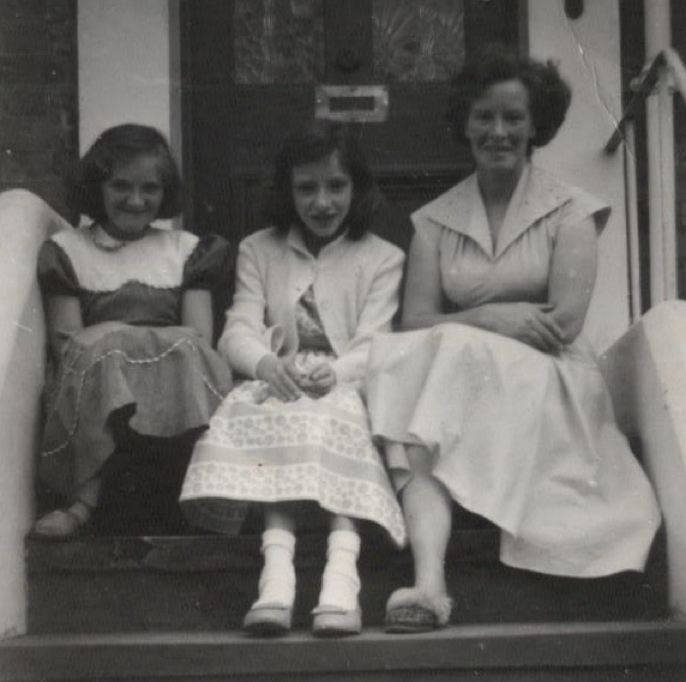
I’d been writing for years, journalism and corporate publications, but I had this idea for a story about a young widow who emigrated from England to St. Louis, Missouri with her two teenage daughters, one an asthmatic.
Although she’d never had any nursing experience, the young widow found work as a nurse’s aide. The pay was low, she struggled to make the rent and one of her daughters was homesick and always begging to go back to England. Still, the plucky young widow was determined to make life in America succeed.
Although I thought of it as a novel, it was based on my own life story. My mother was the young widow, I was the asthmatic daughter making her life miserable by constantly whining to go back to England. My sister was the good daughter who went to school and did as she was told.
I figured it had plenty of dramatic potential, but I couldn’t seem to move beyond the part where the three of them are standing on the deck of the Queen Elizabeth watching the Statue of Liberty hove into view.
Since that was my opening scene, I knew I was kind of stuck.
I’d never attempted fiction writing and knew nothing about plot development or much of anything else that goes into a book, then I saw a Saturday class on how to write a romance novel. I’d never read a romance novel and I didn’t see my book as a romance — I hadn’t really thought of it as anything other than something I wanted to write — but I decided to check out the class anyway.
The instructor was a guy who wrote under a female pseudonym.
Romance writing was easy he assured us. Nothing to it.
You just put a guy and a gal — he used those words — in some sort of situation where they start out hating each other and end up in bed together.
Well, not a bed, he cautioned, too boring. Love scenes should be steamy and anywhere but a bed.
He said he managed to churn out three or four books a year and got to write off exotic vacations and expensive meals.
You’ve always wanted to go to Greece? Set your romance on a Greek island . . . which of course you can only research by actually visiting.
Make your hero the devilishly handsome, but temperamental chef in the island’s most expensive restaurant. Maybe the heroine is a young and naive girl from Wisconsin who wants to break out of the rut she’s been in. Then let the ouzo flow and the sparks fly.
Just remember to detail all your expenses.
It sounded good to me. I could barely wait to get home and start writing.
Still keeping to real life, I removed the young widow and her daughters from the deck of the Queen Elizabeth and put the widow in a hospital working as a nurse. Everyone loved her and told her what a lovely English accent she had. Not that far removed from my mum’s stories about her work experience.
I wasn’t sure what to do about a hero though. My mother didn’t date — between struggling to pay the rent and a whiny asthmatic teenager, there was no time. Since she worked in a hospital, a doctor was an obvious choice. But why would he hate her?
At that point, the story began the drift into fiction.
My hero, Martin, a dark and tortured type from Northern Ireland, just sprang fully formed from my brain. No idea why, he wasn’t remotely like anyone I’d ever known.
Except . . .maybe Robert Fuller who played Jess Harper, a ranch hand on the old TV show Laramie. At fifteen, I’d had such a mad crush on him that I drew his profile and mine engaged in a passionate lip lock.
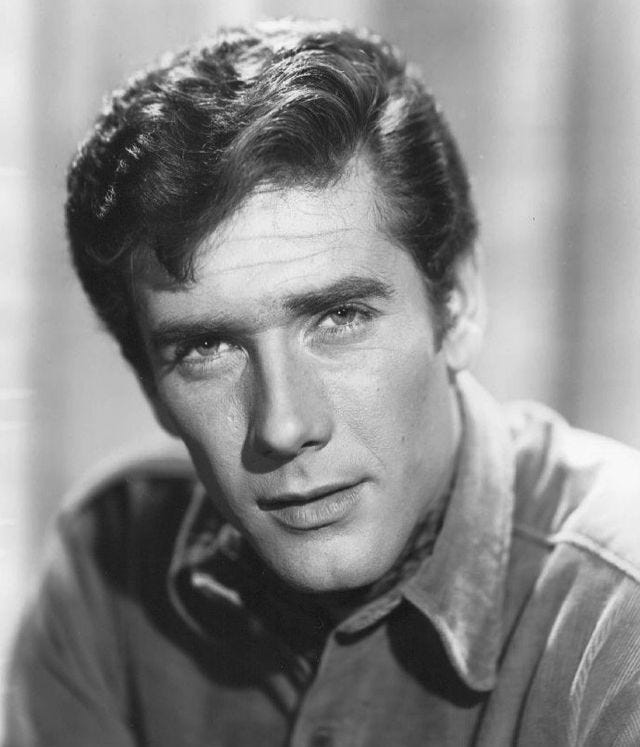
In my head, I suppose Martin did look quite a lot like Jess. I could imagine nurses at the hospital getting crushes on him and calling him the Irish Dr. Dreamy.
But, of course, he would only have eyes for the young widow who I’d decided to name Catherine. Not my mother’s name, because it would feel weird to have Martin making out with a character who in real life was my mum.
Then I drifted further into fiction and made Catherine tall, though not as tall as Martin, with long brown hair worn in a braid that reached halfway down her back. As he discussed patient care with Catherine, Martin would be mentally unbraiding her hair.
Sparks soon began to fly. As soon as Martin hears Catherine’s English accent, he makes some snide comment about the English; she shoots back with something snotty about the Irish and they’re off.
But beneath the frosty exchanges, temperatures are rising. They can hardly keep their hands off each other.
Stoking the emotional heat, I bide my time before putting them together in an empty room where they’re about to succumb to temptation on a hospital bed. Just in time — before clothing is removed — I remember the romance guy’s warning about beds so I change location to an empty office and the top of a desk.
Pretty soon they’re making love all over the place — never the bed though — and then he asks her to marry him so they can all start a new life together, free of Anglo-Irish conflict. The end.
Or so I thought. The story came in at around 10,000 words. I’d need at least 50,000 more for a book. How to, no pun intended, flesh it out? I needed more conflict — the Anglo Irish sniping wasn’t enough, especially after they’d made passionate love all over the place, except for the bed.
I did a major overhaul, moving my original idea still further into fiction.
The young widow became a California divorcee with a jerk of an ex-husband, I eliminated the good sister and traded the whiny teenage daughter (moi) for a ten-year-old son. Asthmatic, but not whiny. And, since I’d never been thrilled with the doctor-nurse thing, I gave Catherine a job in the hospital public relations department.
Once again, real-life offered some inspiration. The ten years I’d spent in corporate PR for a large healthcare organisation had provided me with a treasure trove of horror stories I could put to good use.
I’d also just finished writing an article on neonatal intensive care units for the Los Angeles Times and the subject fascinated me —all the medical advances that allowed NICU specialists to save these tiny and fragile premature infants. Loads of drama and pathos there. I made Martin a neonatologist and put him to work saving tiny babies.
The story was moving ever further from my original idea. My mum was disappointed to learn that she wasn’t going to be immortalized between the covers of a book, but I promised her a starring role in the next one.
I felt satisfied with the book’s progress, thanks in part to advice and guidance from a critique group, mostly women who also wrote romance. Eventually, that group folded and I joined a group that included three men who wrote macho guy stuff.
It wasn’t a great mix.
Every Thursday, for nearly two years, I’d bring in my ten pages to read aloud. While the guys didn’t exactly snicker when Catherine took long bubble baths and wondered if Martin really loved her, I ended up anticipating their reaction and toning down the mush — or introspection as I preferred to think of it.
Inevitably, their influence rubbed off. Before long, Martin, my sensitive and introspective hero, was displaying flashes of anger, throwing chairs through windows and talking in monosyllabic grunts. Just like the macho heroes in the men’s books.
By the middle of the book, I loathed Martin and Catherine’s moping was getting on my nerves. So I dumped them and started a new book.
This one, set in the west of Ireland starred Niall, known for his artistically moody black and white photography and a red-haired American writer called Kate who may or may not have seen Niall pushing someone off a cliff.
At first, I had better luck with Niall and Kate. An agent I met at a conference liked the book and wanted to represent me.
And then dropped me a month later.
Discouraged, but undaunted, I returned to Martin and Catherine. Martin became more sensitive and introspective and had some reservations about the ethics of saving ever-smaller babies.
Now not even a germ of the original idea remained.
One afternoon, I got a call from a New York agent to say that he liked the three chapters he’d read and wanted to see the manuscript. When I signed with him a few weeks later, he asked how I saw the book. The previous agent had asked the same question. And my answer had been just as vague.
“It’s kind of a romance, I guess, but not exactly . . .”
I have the stack of rejection letters he passed on to me. They praised my writing, complimented me on the characters and plot but essentially echoed the reasons my first agent had given for her failure to sell the book
Not enough romance, not exactly a mystery, doesn’t quite fit anywhere.”
This agent didn’t formally release me from my contract, but when I sent the Irish book he wrote back to say he couldn’t represent it.
He also gave me a piece of advice. ‘You are writing somewhere between contemporary romance and good contemporary literary fiction,’ he said. ‘If you want to get published (and not just write) you have to make some more focused choices . . .’
Lesson learned. I amped up the romance between Martin and Catherine then sent the much-revised manuscript off to Harlequin. They bought that book, then the Irish book and over a few years, seven more.
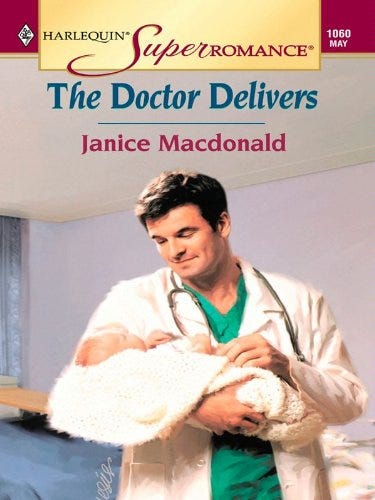
It was strange to hold that first book in my hands. Stranger still to consider the long journey it had taken from the young widow and her daughters on the deck of the Queen Elizabeth to romance in a California hospital.
As promised, I gave my mum — much older by then — a role (fictional) but based on an actual incident, in a subsequent book. She insisted that the elderly mother I’d created was nothing at all like her. I think she really wanted the young widow role.
If you’d like to read more stories, including many about my life in France, plus great stories from thousands of other Medium writers, why not subscribe?
If you use the link below, I will receive a portion of your membership fee and you will have my everlasting gratitude. What a deal!
Did you know that you can also take me along on your walk, or wherever? Just press the listen button at the top of the story to hear it read aloud.
Thanks in advance.
Did you know that you can also take me along on your walk, or wherever? Just press the listen button at the top of the story to hear it read aloud.
Thanks in advance.


