
How Artificial Intelligence will Dominate the City of Future
The advancement in technology has questioned the limits of innovation. We are all familiar with the Moore’s Law, describing the relation between the number of transistors that can be accommodated into an integrated chip (IC). Observations indicate that this relationship should double every two years (1971–2018). This idea briefly shows the pace of expected innovation. Though the “law” is expected to expire in 2020, but the revolution in technology has not yet reached its prime.
In addition to innovation in the semiconductor industry, it is important to realize that the future of SMART urban technology is not far from reality. Artificial Intelligence (AI) and efficient data management are the keys to technical success. Everything from self driving cars (Waymo: Google self-driving car project) to Neuralink (implantable brain-machine interfaces) were an example of the revolution in the 21st Century industrial sector. This idea inspired me to write this article, where in every edition I would be focusing on the different industrial sectors and how they have changed over the timeline and what the future looks like.
AI can provide space for further overall data management. Identifying data patterns is essential for effective operation. With the help of Deep Learning technology , citizens can enjoy the privileges of future SMART cities connected through IoT.
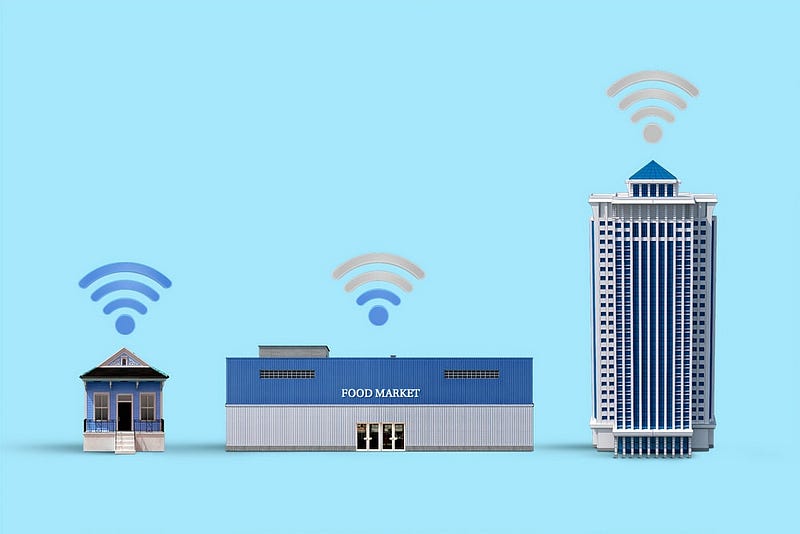
SMART cities connected with IoT platform, offer a dynamic network of interconnected devices. Electronics with sensors and actuators and can allow exchange of information in real-time. The transmitted data is used for execution of a function. This requires high level programming and offers opportunities for data analysts and software/hardware programmers . The initial concept of IoT was defined around 2000, by the Members of the Auto-ID center of MIT. It has evolved from its initial vision of using RFID (Radio frequency identifier) to develop an EPC (Electronic Product Code) database for universal exchange of product information. The opportunities are now endless starting from SMART classroom to self driving cars.
It is estimated that by 2025, there will be a large population of trillions of IoT connected devices .
Considering the varied application and potential of IoT connected devices ( both at the consumer end and the manufacturing market), it is likely to pursue a similar trend as the everyday smart phone and utility market. The IoT has a variety of applications that can improve efficiency with minimal human interaction. It will allow an improved standard of living and has potential in the financial and banking sector.
A primary advantage of the IoT connected community will allow the processing of data through AI technology in real-time.
When connected across the IoT platform, AI technology can collect and process information with a minimum delay of information.
Considering our busy lifestyle, remote monitoring and control is achieved through embedded processors in electronic devices. One of the main challenges of widespread implementation is cybersecurity. As there have always been privacy issues in this area, measures must be taken to avoid the destruction of personal information.
Commercialization of SMART cities and Relevant Projects
The main goal of SMART city is to establish an Information and Communications Technologies (ICT) infrastructure for data analysis. It will allow effective management of cross-community interaction. Certain neighborhoods has begun to build a platform through IoT to implement, monitor and manage the consumption of water and utilities to avoid waste of resources.
Cisco, IBM, Microsoft and Schneider Electric have already action to commercialize the SMART city concept.
Microsoft Azure is a cloud computing service that allows to built, test and manage various applications. Microsoft Azure Machine Learning ( Azure ML) enables predictive analysis and interaction with application data. Other application platform ( Project Oxford) allowed services like face recognition and verification, clipart recognition, celebrity recognition and many more.
Azure IoT Hub allows a secure connection, updating, transmitting and receiving of command signals across various IoT connected devices. This service is available across various regions including East and Southeast Asia, East and West US, Northern and Western Europe. The platform allows bulk import and export of registered devices, including monitoring options in real-time. Device telemetry ( it is the collection of measured data at remote points and automatic transmission to the receiving equipment), cloud-to-device command are some of the operations monitoring features offered by IoT Hub.
Cisco IoT is also offering its services to different industrial and community sectors. For instance, City of Copentiagen uses Cisco platform for monitoring air quality, that will eventually allow to remidate the source of pollution. The city is using sensors for various other applications including managing their trash collection. The collected data allowed them to realize that 70% of the trash were deemed unnecessary and could be easily avoided. They are also leveraging on real time video monitoring to detect open parking spaces and man such similar features.
The State of Alaska, USA is also using IoT platform in its department of transportation facilities to connect people and collect/process data along the most remote roads. The IoT enables the state to maintain the dispatch of important equipment and communications even in extreme weather conditions.
Implementation of sensors and IoT into our community will eventually allow to improve our overall quality of life.
Limitations and other drawbacks to the concept
Connectivity across different devices is one of the major challenges in the implementation of a SMART community. The lack of standard infrastructure protocol between different manufacturers is one of the main reasons for the slow growth in this trend. On 4th July 2017 Internet Protocol version 6 (IPv6) became the internet standard for IoT. The Internet of Things (IoT) connected devices require an IP address for the device and location identification, which requires more memory space for commercialization of the concept. At present IPv6 uses 128- bit addresses and should theoretically translate to 3.4x10³⁸ addresses.
Another challenge is the energy efficiency of the connected devices. IoT, connected devices require a constant streaming of data from wireless sensors and actuators. A low energy power management system is required to ensure constant transmission of data across the network. Privacy of information is another challenge that should be addressed when implementing IoT infrastructure in the community. Security and protection of private data from corporate surveillance and individual hackers is simultaneously required. Two approaches include: (1) improved cybersecurity and (2) data minimization.
By solving these challenges, we can finally build a SMART community that will provide an efficient infrastructure through connected data management.


