
How the Sensory World Transforms Us Into Powerful Creators
How anyone can access the same natural teacher
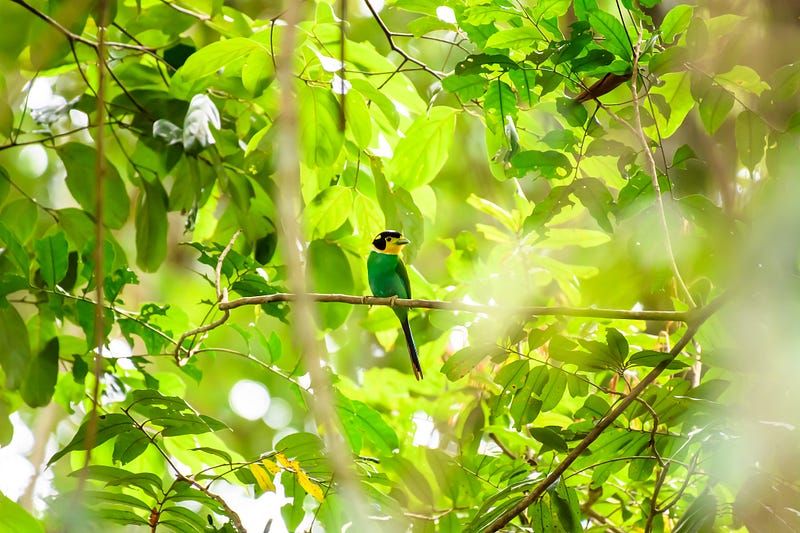
Tuning into the world around us opens the portal to untapped creative potential within us.
Storytelling has it’s roots in noticing.
Watching as the moments of life unfold.
The sound of a young girl’s laughter as she skips past a game of hopscotch. The crawling sensation of an ant on a fingertip. The burning in someone’s stomach watching someone they love profess their love to someone else. The chirp of a morning bird as it calls it’s neighboring friends over.
There are stories everywhere if you can tune to the subtleties around you.
The way butterflies fly in and out of the garden; how they hover over plants wildly and then leave forever. How birds dance with one another in a perfectly coordinated trance. The rising scent of the morning air. The brightness of the evening sun.
Nature is our mirror.
There’s a reason we are drawn to gazing at the ocean. It is said the ocean provides a closer reflection of who we are than any mirror. - Rick Rubin, The Creative Act
Seeing Beyond the Sight
Most of us have become habituated to looking at things instead of seeing them. Placing our eyes on what might seem like an object of attention fools almost everyone that we’re attentive beings.
But seeing, it’s bringing all your attention and conscious awareness to an object, a person, a landscape and recognizing that you’re intertwined with all of it. You are two parts of a whole, but a whole nonetheless.
Practice this, next time you look at a tree-
Notice the way the branches move. Sense the pattern, the rhythm with which they dance back and forth.
When the wind stops blowing, notice it’s stillness. There’s a massive story to be told about the serenity of a tree.
Another amazing practice is watching the way someone speaks.
During a conversation, emerge yourself into the person. Sense the way their lips move, the way they shrug their eyebrows, and allow the tone of their voice to pierce your body so all that person becomes are vibrations.
Once you feel the vibrations, see the person again. There’s a wholeness to this person now, a new understanding. This is looking at a person with a fresh pair of eyes. This is truly seeing someone.
Tune Your Ears to the Symphony of Life
Recent research has shown that music has a powerful impact on many health conditions, but specifically, it’s been beneficial for Alzheimer’s.
Music helped reduce agitation and it improved behavioral issues for these patients, but what was most remarkable was that these patients were able to tap beats, even sing lyrics, from childhood.
There were songs that should have been long forgotten, but weren’t — that’s how powerful sound and music is.
Music taps into our neurocircuitry, into our nervous systems, to create long lasting memories.
So how do we tap into this powerhouse to enhance our creative potential?
Listen. Listen to the beat of the song. Listen to the chirp of the bird, listen to the low tremble of your air conditioner at night, listen to the rhythmic breathing on your partners chest, the cadence with which a child uses it’s voice, the varying tones of your pet’s bark.
There is sound all around us, all the time.
Even silence carries profound messages when you truly listen.
Tasting and Smelling Our Way to Creative Expression
Taste and smell are close relatives. They both evoke feeling and memory.
Scientists now believe there are seven different smells; musky, putrid, pungent, camphoraceous (similar to mothballs), ethereal, floral and minty. There are four tastes; sweet, sour, salty, bitter, and savory.
When it comes to creating using taste and smell, this is critical. Can we as writers bring forth a visceral sensation to our readers? Here’s an example of how taste and sound are used in a sentence:
“Oh, how good everything tasted in that bower, with the fresh wind rustling the poplar leaves, sunshine and sweet woods smells about them, and birds singing overhead!” — Susan Coolidge, What Kati Did
A practical way I bring this forth is by paying close attention to what I’m eating. I immerse myself in the dish. I will pick up the chicken wing for example, and I will notice the smells coming from it- typically a floral smell radiates, likely the rosemary and cilantro seasoning. A salty flavor will follow the smell when my lips make contact with the chicken. As I chew, the flavor intensifies and as I swallow the food, it will slowly diminishes. At times, a savory taste will remain.
I have a strong sense of smell, but tuning into my sense of taste is difficult. It takes me a lot of practice, but with our senses, that’s what it is — practice. It’s bringing our awareness back to the moment, to our senses, that brings them to life.
Using our Sense of Touch to Touch the Heart of Creation
The sense of touch is the funniest sense for me.
For many years, I struggled with tuning into this sense. I was completely numbed out and even as I sought stimulation, tuning into it was still dull.
My connection to this ethereal sense improved over time. As I discovered it, it quickly turned into my favorite sense. It opened my field of awareness.
As I type this, I can feel the rubber of my keyboard cover. It’s a critical part to my writing experience. The sofa I sit on is plush and as I sink into it, I sink deeper into my words.
Through touch, the physical world awakens. We can feel textures of all kinds; rough, sticky, bumpy, slippery, feathery, of course. This world is endless!
Craftsmen, sculptors, and designers, all rely on their sense of touch to connect with the heart of their creations.
The fascinating part is that we can all use the sense of touch for anything we create, even if it’s writing. Feel the way the keyboard flows through your fingers, connect to the way a pencil manifests itself on paper. This is where the real magic happens.
As children, we’re given the gift of wonder. Through wonder, we explore our environment and look at the world with all its newness. As adults searching for a creative life, this is an invitation to channel that wonder again. To allow yourself to feel the world again.