
How the Sad King Left a Legacy of Joy to the World
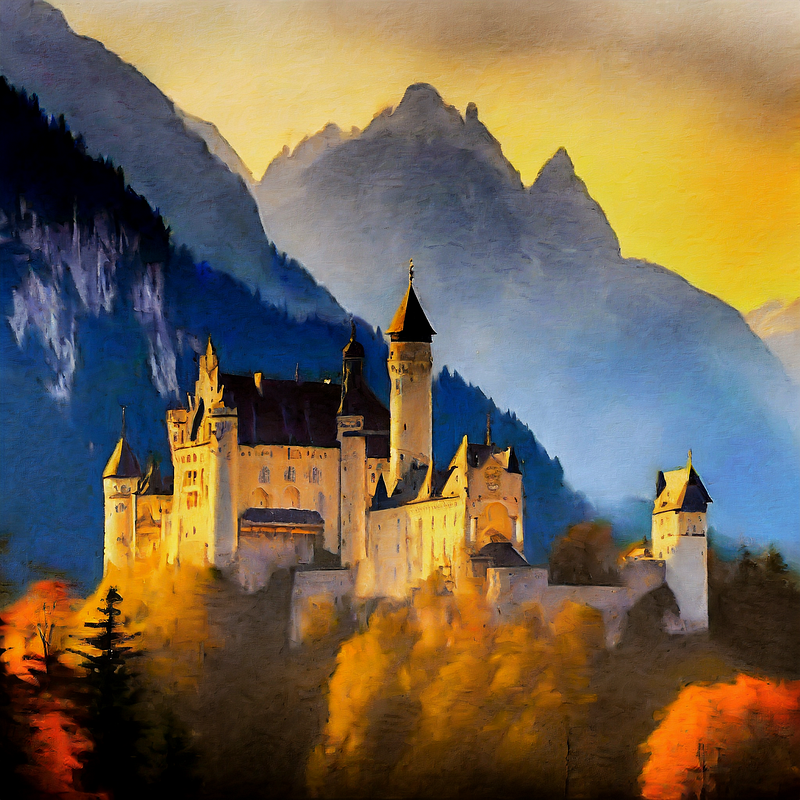
Recently, I had the opportunity to explore Bavaria, a region well known for its breathtaking, picturesque landscapes where the serene blending of blue and green captivates the eye.
In the bright light of a high sun, you can revel in the beauty of a serene Bavarian idila. However, when the rain and fog roll in, this romantic scenery transforms into an enigmatic realm where shadows conceal everything, amongs them is one particularly compelling — one of Bavaria’s last king.
Visionar or/and lunatic, so called the “Mad King” or I would dare to add a “Sad King” better? Ludwig II ruled Bavaria in the late 19th century, more precisely from 1864 until his death in 1886. While his rule was marked by eccentricities and erratic behavior, he possessed a deep fascination with art, music, and architecture.
Today, Bavaria is perhaps best recognized for the magnificent castles that Ludwig II built.
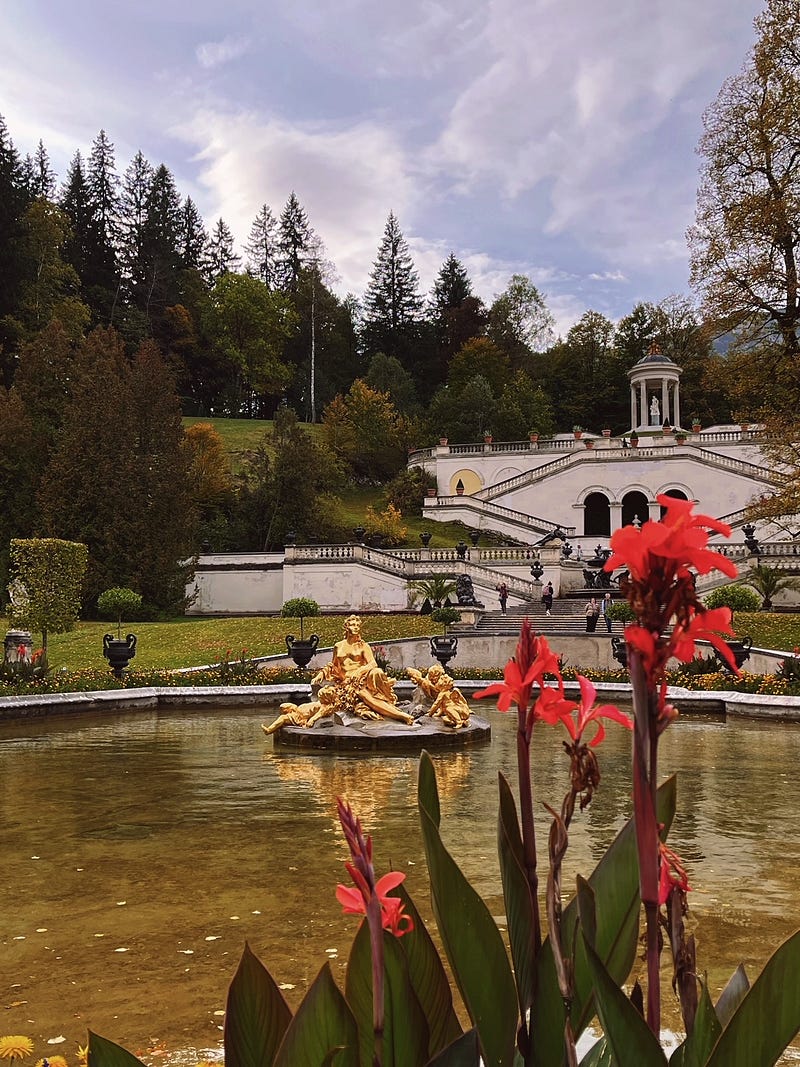
Among the three most popular projects, only Linderhof was completed. The other two, Herrenchiemsee Palace and Neuschwanstein, have remained unfinished to this day. His most famous masterpiece is now known as Neuschwanstein Castle, which is often referred to as the Disney fairytale castle. Inspiration for many childhoold heros and fairytale stories.
Prior to my visit to Bavarian castles, I was unaware of this marketing catch. I initially expected to encounter a variety of castles spanning different epochs. But instead it came as a surprise to discover that all these was a creation of one man.
But his story made me think, think for long and wide.
It took us three days to visit all the castles constructed by Ludwig II. Over these three days, I heard a great deal about his achievements, his family background, and the mysteries surrounding his death.
But all the time I asked myself — why this man was so sad man?
(Black) Swan
A majestic architectural masterpiece standing stubornly up high in the mountains. It is Neuschwanstein Castle. I must confess it took my breath away, nothing like that I have seen before.
Ludwig had a brother, and mother and father. Family? Not. His relationship with mother and father was cold and on stranger level.
As I visited the lake near his childhood castle that is right opposite to his Neuschwanstein Castle, I couldn’t help but envision Ludwig and his brother dashing down to the water’s edge, their laughter filling the air. It was a moment of pure, unbridled joy as the two boys frolicked by the lake, carefree and unburdened. It must have been a time when they were just children, as free as birds, swimming in the water without a single worry on their minds.
In reality, most of the time, except for a few escapes to lakeside retreats, these were Bavarian princes. Bavarian princes in times when this only meant being perfectly isolated within their own world, avoiding any contact with the changing outside reality, for they wouldn’t like what they’d see. They could sense that their era was drawing to a close, the era their ancestors had been so proud of, which had elevated them above mere humans.
Outside this bubble, it became clear that they will be becoming ordinary humans as well and that very soon. And this grand era would soon feel like a distant dream.
In those turbulent days of 1848, Europe was on the brink of revolutions, and the days of a select few privileged individuals were rapidly coming to an end.
Did Ludwig ever peek outside that bubble and realize that he was the ruler of something that no longer existed? This might explain his frantic need to construct magnificent castles, an attempt to preserve a time when their ancestors still held significance in the world.
Rushing to finish them all in this race against time, he constantly lost in his effort to build as much as possible.
Grand chambers covered in gold tapestries, decorated with intricate murals and chandeliers for one man.
Maybe whole his life he desperately want to be seen and heard.
After participating in numerous wars that took a toll on his younger brother, who became mentally ill, Ludwig II was the last true Bavarian king, and his gift to Bavaria in the form of magnificent medieval-style castles marked the end of an era.
His death was symbolic, drowning, much like how Bavaria, once a mighty kingdom, had long ago been submerged or drown into the new German Empire, fading into history.
In the end, I don’t believe Ludwig II was an unhappy man. Throughout most of his life, he found joy in his pursuits and felt a strong sense of purpose. His passion for building was deeply fulfilling, and it brought him happiness along the way. However, at the end of the day he was alone in his newly built castles. Solitude or serenity? Only Ludwing would know the answer.
When he passed away, whether by his own hand or otherwise, he did so in solitude. Despite any rumors or speculations, he departed alone, leaving behind his legacy for us and generations to come to continue admiring his remarkable creations and to dream. Dream about that magical time and how once there was a time when everything was possible, even to build the castle that world never have seen such before.
As I left Neuschwanstein Castle, I couldn’t help but picture Ludwig in his private chambers, sitting at his desk, the soft glow of candlelight on his face as he gazes out the window. Is he sad and nostalgic or he smiles satesfly? Even in his solitude amidst the mountains and mist, I believe he found contentment, or I choose to believe so, otherwise I would be terrified by how lonely life must have been for him.
If you enjoy my content, follow me for more stories inspired by history great events and people.
SUBSCRIBE here to get updates when I post a new article.
Thank you.