
How The Renaissance Got Its Amazing Colors
A story of dedicated specialists, a trading empire, and wealthy patrons that funded it all

It’s something we rarely think of, likely because we’re spoiled as children.
Crayons are handed out to us at restaurants when we’re young to keep us busy. But we don’t understand the power of this color. It’s so common, unsurprisingly, we take it for granted.
I still remember getting my sixty-four pack of Crayola Crayons when I was eight. It was the gold standard of the time. In fact, I think “gold” was a color.
The box was situated with names and shades never heard of. While “Sky Blue” was interesting, who cared about “Burnt Siena.” Although the color palette was impressive, it never completely blew me away. They were just simple crayons.
Shamelessly, I even threw colors away. But shades of every type imaginable weren’t always common. In times past, color was a business; you might even say a rarity. It demanded respect, commanded incredible prices, and required a trading empire to gather.
Keep this in mind as you think of the great Renaissance painters in history. It wasn’t just about the artist. The magic also revolved around the colors they used, and how they were gathered. So, let’s start there.
Venice’s New Trading Empire And The Business Of Color
As Europe recovered from the Black Plague and its fortunes started to change, Venice experienced some good luck itself. The city-state’s rival Genoa faltered. Its trade network fell apart, and Venice picked up the pieces.
Historian Peter Frankopan says stretching into the late fifteenth century the Venetians had a lock on much of the spice trade.
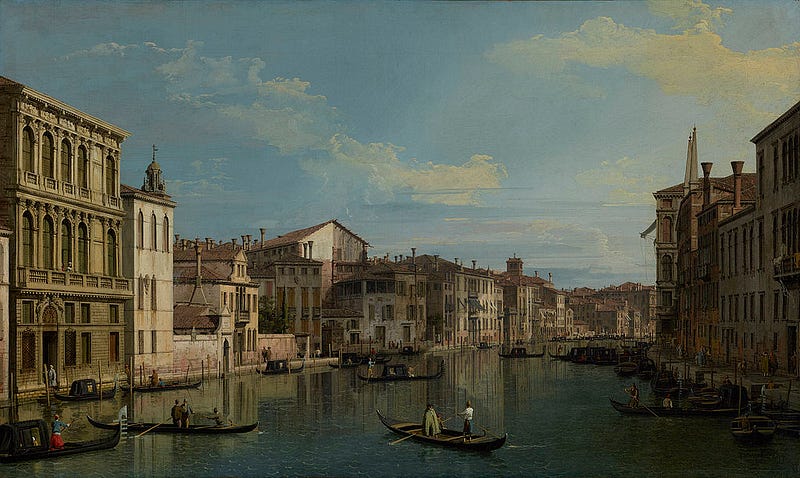
In his book The Silk Roads: A New History of the World, he reveals twenty-five hundred tons of spices passed through the city every year. This included four hundred tons of pepper alone. It sounds like a lot for just food, but remember, spices were also used for medicines and cosmetics.
Each pound of product brought with it “handsome profits,” which accumulated in the city. So, not only did Venetians have access to exotic ports around the world, moreover, they had the money to purchase desired expensive goods.
Frankopan says one of the staples became “pigments from overseas.” And their origins were as widespread as Venice’s trading networks: from Greece to Central Asia, among others. In fact, the colors themselves became a business.
The National Gallery of Art says Venice became famous for its pigments. Artists called figurers specialized in color. Even dedicated shops appeared which focused just on colors, and became known as vendecolori, or colormen. According to The Gallery:
They offered a panoply of materials for the color industry, including raw materials for colorant and dye manufacture, glassmaking, and prepared pigments. They dabbled in international trade and offered many imported colors in addition to ones prepared locally…The range of materials at the vendecolori was notable for its breadth. The vendecolori sold materials of the highest quality and appear to have been in the position of offering highly refined and purified colorants. At the vendecolori, artists could acquire materials of all sorts…”
Pigments could also be regulated by painter’s guilds. Mark Cartwright at the World History Encyclopedia says, “certain pigments (could) not be used in certain media.” This worked as quality control.
For instance, it stopped artists from passing off copies on lesser media. The average eye could immediately see the colors weren’t the same. Moreover, this innately dedicated the best materials to the most important customers with the deepest pockets. Namely, the Roman Catholic Church.
This sounds complex, but it’s nothing compared to the complexity of the colors themselves.
Creating The Pigments Of The Renaissance Masters
“A wide range of colours was available to the Renaissance artist, but quality and brightness depended on the size of their purse, or perhaps more accurately, that of their patron.”
— Mark Cartwright, World History Encyclopedia
While colors made from plants and berries were cheap and easy to get, better pigments cost much more and were created from minerals and earth. For instance, azurite and malachite, which are blue and green respectively, came from a type of colored bronze.
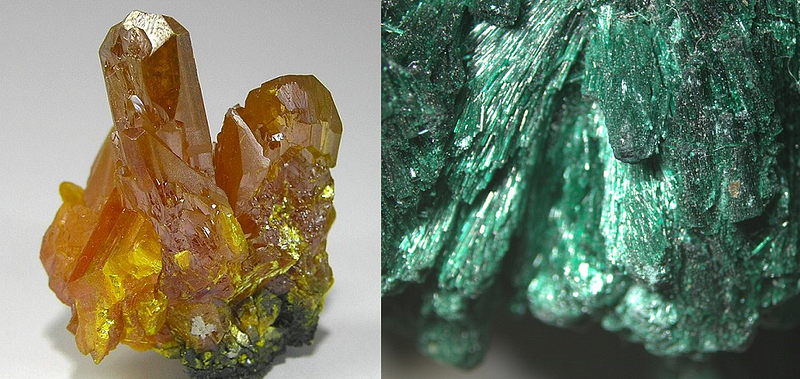
Yellow came from orpiment, a mineral found near volcanoes. Red and white, on the other hand, were made with lead. But depending upon your need, sharper colors could be obtained.
The king of all blues, ultramarine, was made from the precious mineral lapis lazuli, and brought all the way in from Afghanistan. Cartwright says one ounce of ultramarine cost as much as eight pounds of the mineral vermillion, which could be used to make red.
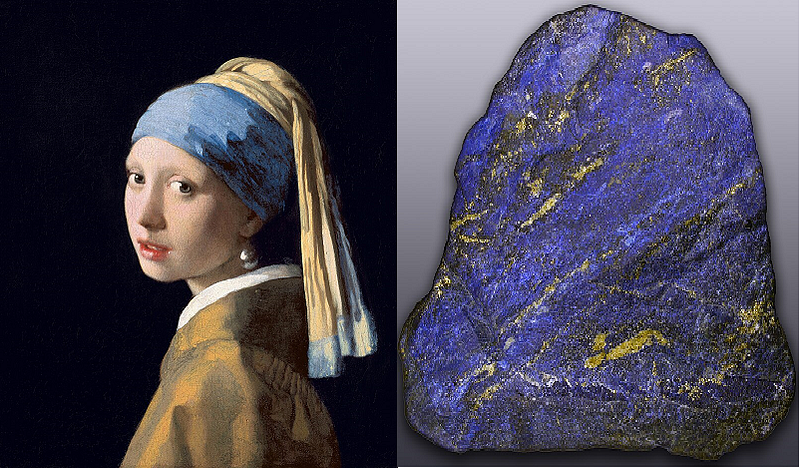
Most used azurite, which was ten times cheaper. The blazingly sharp ultramarine was usually dedicated for the clothing of Mary, the mother of God, with some notable exceptions (above). While there was a king of red too, called Cochineal. This involved crushed scales of the kermes beetle.
Obviously, vermillion was more affordable.
Then again, you could choose Venetian Red. George O’Hanlon at Natural Pigments says this is an “iron oxide earth-red pigment,” that’s “known for its rich, warm tone and ability to maintain its vibrancy over time.” Furthermore, he notes Titian was believed to get his red pigment from a local quarry in Venice.
Venetian Red was also introduced into the Crayola Crayon pack in 1903.
But getting the colors was only the first step. Cartwright says the pigments were ground on a piece of non-porous marble by a stone tool called a “muller” until they were powder and kept in oyster shells until needed.
Once required, the powder was mixed with just the right amount of “liquid medium.” So, mixing the pigment was a talent in itself, performed by skilled members of a workshop.
As you can imagine, these pigments were of high value to an artist, and it wasn’t unusual for them to be listed in wills. With all this in consideration, let’s circle back to our intro, along with our much-maligned box of crayons.
The Colors We Take For Granted

As children we’re taught color is plentiful, easily acquired, and so common as to be taken for granted. But it wasn’t always this way. Furthermore, the Renaissance is a prime example of this.
It was more than just the genius of the artists formulating the masterworks we all appreciate. The color fueling it had to be generated with great effort. It was such a niche enterprise a business of figurers and vendecolori grew around pigment itself.
Likewise, the colors had to be carried across the earth and funds gathered for their purchase. It required specialists, trade networks, patrons, in addition to the fantastic artists that turned canvases and walls into world-changing works of art.
Keep all this in mind next time you daydream about those crayons you played with as a kid. They were more than just toys. Each color was the life blood of the art that changed our world.
If you’d like to read more stories like these, please sign up for my mailing list. I’d also appreciate if you join Medium so you can access other writers like myself. It’s well worth the $5 per month. I’ll also get a tip for the referral. Check out my Substack as well: History-Philosophy-Action.


