
How the Police Dehumanize People as a Result of Burnout
Examples from my time as an officer.
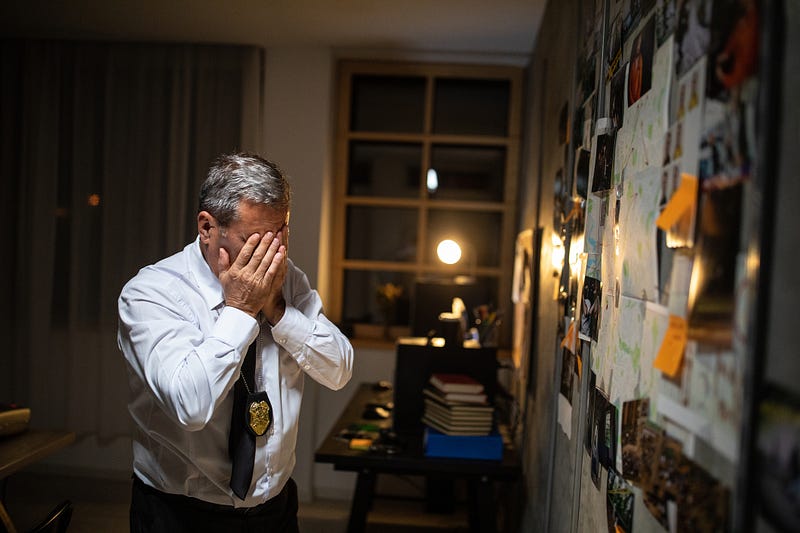
A fellow police officer had sex with a victim of domestic violence he was supposed to protect. Rather than suffer punishment, he was the envy of the station.
As shocking as this was, he was by no means alone. If you were “one of the boys, “ your colleagues expected you to flirt with women while on duty. I knew a Sergeant who was late to take over a murder scene because he was having an affair with a colleague.
This is just one example of dehumanization caused by burnout.
Burnout.
This is the consequence of constant exposure to continuous trauma and sadness. The only way for many officers to cope is to reduce the people they encounter into something less human.
According to the World Health Organization, burnout is:
“A syndrome conceptualized as resulting from chronic workplace stress that has not been successfully managed. It is characterized by three dimensions: feelings of energy depletion or exhaustion; increased mental distance from one’s job, or feelings of negativism or cynicism related to one’s job; and reduced professional efficacy.”
After several traumatic incidents, I had a meeting with a Chief. He described me as having a “siege mentality.” I no longer saw the public as people I served but as dangers that needed suppressing.
The upcoming examples show the various faces of dehumanization perpetrated by police officers. They all joined the job to help people yet lost themselves. They stared into the abyss until the abyss stared back.
Dehumanization in practice
The incident that ended my career occurred on a wet, cold night in 2003. Two teenage girls had died after jumping from a tower block. One didn’t die straight away, so paramedics took her to hospital. The other died immediately, and medics left her at the scene. My job was to guard her body.
My life changed over the hours I guarded her. I’ll never forget the window 11 floors up, swaying in the wind.
It took a few days to be reunited with my colleagues. When I returned to the station, most of them had gone home and forgotten all about me. They didn’t even come back to give me a lift to the station at the end of my shift. I missed the debrief because I was late returning from the scene, and they didn’t wait. I then had four days off to ponder the horror.
Back at work, any relief I expected from being among my colleagues was short-lived. Some of them had to seize the surviving victim’s clothing when she arrived at the hospital. The first topic of conversation about that night wasn’t about the terrible injuries. Instead, my colleagues were making lewd comments about the victim’s body.
I won’t repeat them, but you can imagine. I never talked to the main officer involved again, but his words have haunted me ever since.
I managed to talk more people out of suicide than I lost. One night before Christmas, I was called to the top of a parking lot, which was an infamous suicide hotspot.
Whenever I turned off the main road and began the ascension to the top of the car park, it always felt lonely. I could feel the weight of the world on my shoulders.
I found the suicidal man in the far corner. He shouted at me, but I couldn’t hear him over the howling wind. I shouted that I wanted to help.
My colleague was standing off to the side on the radio, and communicating with this man was my job. I wanted to keep him as calm as possible.
After what felt like a lifetime, hampered by the wind, he began to approach me with clenched fists. I wasn’t worried for myself. I could tell he was no threat to me. To himself, he was a mortal danger. As he approached, I took his fists in my hands and told him again that I wanted to help.
At that moment, he broke away and dashed the edge.
I caught him and took him to the floor. I handcuffed him for his safety and got him to the police car. We took him to a mental hospital for assessment. He didn’t want me to save him and abused me all the way there.
At the mental hospital, his abuse continued. Unfortunately for him, he tried to abuse a nurse. Several nurses took him to the floor, took his trousers down, and injected him in his buttock.
This was in the middle of a public corridor in full view of everyone. Some people were laughing.
Whatever they stuck in him did the trick, and he fell asleep moments later. But I couldn’t get the indignity out of my mind. He was an irritant to those nurses — a “lunatic.” As such, he wasn’t entitled to the basic respect that actual people deserve.
It’s not just the police that dehumanize.
The dehumanization that the police display is most evident in rape cases. Unfortunately, in my area, we had many rapes to investigate. The police have a hierarchy of victims. At the top are stranger rapes. These are the rarest and the type that gets the most sympathy. The police hate these because it hurts them to imagine what the victim endured.
At the bottom of the pile are repeat victims whom the police write off as lying. Women who know their attacker and stay with him afterward also rank low.
When a rape allegation comes in, there’s one question the police want to know: “Is it a good one?”
By “good one,” they mean one where the victim didn’t “ask for it” and wasn’t making it up. “Good” to the police means the worst experience of your life to anyone else.
Another incident occurred when I kicked a door down and bumped into a young man who had hanged himself. He’d been dead for two weeks, and I’d gone face-first into his legs.
I’ll spare you the details, but the smell was overpowering. He’d tied his underwear to a cord, dangling from the ceiling for unknown reasons. It was an absurd detail that has stuck in my mind.
I had to search him before the undertakers could remove the body, and doing so was as gruesome as it sounds. In another absurdity, I found a book near the body, open to the poem “If” by Rudyard Kiping.
As we left the bedsit with evidence, my colleague exited a nearby shop. He was eating beef crisps. He intended this as a display of manliness. The smell of decomposition is like rotting meat. Most of us ordinary people were struggling to hold on to the contents of our stomachs. My colleague showed us that he was so unaffected by what happened that he could eat crisps.
This incident passed as humorous in the modern police service.
Burglaries are one of the most traumatic incidents for any victim. They also have a meager conviction rate and low victim satisfaction with the police.
The problem is, as traumatic as a burglary is for the victim, they’re dull for the police to attend. The exception is if the suspect is still on the premises. Then, it becomes one of the most exciting calls, and the police throw everything at it.
But when there’s no suspect, the initial police response is a clean-up operation. They must take lengthy statements, provide victim care and advice, and fill out many forms.
This is so boring for the police that they will do anything to avoid going to burglaries. If called to one, they will stop any suspicious person or car in the hope they can make an arrest for something and pass the burglary to someone else.
There were many murders in the areas I policed. Thankfully for the police, they could write most of these murders off as “the victim had it coming.”
To the police, you had it coming if you were a drug addict, had a criminal record, or a history of violence. We used to have a “stiff of the week” whenever a well-known criminal was murdered.
This meant the police would print out the victim’s photo, write “dead” across it, and pin it to the wall. Such people were often the suspects in many investigations, and the police were happy to reduce their workload.
How does dehumanization occur?
The police occupy a unique position in society. One minute, they’re expected to have the compassion of a therapist as they tell someone their loved one has died. The next minute, they may be fighting for their lives, yet having to do so with minimal damage to their attacker.
The long periods of boredom, coupled with short bursts of adrenaline, can impact their mental health.
Due to the fast nature of policing, many officers deal with difficult things without processing them. Many feel an expectation to be detached from their feelings.
The police aren’t encouraged to open up. This has to change. By allowing our officers to feel their emotions, they can better understand the cause. Once they know the cause, they are better prepared to deal with them.
Looking after people in distressing circumstances can leave officers exhausted. All my examples show that the police don’t care about people as much as they did at the start of their careers. This is known as compassion fatigue. It makes you angry and less confident and drains your motivation.
Even worse, going through distressing events can lead to Post Traumatic Stress Disorder. This can leave an officer feeling threatened and at risk of being abandoned. They may also feel unsafe and powerless.
What can we all do to prevent burnout?
A police officer’s job will always be stressful. Adverse events affect well-being more than positive events. Burnout can spread through a large department like a virus.
But it’s not just the police that suffer from burnout. A recent survey found a quarter of employees across varied professions experienced burnout symptoms such as:
- Feeling drained.
- Not feeling able to cope.
- An inability to sleep.
- Sadness or anger.
- An increase in alcohol consumption.
- Medical issues.
As a society, we must change how we handle stress. First, the basics. We need more:
- Exercise.
- Sunshine.
- Spending time with family.
- Eating well.
- Finding other ways to help people in your free time.
- Being grateful for what you have.
Yet, the duty to protect ourselves from burnout reaches beyond the individual. Employers must create an environment where burnout is less likely to occur. Line managers must check their staff for signs of burnout to catch issues quicker.
Supervisors can lead by example and set a positive tone in the workplace. They can reassure workers that mental health and a work/life balance are essential.