avatarSithara Ariyarathna

Free AI web copilot to create summaries, insights and extended knowledge, download it at here

3372

Abstract

also from the collapse of healthcare systems. In the 1918–1919 H1N1 influenza pandemic,<a href="https://www.cdc.gov/flu/pandemic-resources/1918-pandemic-h1n1.html"> 500 million got infected and between 50 million and 100 million were killed</a>. It ended only as natural infections conferred immunity on those who recovered.</p><p id="c440">But even then the strain did not completely vanish. It became endemic infectious disease circulating for another 40 years as a seasonal virus.</p><h2 id="0ec2">Containment or Social distancing</h2><figure id="3bc9"><img src="https://cdn-images-1.readmedium.com/v2/resize:fit:800/0*91sTI-BknsYARd4O"><figcaption>Photo by <a href="https://unsplash.com/@hellokian?utm_source=medium&amp;utm_medium=referral">kian zhang</a> on <a href="https://unsplash.com?utm_source=medium&amp;utm_medium=referral">Unsplash</a></figcaption></figure><p id="9f58">The <a href="https://www.cdc.gov/sars/about/index.html">severe acute respiratory syndrome (SARS)</a> in 2003 was also caused by a coronavirus (SARS-CoV)<b>.</b> But in this instance, <a href="https://advances.sciencemag.org/content/early/2020/05/28/sciadv.abd0086">aggressive measures were taken</a> such as isolating the sick, quarantining their contacts, and implementing social controls which resulted in bad outbreaks limiting to a few locations. And community transmission of SARS-CoV has not occurred<a href="https://advances.sciencemag.org/content/early/2020/05/28/sciadv.abd0086"> since 2004.</a></p><p id="6ed9">But in SARS <a href="https://science.sciencemag.org/content/early/2020/06/02/science.abc6197.1">identifying patients was not as hard in COVID-19</a>. In SARS cases,<b> </b>sickness followed infection very quickly, and obviously: almost all people with the virus had serious symptoms such as fever and trouble breathing. And they transmitted the virus after getting quite sick, not before.</p><p id="99c5">Unfortunately, we are <a href="https://www.latimes.com/california/story/2020-03-08/grand-princess-cruise-ship-to-dock-in-oakland-some-passengers-quarantine-in-san-antonio">past the point of containing this virus</a> according to many experts. But we already knew that.<b> </b>The next thing we have to do is to starve the virus everywhere through a combination of quarantine, social distancing, and restricting travel. For that, it was critical that each and every country acting together not waiting until their country gets an increasing number of patients. If it was coordinated properly pandemic would have ended in just a few months with low losses of life. Even that didn’t happen in every country.</p><p id="458d"><b><i>But even with social distancing, there is a big loophole.</i></b></p><p id="735d">Social distancing delays the achievement of herd immunity as cases decrease. Even if we collectively prevent a surge in the coming months, the virus could <a href="https://www.imperial.ac.uk/media/imperial-college/medicine/sph/ide/gida-fellowships/Imperial-College-COVID19-NPI-modelling-16-03-2020.pdf">re-emerge as soon as restrictions are lifted, undermining our best efforts altogether.</a> So it is not how this pandemic will going to cease.</p><h2 id="8326">Vaccination for the rescue</h2><figure id="7e8b"><img src="https://cdn-images-1.readmedium.com/v2/resize:fit:800/0*sAtv4rrG80Eu7Sxl"><figcaption>Photo by <a href="https://unsplash.com/@dimhou

Options

?utm_source=medium&utm_medium=referral">Dimitri Houtteman</a> on <a href="https://unsplash.com?utm_source=medium&amp;utm_medium=referral">Unsplash</a></figcaption></figure><p id="c006">When a novel influenza A (H1N1) virus<b>,</b> known as swine flu, caused a <a href="https://www.cdc.gov/flu/pandemic-resources/2009-h1n1-pandemic.html">pandemic in 2009</a>, there was panic as it was very similar to the 1918 killer. But it proved less severe than feared as its pathogenicity was not very high. But another important reason was that six months after the virus appeared, <a href="https://www.cdc.gov/flu/pandemic-resources/2009-pandemic-timeline.html">scientists developed a vaccine for it</a>.</p><p id="1976">So it seems like the development of a vaccine is the best hope we have. Even though <a href="https://www.who.int/publications/m/item/draft-landscape-of-covid-19-candidate-vaccines">several vaccines are in development</a>, they are at least a year away from becoming available. Until then we’ll have to go through widespread testing, quarantine, and social distancing methods to slow down the virus spread and give more time to researchers. Even with these measures in place, the virus is slowly spreads causing up to hundreds of thousands of deaths.</p><p id="ce7c">Even if WHO officially declares the end of the pandemic before the vaccine is ready, the virus may reappear seasonally. So a<a href="https://science.sciencemag.org/content/368/6494/948"> vaccine is of paramount importance.</a></p><p id="79ad">Even after a vaccine is introduced, we will have to take measures for pair distribution of vaccines to prevent only high-income countries taking large advance orders for the vaccine<a href="https://www.worldscientific.com/doi/abs/10.1142/9789814368049_0008"> as happened in the 2009 influenza A/H1N1 pandemic.</a> And it will take a few years before we could provide immunity for the larger portion of the society. Depending on how contagious an infection is, <a href="https://www.jhsph.edu/covid-19/articles/achieving-herd-immunity-with-covid19.html">usually, 70% to 90% of a population needs immunity to achieve herd immunity.</a></p><figure id="b8c9"><img src="https://cdn-images-1.readmedium.com/v2/resize:fit:800/0*DtUJ1V_xFg-GArC9"><figcaption>Photo by <a href="https://unsplash.com/@honeypoppet?utm_source=medium&amp;utm_medium=referral">Sandie Clarke</a> on <a href="https://unsplash.com?utm_source=medium&amp;utm_medium=referral">Unsplash</a></figcaption></figure><p id="2bb2">Vaccination assisted by as much global coordination as possible is generally considered to be the winner of this kind of situation even though it is a slow option. But it’s the proven option.</p><p id="61d7">Humanity has conquered deadly plagues before such as the smallpox virus which killed 300 million people in the 20th century alone but has<a href="https://www.cdc.gov/smallpox/history/history.html"> since been eradicated<b></b></a><b>.</b> But unfortunately, it is the only example we can show as an eradication. So even if a vaccine is available, we can’t be sure that COVID-19 would go away completely. It will likely to become endemic and may cause outbreaks seasonally. Let’s hope that within the next several years, one or possibly several vaccines will become widely, and hopefully freely available thanks to a worldwide effort.</p></article></body>

How the Pandemic will End?

An answer from history to the question we all ask
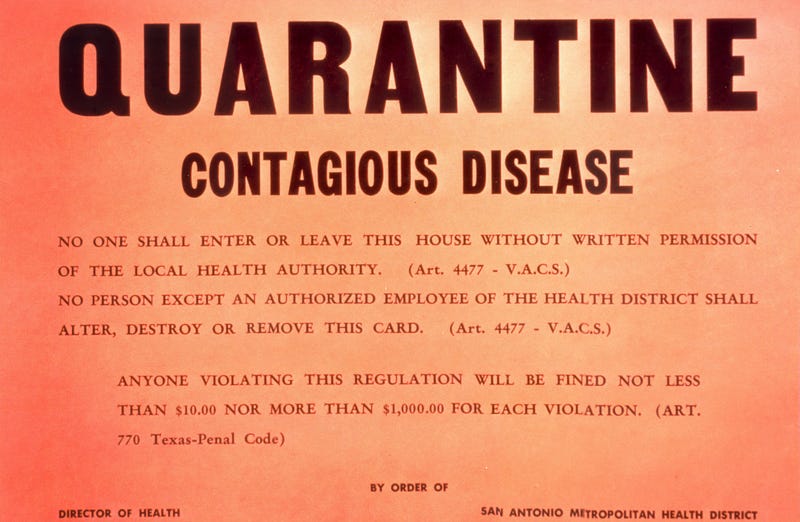
Photo by CDC on Unsplash

When will we see an end to this?

This is the question we all have now. We all know where it began. (although there are some suspicions about the origin as well.) But it is a lot harder to predict when it will end. It is made even harder by the easy transmissibility, symptoms ranging from none at all to deadly, and the extent that COVID-19 has disrupted the world.

The WHO will likely declare the pandemic over once the infection is mostly contained and rates of transmission drop significantly throughout the world. But exactly when that happens depends on what global governments choose to do next, the evolution of the pathogen and the human response to it, both biologically and socially.

But this is not the first pandemic human race is facing. If we take a peek at history, there were few pandemics. From those, we can identify three ways a pandemic could be over.

Let the virus burn through the society
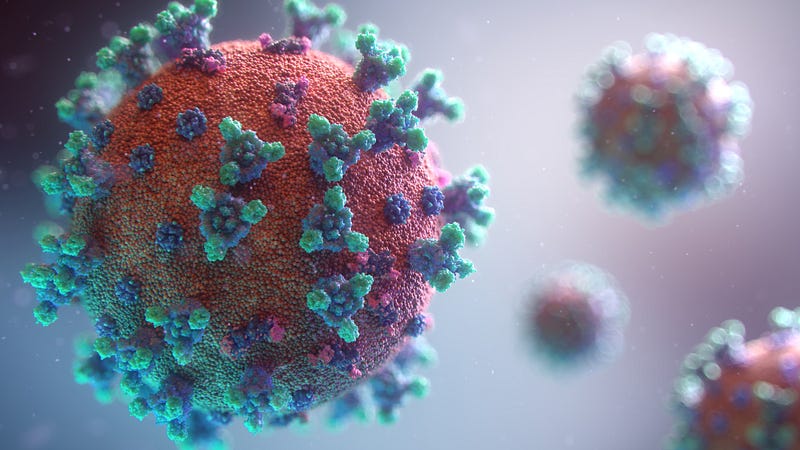
Photo by Fusion Medical Animation on Unsplash

The most famous example of this dynamic in modern history was the H1N1 influenza outbreak of 1918–1919. In this way, people acquire immunity against a virus they have been infected and recovered — gaining some level of antibody protection.

Maybe in this period, a vaccine will be made available to help in producing herd immunity. Since a vaccine is at least 12 to 15 months from being available, the fastest way to herd immunity would be to let the virus burn through the world’s population unimpeded. According to a March 16 report released by researchers at Imperial College London, in the United States, the pandemic would peak in about three months under that scenario.

But the fastest is also the most inhuman way to go on as it will definitely cost millions of lives. People will die not only from the virus but also from the collapse of healthcare systems. In the 1918–1919 H1N1 influenza pandemic, 500 million got infected and between 50 million and 100 million were killed. It ended only as natural infections conferred immunity on those who recovered.

But even then the strain did not completely vanish. It became endemic infectious disease circulating for another 40 years as a seasonal virus.

Containment or Social distancing

Photo by kian zhang on Unsplash

The severe acute respiratory syndrome (SARS) in 2003 was also caused by a coronavirus (SARS-CoV). But in this instance, aggressive measures were taken such as isolating the sick, quarantining their contacts, and implementing social controls which resulted in bad outbreaks limiting to a few locations. And community transmission of SARS-CoV has not occurred since 2004.

But in SARS identifying patients was not as hard in COVID-19. In SARS cases, sickness followed infection very quickly, and obviously: almost all people with the virus had serious symptoms such as fever and trouble breathing. And they transmitted the virus after getting quite sick, not before.

Unfortunately, we are past the point of containing this virus according to many experts. But we already knew that. The next thing we have to do is to starve the virus everywhere through a combination of quarantine, social distancing, and restricting travel. For that, it was critical that each and every country acting together not waiting until their country gets an increasing number of patients. If it was coordinated properly pandemic would have ended in just a few months with low losses of life. Even that didn’t happen in every country.

But even with social distancing, there is a big loophole.

Social distancing delays the achievement of herd immunity as cases decrease. Even if we collectively prevent a surge in the coming months, the virus could re-emerge as soon as restrictions are lifted, undermining our best efforts altogether. So it is not how this pandemic will going to cease.

Vaccination for the rescue

Photo by Dimitri Houtteman on Unsplash

When a novel influenza A (H1N1) virus, known as swine flu, caused a pandemic in 2009, there was panic as it was very similar to the 1918 killer. But it proved less severe than feared as its pathogenicity was not very high. But another important reason was that six months after the virus appeared, scientists developed a vaccine for it.

So it seems like the development of a vaccine is the best hope we have. Even though several vaccines are in development, they are at least a year away from becoming available. Until then we’ll have to go through widespread testing, quarantine, and social distancing methods to slow down the virus spread and give more time to researchers. Even with these measures in place, the virus is slowly spreads causing up to hundreds of thousands of deaths.

Even if WHO officially declares the end of the pandemic before the vaccine is ready, the virus may reappear seasonally. So a vaccine is of paramount importance.

Even after a vaccine is introduced, we will have to take measures for pair distribution of vaccines to prevent only high-income countries taking large advance orders for the vaccine as happened in the 2009 influenza A/H1N1 pandemic. And it will take a few years before we could provide immunity for the larger portion of the society. Depending on how contagious an infection is, usually, 70% to 90% of a population needs immunity to achieve herd immunity.
Photo by Sandie Clarke on Unsplash

Vaccination assisted by as much global coordination as possible is generally considered to be the winner of this kind of situation even though it is a slow option. But it’s the proven option.

Humanity has conquered deadly plagues before such as the smallpox virus which killed 300 million people in the 20th century alone but has since been eradicated. But unfortunately, it is the only example we can show as an eradication. So even if a vaccine is available, we can’t be sure that COVID-19 would go away completely. It will likely to become endemic and may cause outbreaks seasonally. Let’s hope that within the next several years, one or possibly several vaccines will become widely, and hopefully freely available thanks to a worldwide effort.

Health
Science
Covid-19
Coronavirus
Future
Recommended from ReadMedium