
Is the Mind the Tool-User or a Tool?
The meaning of life for the self that the brain imagines

What were the first inventions? The standard answer is that they were stone tools, such as axes, daggers, and arrowheads.
But if we think more broadly about technology, we should see that the earliest tools were rather our “immaterial” selves, the patterns of thought that make up our minds, personalities, and cultures.
A tool is standardly defined as a material implement that’s manipulated by the hand. But technology includes any technical means that’s meant to achieve a practical end. You have technology, then, as in knowledge of how to achieve a goal with a technical means, when you have:
- a user
- the user’s purpose or goal
- an independent technique, tool, vehicle, machine, or other item that’s designed to carry out the user’s will.
That last condition distinguishes a piece of technology from a natural effect, blocking Aristotle’s rampant teleology which confuses technics with causality. The rain isn’t literally a technique for making the ground wet; the wetness, rather, is an undesigned effect of rainfall.
A tool is designed by an implicit or explicit blueprint, by a formal conception of how the tool will achieve the user’s purpose, and a tool must have some independence or separation from the user, for the tool to be constructed by a person rather than by the natural evolution of bodies.
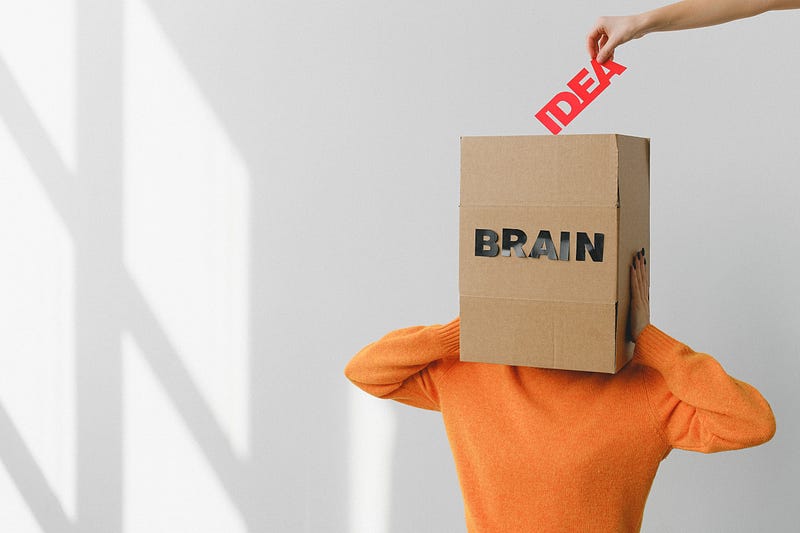
The priority of mental tools
With that in mind, we can observe that at some stage protohumans must have lived as impersonal animals before their brains evolved to enable them to conceive of tools. When primates were on the cusp of personhood, the initial tool-users were the primate bodies, especially their neurological and intestinal control centers.
But what distinguished animals from the first behaviourally modern humans wasn’t the use of stone tools. Rather, it was the development of minds that modelled the environment with godlike freedom and ambition, as opposed to reacting automatically to stimuli. The pivotal point was the emergence of personhood, which provided the grounds for culture, for social, collective artificiality.
The mental models that would eventually become ideologies, worldviews, and cultures were blueprints that spelled out how the user might modify the environment to obtain some benefit. The brain’s mind or personal self was made up of such cognitive and artistic patterns. For instance, the self was largely a story the brain told itself about how that individual fit into his or her environment.
Thus, the personal self is a relatively immaterial, imaginary tool the brain uses to affect the outer world.
The reasons we identify with this mere tool we use, rather than with the true user (such as the material brain) are threefold.
First, our true inner self, the gut-brain axis is hidden behind our skin and muscles. The brain especially is hidden in the skull, so we could hardly be expected to identify with something that’s not apparent to us. If we identify with something material, it’s usually with our face which we can see at least on a reflective surface such as water.
Second, the prospect of identifying with something as fragile and seemingly impersonal as a squishy brain is horrific since doing so would bring our fear of death to the foreground of our experience.
Third, the mental tools we use work best when they become second nature to us, or when they’re so familiar that we’re no longer self-conscious about employing them because we identify with them unconsciously and implicitly. Think of the difference between seeing your car in the garage and driving the car. The car becomes an extension of your body when your control over the vehicle is unconscious, when you need no longer think explicitly about how to drive it because your use of it is automatic.
Similarly, the human brain slips on its mind and uses its models, thoughts, plans, ideologies, and so on precisely by identifying with them, that is, by not being anxious or self-conscious about this odd aspect of itself. The human brain is like a hermit crab in that it’s uncomfortable with its naked self; this brain is a hybrid entity that needs its outerwear, and the primary gear, the Edenic fig leaf isn’t the stone implement but the mind or personality itself.
The emergence of human tool-designers
How, though, could protohumans have designed ideas without relying on prior ideas? Doesn’t the intelligent design of tools presuppose the mind’s existence?
More likely, the first appearance of personal mentality was the result of childlike playfulness and trial and error. As Lewis Mumford explains in Technics and Human Development, the brain likely experimented with its newfound mental freedom from stimuli, by imagining models, characters, and other abstract causes to predict observed behaviours. For instance, early humans would have posited minds to explain the intelligence of other members of their kind. The vast Stone Age might have been prolonged by just such mental experiments and plays that mostly went nowhere.
Early human mentality, then, wouldn’t have been especially egoistic, in virtue of the childlikeness of that toying with inner space. Children are too easily absorbed in each new game to identify exclusively with a character or with some other mental model or role. Indeed, the child’s brain is still growing, so there’s nothing stable there to ground the identification. Likewise, early humans would have been too busy playing with newfound ideas to become overly familiar with some of them.
Eventually, however, overfamiliarity would have resulted in egoism, and thus in the more systematic, instrumental relationship between the self and the environment. Identification with some stable mental or cultural structure would have bred alienation and antagonism between the self and the family or tribe, on the one hand, and the rest of nature, on the other. At that point, the mental experiments would have paid off with more deliberate, ruthless tool use, making for the rise of art, culture, and eventually sedentary societies and civilizations.
What, then, is a human person, roughly speaking? We’re brains that dream egoistically of being immaterial minds, persons, or “spirits.” We’re mammalian bodies that use certain ideas so well that the use becomes second nature, so we identify with this model of the inner self, which is thereby distinguished from everything else, setting up the Faustian antagonism that’s a hallmark of human “progress.”
The gut-brain axis is all we essentially are, but what we do mainly is invent tools, and the first tools weren’t stone implements, but a host of pure abstractions, including the personal and social roles we perform.
These inner tools affect the outer world in two ways: first, they motivate our body to act with cunning and intelligence, and second, they act as bridges or extensions of the mind, especially via the linguistic symbols we developed. With language, the inner self reaches out to modify other selves, to amuse them with stories, convince them with arguments, or scare them off with warnings.
The meaning of life for a mental tool
The upshot is that if the self with which we identify isn’t our true self, as it were, but is the gut-brain’s primary gear (its mind, personal character, or social role), we can construe the big question of our life’s meaning as being about the purpose we should be achieving in that capacity. This purpose is either unconscious or socially directed, so it likely must be inferred from our practice.
For instance, we can adopt the model of social divisions I present elsewhere, according to which a world that’s fundamentally absurd (existentially inhuman and meaningless) will splinter a society of intelligent beings into four main classes, depending on whether or how folks reckon with that absurdity.
The masses won’t recognize foundational discrepancy at all because they lack the luxury of indulging in the required meta-perspective. Their purpose in life, then, is to be happy, meaning that they seek mainly to be content with everything (despite its absurdity), like blindered workhorses or human cattle.
The other three groups, comprising a minority of the total population, have the misfortune of recognizing absurdity when they see it. Some deal with this nature of life by monstrifying themselves, as they attempt to exploit the world’s unfairness by adding to this amorality to profit enormously from it.
If these predators and parasites succeed in their ventures, their evident purpose to rule over the masses as godlike sociopaths. If they fail because they lack the powers of manipulation or the luck, their purpose is to waste themselves as reversions to an imprisoned class of criminal animals, in which case they act as less productive cattle than the happier, majority class.
Finally, there’s the counterculture that revolts against the society that makes peace with life’s absurdity. The existential rebel’s purpose is the tragic, Christ-like one of sacrificing his or her peace of mind for unrealistic ideals. This fourth class identifies all-too strongly with the ideas that are only tools the rebel’s gut-brain axis uses.
Indeed, these rebels are like children who lose themselves in the woods, except that the forest in this case is intellectualism, the preoccupation with ideas. As in the Gnostic Hymn of the Pearl, the child spends so long lost in the forest that she forgets she was the person who chose to wander in that direction. Instead, she sees herself as a fellow tree, as a spirit, god, artist, sacrificial victim, or some other imagined construct.
More positively, we could frame the rebel’s situation this way: the human gut-brain axis is impotent without its tools, so we can lose the pejorative sense of “identifying with a mere tool.” The inner space of ideas is rather the haven that religionists, artists, and philosophers often reify.
The “supernatural” domain of gods or of Platonic essences could only ever have been the inner realm of the “mere” ideas we envision or of the mental models we employ. That realm is the emergent axis around which the proper human world turns. By identifying with a noble mental role or character, the rebel aims to build an alternative to nature’s absurdity, a culture that makes no excuses for cosmic strangeness and that doesn’t tolerate throwbacks to animality.