
STRESS | HEALTH
The Hormone Designed to Save Our Lives Can Make Us Sick
It’s all about time and intensity that make all the difference.
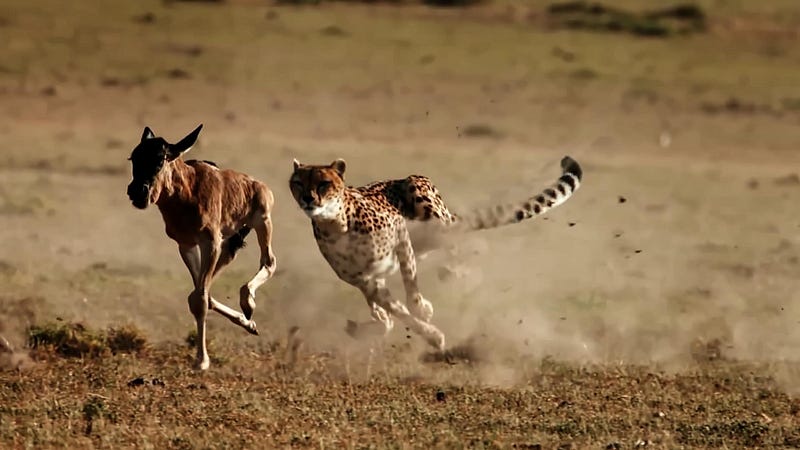
Have you ever experienced any of these situations?:
⚠️ You are about to be hit by a car that ran a stop sign,
⚠️ Getting angry at the brainless human walking in front of you, who left his dog’s ‘morning present’ in your path,
⚠️ Your toddler extending their chubby fingers into the wall socket -
The latter was my brother’s favorite hobby at that age…
Despite his scorched fingertips, he became a telecommunication engineer years later. In any case, my mother was the one who faced the stressful event, not him.
⚠️ You are stuck in traffic, running late for the Board meeting where your annual budget will be approved, or not if you don’t show up on time.
⚠️ Getting lost in the middle of the night in a foreign city where you don’t speak the language, without Google Maps or Google translator.
⚠️ Being chased by the Dothraki in the vast grasslands of Essos — this is the HBO-equivalent of the classical ‘being chased by a Cheetah in the savannah.’
What do all of these scenarios have in common?
They all will likely trigger the stress response in our bodies, and with it, a hormonal release masterfully designed to save our lives.
Not bad, Biology, not bad!
That hormonal signaling is time-sensitive and designed to save our lives.
All the situations above are perceived as “dangerous,” and they will automatically lead to the release of two hormones:
Adrenaline and Cortisol.
From that moment on, they will run wildly throughout the bloodstream.
These hormones will help you to sustain the “heads up!” alertness necessary to solve the situation with quick reactions and sharp-focused senses…
However, the epic soundtrack that would play in the background while facing the danger will shift into a squeaky violin as soon as the “danger” is over and your body stays hooked on a hyperexcited state.
The ‘Fight-or-Flight’ response is meant to work within a very short timeframe
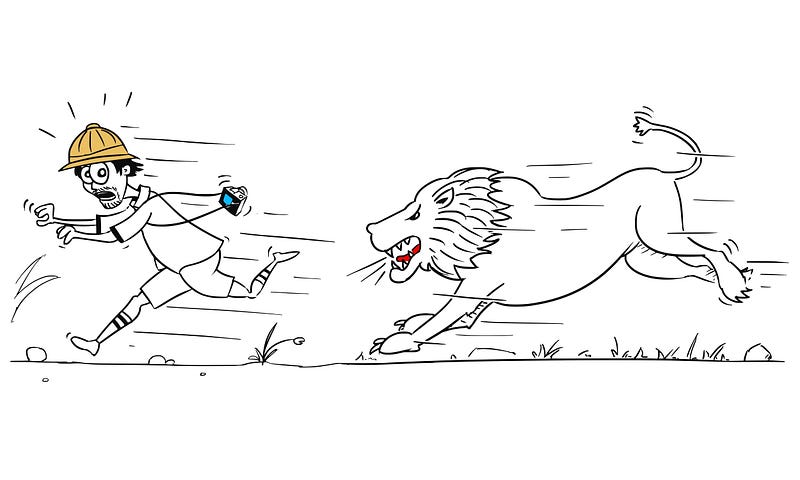
Within this very limited time period, the body summons a whole arsenal of reactions, orchestrated by adrenaline and cortisol, to optimize the very well-known “Fight or Flight” response.
1. We will either be safe or dead in the next few minutes, i.e., the problem gets solved one way or another within a very short time.This is key!
2. And during that period, the body temporarily shuts down most functions that are not strictly necessary to survive.In other words, the body prioritizes functions that provide blood and energy where needed: primarily, to our limbs, heart, and sharpened senses to recognize danger and react instinctively.
Do you see where this goes…?
Stress is the nervous system’s survival mechanism and is designed to be deactivated once the danger passes.
And this is the critical part that we tend to overlook.
When we are about to:
- be hit by a car,
- lose our annual budget,
- become the next meal of a lion in the jungle, or
- be beheaded by the Dothraki,
We don’t feel like eating a hamburger, having sex, dealing with that annoying Candida in our intestines, or taking care of our hair and nails.
You can call this our body’s ingenous way of prioritizing its to-do list!
It makes sense that our body deregulates, or completely suppresses, other functions considered a “nice to have, but not now,” like:
◾ digestion,
◾ sex drive,
◾ immune system,
◾ hair and nails quality,
◾ pain
All of them can perfectly wait until the life-threatening situation has been resolved and we can breathe deeply again.
“After all, it will be a matter of minutes…” -thinks the body, naively.
When does that perfectly designed biological response become a problem?
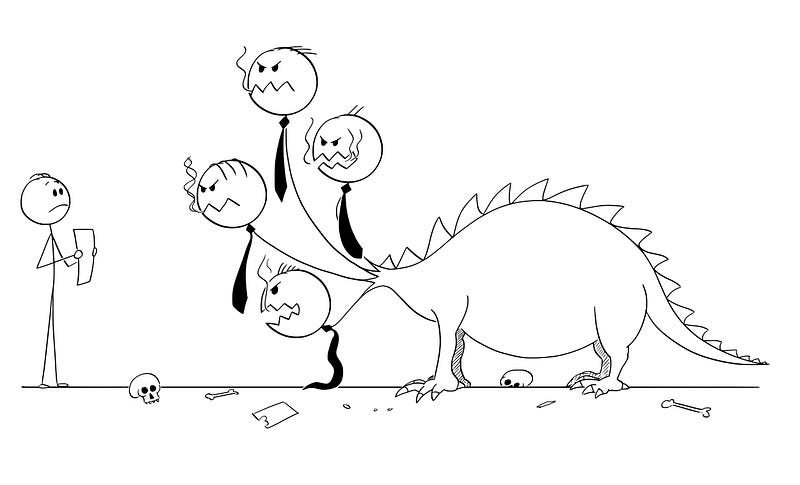
When we overextend that stress level.
How?
By replacing “the lion’s face” in our mind, every 20–30 minutes.
It can adapt almost infinite forms:
Partner, mother-in-law, boss, taxes, traffic jam, job deadlines, roommate, limiting beliefs, health challenges, default worrying mindset, ‘not-good-enough,’ ‘I-should-not-eat-that,’ ‘look what she said to me!’, ‘why is he/she not answering?’, ‘I will lose my job if I don’t get this done’…
Then, our health becomes the ‘victim’
When these stress signals become permanent, other critical functions become heavily compromised, functions that were supposed to be restored in a matter of minutes or hours.
This is the reason why it is so common nowadays to find people with:
- A wide range of digestive issues
- Heads up, thyroid!
- Horrid, seemingly cursed, menstrual cycles
- Hair loss and brittle nails
- Recurrent infections or proneness to develop diseases, as a result of a weakened immune system
- Getting sick right at the beginning of your holidays…
- Lack of sex drive… as much as you want to do your best-
- Sleep disturbances -with this one, you start your unique down-the-rabbit-hole journey
- Migraines and headaches
- High blood pressure
- Hormonal imbalances that may lead to nasty autoimmune conditions, among other severe consequences…
Conclusion: ‘The dose -and the timing- make the poison’
Dosis sola facit venenum: Only the dose makes the poison — Paracelsus
This well-known adage-and pillar of Toxicology- perfectly applies to our stress response.
One thing to add in this particular case:
Both the DOSE and the TIMING make all the difference between a necessary, life-saving response and a lifestyle that threatens health and well-being.
Key messages
❁ We cannot forget that stress, or its healthy version called ‘eustress,’ helps us survive life-threatening situations and get things done.
❁ The ‘Fight-or-Flight’ response was initially designed to be highly effective within very short timeframes.
❁ During that period, the body prioritizes all the functions that help us survive to tell the story, leaving the rest for a “better moment to come.”
❁ When this “war zone” environment in our bodies becomes permanent, a whole range of health issues may arise. Many of them can even become ‘chronic’ if we don’t address them soon enough.
❁ As with many things in our lives, stress management is a matter of balancing two variables: “dose and timing.”
❁ Remember: despite the fact that society promotes the opposite, stress is not a badge of honor.
I truly appreciate your time and support. Why not join Medium? You’ll get unlimited access to all my articles and thousands of other writers. If you sign up with this link 👇, I will get a tiny commission 😊


