
How the Grading System Has Failed Students
On how the grading system has destroyed the whole point behind education — learning
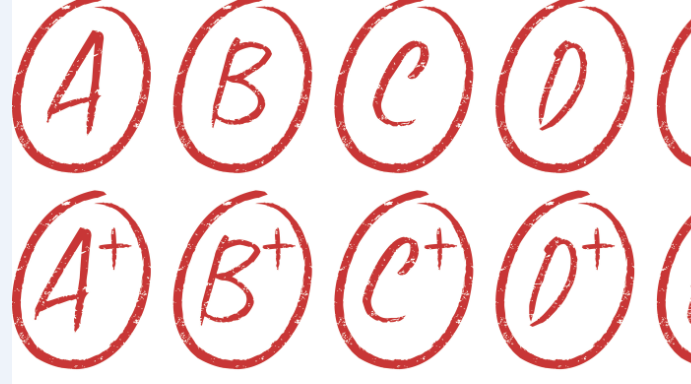
All throughout my K-12 education, the main motivator for me was grades. There was virtually nothing that could or would stop me from getting the highest marks possible. Now, you may be wondering why all this even mattered to me at all.
Well, I’m sure many of us as kids were told how grades could make or break your chances of getting into a decent high school, then a top-ranking university, and, consequently, landing a good job. This mentality has been perpetuated throughout all of K-12 education, and, I, like most, have definitely fallen into that mentality as well. I mean, it’s hard not to.
But what does this do to students? I’ve been doing some research on this and it turns out, unsurprisingly, more harm than good.
Isn’t it interesting how so many students ask educators what they need to do to get an A? Now, what if this question became: what can I do to get the most out of this class and actually come out a better, more educated person?
Isn’t that the goal of education? To foster self-growth and expand our consciousness?

But, no. The external motivation of grades renders these questions obsolete. And, by the way, this isn’t the students’ fault.
It’s the education system. And the ways in which it has focused so heavily on assessment that it completely lost the essence of what learning is about. Sure, we need benchmarks to assess progress in whatever topic we’re learning about. But, at what point is this taken too far?
Going off of my own experience, it’s when you no longer seem passionate about what you’re learning. That was basically me all throughout high school. Sure, I got straight A’s, amazing test scores, and graduated valedictorian. But did I actually enjoy myself in the process? No way. It was a chore at that point. I was doing it just to ‘get into a good college’ and because that’s what I needed to do in order to ‘be competitive’ in the college admissions process. Sad, I know.
While I did find certain things of interest, most of it was repetitive work that I had no interest in ever pursuing again.
And, you know what? Teachers always thought that I was interested in the subject matter because I would pass with flying colors. But, really, I couldn’t be more excited when I finally finished my physics class, got through British lit and the dreaded poetry unit, or completed my AP chem exam. God, I really hope none of my high school teachers are reading this…
So you may be asking yourself by now, if grades are so bad, how else do we motivate students and measure their progress?
Well, I recommend a few suggestions, as per my research:
- Make learning personal. Get to know students individually. What are their passions, hobbies, and interests? What are the things that light them up? By understanding what makes students unique and interested in learning, we can start to envision a curriculum that nurtures this spirit of curiosity and creativity.
- Provide qualitative feedback. It’s very easy for educators to evaluate students on a point-based system. But this greatly undermines the skills of the student. Their knowledge and value becomes diminished to a calculable statistic. This is not only a reductionist approach, but it also makes it less likely for the student to know and learn from their mistakes. Taking the time to provide written feedback can make students aware of their strengths and weaknesses, painting a more comprehensive image of the students’ talent and progress.
- Incorporate project-based learning. As a design and humanities student at a tech school, I’ve been lucky. Most of my grades comes from projects and open-ended assignments, in which I’m free to incorporate the full spectrum of my knowledge concerning the course material, while giving my own argument. I learn just as much (if not more) investigating class concepts, while being encouraged to pursue topics of my own interest in greater depth. I’m not limited to multiple-choice tests that many of my STEM peers are. And, honestly, I’d rather not step into their shoes…
- Consider pass/fail grading. I know. Pass/fail worries many educators because it makes them wary that students will do the least they need to in order to pass. But, what if I told you that pass/fail grading reduces stress and encourages students to take on learning challenges without the fear of getting a poor letter grade? Yes, they’re more likely to run into failures along the way, but that’s part of the learning process after all!
- Steer clear of memorization masked as ‘learning.’ I actually have quite the story about this. I completed 5th grade in Poland, where rote memory was literally required to pass any course. We’d be given exams and quizzes several times a week, where we were expected to recall (and I mean in written format, not multiple-choice) what the teacher dictated to us in class. It was super stressful! I remember spending hours after class just memorizing concepts and definitions that I didn’t even have the slightest clue about only because I may have a written or oral quiz the next day. What’s more? I was expected to memorize material from at least three classes before and have that information at the front of my mind whenever I got called on (or else I’d get a failing grade). Now, ask me anything about the material I’ve learned during that year and I know literally nothing. While I can say my memorization skills have definitely become sharpened from this experience, I cannot say that it was of any benefit to my growth.
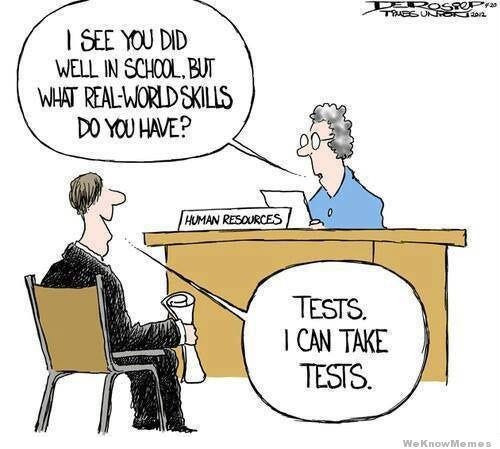
In an ideal world, the value and impact of grading would be largely diminished. Students would be encouraged to do things outside of their comfort zones, take risks, tackle challenging concepts, and (*gasp*) be encouraged to fail and fail often. Yet, in our current education system the opposite is true. Students turn out pulling all nighters cramming in information that they have near zero interest in, with little clue or awareness as to how this information is making them a better person.
But, hey, at least they get an ‘A’, right?
References
For more of my content on education, check out: