
NUTRITION AND HEALTH
How the Food Industry Keeps Us Hooked On Certain Foods
Meet the soulmates “Dopamine Rush” and “Bliss Point”
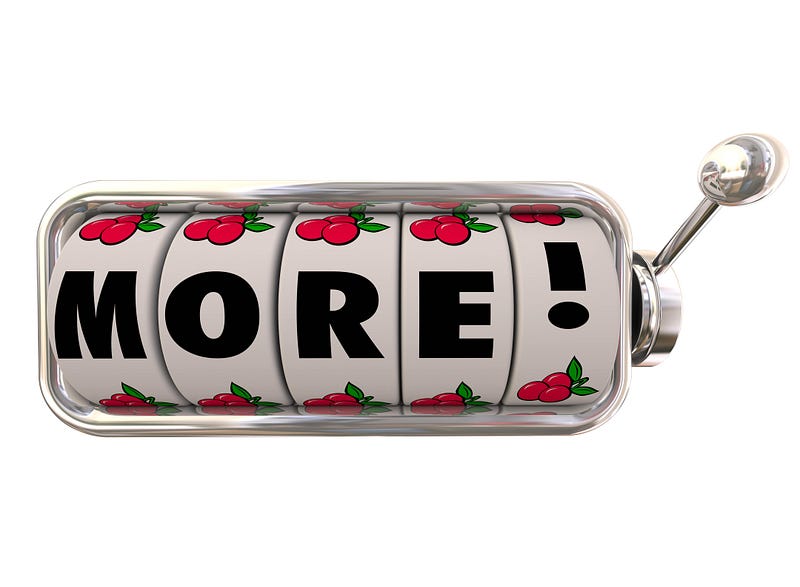
Do you remember the old slogan used by a very well-known potato chips brand: “Once you pop, you can’t stop”?
That is the most accurate definition of the ‘Bliss point” and the effect it has on our body and on our behavior that I’ve ever heard.
They nailed it!
When we experience moderate to high-stress levels throughout the day, our brain starts to look for mechanisms to counterbalance the otherwise devastating consequences of long-term cortisol in our bodies.
One of the most ancient coping mechanisms is the release of another hormone- technically a neurotransmitter, called Dopamine, aka the “Reward chemical.”
This reward chemical seems to have found its place in our rushing culture through what is known as the “Dopamine rush,” or how I prefer to call it, the “Slot machine effect” or the “Gong effect.”
Imagine a hyper-excited brain shouting:
“Yes, yes, yes, yes!!!!! Whatever you did, do it again!!!!!”
These would be our brain-signals transcript in response to the dopamine release.
And for decades, the Food Industry has mastered this neurological mechanism designing foods that make us reach the so-called “Bliss Point.”
I was once part of those teams.
What is the “Bliss Point” and how does it “hook” our brain?

I am sure you’ve heard of the term palatability: a more scientific term closely linked to the ‘Bliss Point’ that refers to “the hedonic reward provided by foods or fluids that are pleasant to the palate.”
The Bliss Point is the perfect -and almost magical- mixture of sugar, salt, fat, and level of crunchiness in your mouth that will strike the ‘gong’ on your brain’s dopamine receptors, i.e., it will make you experience a moment of relief and pleasure.
A sort of temporary Shangri-La for our overstressed brains.
In other words, the first and most immediate effect of these foods in our brain is a sound: ‘Eat again whatever you just put in your mouth!’
Or the equivalent in the Slot-machines world: “Insert [coin/that food] again!”
Just an example: In 2020, during the first four months of COVID lockdown in the EU, the two most sold ‘edible items’ -i.e., discard toilet paper- were potato chips and alcohol.
CAVEATS: Alcohol is an entirely different and far more complex topic, but somehow, it also triggers the same ‘reward effect’ in the brain.
Which foods are “designed” to reach the “Bliss point”?
Virtually all processed foods.
Here you have a few examples:
🍫 Chocolate with salty chunks; chocolate with nuts…
🍟Chips -yes, despite the salty flavor, most of them also contain sugar, in addition to the potatoes’ carbohydrate content-
🍪Think of any sweets, candies, sweet snack bars: they will likely contain salt, as it is one of the main preservatives in the food industry
🥜Nuts mixed with salt and honey — Who was the genius?!
🥨 Think of any salty snack: it will likely contain sugar
🍿 Popcorn — Hello, binge-watch Netflix series! -
🥣 Ready-to-eat soups, BBQ sauces, most mustard and mayo sauces, most ready-to-use salad seasonings, sweet-sour sauces…
🥫 [Check the ingredient label of almost any processed food and insert the name here…]
I bet you are thinking: “💥 🤬 ⚡💣!!?!!?!! All the delicious foods!”
Exactly: Ultimately they were all designed to rank high in P-A-L-A-T-A-B-I-L-I-T-Y.
– Kudos to you, food engineers! -
Where is the fat in all of the above?
Basically, in every single food item, one way or another.
Spoiler alert: they will unlikely be the healthiest ones.
Why the ‘crunchiness’?
The crispy noise in the mouth feels like a ‘relief’ to the clenched jaws that we tend to grip when we are under stress.
And yes, almost all of them offer this crunchy sensation, even sauces -think of the chips you eat together with the dipping sauce or the croutons within those ready-to-eat soups.
Why is it useful to know about the “Bliss point”?
We cannot disentangle what remains unknown or in the blind spot.
The first step to creating a more supportive and healthier environment around us — home, office- is to know how our brain seeks pleasure under chronic stress -and which foods and flavors provide immediate relief.
This awareness will nudge us to make wiser decisions towards our plate and, ultimately, our health.
A more sensual approach to the Bliss Point
Janet Meisel recently shared in this article one of the most beautiful, sensual, and nourishing descriptions of the “Bliss Point” I’ve read: pleasure, textures, flavors, relationships, and desserts all-in-one.
Did you ever think of comparing your loved one with a dessert?
Well, she did it.
You cannot miss this five-senses enhancing article!
If you would like to read more articles like this about nutrition, emotions, hormones, and making peace with your food, you can connect with me here 👇:
● Subscribe to my MEDIUM Email List
● Connect with me on LinkedIn
● Follow me on Twitter
I’d love to connect with you!


