
How the Fear of Missing Out Drives Us to Make Poor Decisions
A lesson learned from my seven-year-old brother on a hiking trip that’s more relevant today than ever.
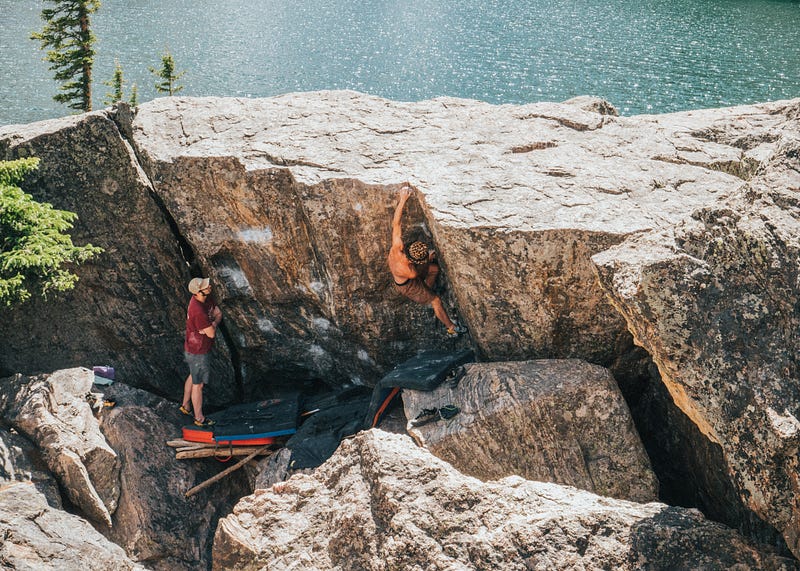
Once upon a time, atop some rolling hills and valleys, my grandad, my little brother, and I — a 10-year-old — were hiking. Technically, the things we hiked were mountains, but we didn’t start right at the bottom and they weren’t too tall, so we called them hills.
Nevertheless, they had the positive aroma of wilderness — a fresh pine smell, as well as some smells of rotting wood and other decaying organic matter such as the pine needles we were crunching underfoot. We took in pungent breath after pungent breath.
At one point, we noticed that my little brother, who was only 7 years old at the time, was lagging behind us. The mountain wasn’t very steep. My grandad was old, and he was still climbing it easily ahead of us. My grandad loved to hike.
We eventually reached a point from where we could actually see the top of the mountain. We bumped into some people who passed us on their way down, which prompted me and my grandfather to turn around yet again. There was my little brother, keeping up with us, but red in the face and slightly further behind than he was the last time.
So we took a little break for him, and asked him to hand us his bag for some sandwiches — we were each carrying bags. His was the lightest. Or… it was supposed to be the lightest. He basically reached behind a tree where he had left it before we sat down and dragged a trail on the ground with it while bringing it to us. It was filled with rocks.
What the heck? We looked at him incredulously, thinking someone must have played a prank on him back at the bottom of our hiking trail. Turns out, he had just seen many pretty rocks on his way up the mountainside, and for fear that someone else would take them or that he would never see them again, he collected them — on his way up!
We had a good, hearty laugh and while red in the face, he told us that we all wasted money on objects in life for fear of missing out but that his rocks were free! Basically, he was trying to call us hypocrites although he didn’t know the word.
Also, we laughed at him like he was stupid, and nobody, no matter what age, likes that. He began making his point after we had stopped laughing at him. The way he said things involved a lot more finger-pointing and pouting and a lot less elegance and eloquence, but you’ll just have to do with my description of it — I can’t accurately replicate the stutter of a temperamental 7-year-old boy through text.
He began his story about how the two of us — my grandad and I — collected useless things that were a lot more expensive than his rocks. My grandad had a huge workshop — the size of a house. Inside it, were tools for a wide variety of mechanical activities that my grandad didn’t know how to do — since he wasn’t a mechanic.
My little brother must have gotten the idea for this dig from my grandmother, who was constantly giving out to grandpa about the tools he was buying. Basically, my little brother claimed that my grandad spent inordinate amounts of money on special drillbits and 20 different types of saws and welding tools which he never used.
My grandad loved collecting tools in case he ever needed them — especially if they were on discount. He would walk into any shop and see a tool that was ever so slightly different from the ones he had at home, and he would always buy it. It was crazy!
As for me, my little brother pointed out that even though I didn’t particularly care for football, I constantly asked my granny for money to buy football player trading cards so I wouldn’t miss out on all the fun with the other boys from school. We’re all afraid of missing out on things and we made bad decisions, was his point.
You can imagine that such a lecture from a small child was even more cringy in real life than reading about it is.
Do you know what I learned from this? Nothing. He was a boy in 1st grade and his wisdom counted for nothing with me and my grandfather. My grandad continued to get excited when tools were on discount in any shop and his atelier continued to be filled with tools that he didn’t use. At one point he even bought ski repair tools despite us not owning any skis.
I continued to buy football cards. Neither of us stopped to think about whether it was the right time to buy something or whether we were just acting on our initial impulses — buying stuff that it would have been wise to wait until later and have a look at after some rational thought.
The Fear of Missing Out
I only got to thinking about my little brother’s lesson when I was in college, about 8 years later. I was in a Marketing class in Business College when our professor pulled up a slide on what motivates customers to buy —the fear of missing out. This is the fear that a product will not be there again when you return — which makes you want it now!
It reminded me of my little brother and his rocks which he was carrying up the side of a mountain in his backpack and I laughed at the memory. I then realized how by that time, I had an almost compulsive online spending habit on Amazon and Firebox — buying stuff I didn’t need. For instance, I once bought a gag gift of canned unicorn meat. It was literally a tin of sand that said unicorn meat on it. But when I found it I thought I would never see anything like this again so I bought it.
Not to go too deep down the rabbit hole, but isn’t the fear of missing out (also known as FOMO) the entire driving force behind consumerism? I mean, a lot of people I know are living paycheck to paycheck even though they earn more than double the amount of money they need to survive and have all of their needs met each month.
If it feels like your life could be described as you constantly running but remaining in the same place, and at some point, you just became disillusioned with it all, it may be because like my little brother, you are carrying around a lot of rocks in your backpack. The constant race to have more now takes away from your ability to stop and think about what you really want in life.
My little brother’s point — though I suspect even he has forgotten about his not-so-inspiring speech by now — was that none of us, like him, stop to think about things that make us excited in the moment and whether we should really invest in having them.
Some things are better left until later. Some are best left for never.
Empty Your Metaphorical Backpack
Back to the story, once we had finished climbing up the mountain after emptying his bag and later found the same rocks where he had left them, he decided that most of the rocks weren’t as cool as he thought when he first saw them. Can we apply that same wisdom to our own lives? Yes, I think so.
Look, based on developed-country averages, you’ve got maybe 75+ years of life to live in total — perhaps less. Is what you’re spending your money on now what you ultimately want to end up with in life? Or are you just picking up stuff as you go along, not really thinking about it?
I’m not a philosopher or a guru, so I don’t know what’s best for your life. I’m just asking you to ask yourself whether everything you’re bringing with you while climbing the mountain of life is stuff you need right now. If the objects you own now — aside from the strict essentials — were all that great, you should be really happy. But are you?
Stop; take a lunch break. Sit down and look through your metaphorical life back-pack. What are you carrying with you?
Mind Cafe’s Reset Your Mind: A Free 10-Day Email Course
We’re offering a free course to all of our new subscribers as a thank you for your continued support. When you sign up using this link, we’ll send you tips on how to boost mental clarity and focus every two days.


