
Personal Finance/Wealth Management
How The Central Bank's Digital Currency (CBDC) Could Track Your Spending Habit
The Central Bank is able to control the amount of money in circulation now, but its digital currency is able to do much more.
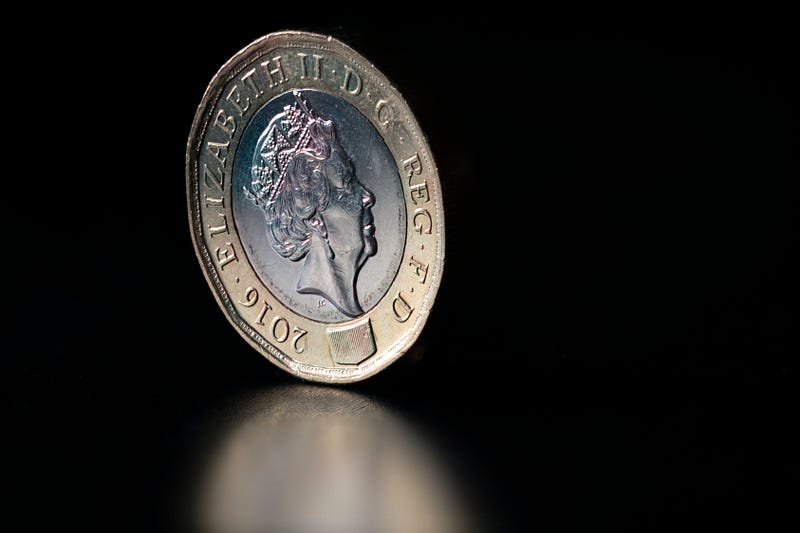
The Bank of England has opened a consultation to introduce digital currency into the system. It will be called BRITCOIN, (not Bitcoin but the digital pound). I wrote about it a while ago, that this is not just the UK's Central Bank but over 100 countries around the world, with China leading the way.
The problem with CBDC is the reason for spending your money on a particular issue that does not seem ‘right’ with the authorities. That particular expenditure could be denied. Addicts can no longer buy too much of their tobacco, or alcohol. Let us not talk about hard drugs because they are legal in the first place.
CBDC Is Financial Surveillance
This is financial surveillance in the real sense of the word. However, it is only when you are doing something wrong that you need to fear the strict hand of the law. But there is a risk that you could be penalized for spending your money on what the authority deems not right for you.🙄 So whose money is it then, and who decides what it is being spent on? This is what needs pondering.
There is one good thing about the introduction of digital currency: it will clean up the systems, especially those in the illegal drug trade and crime. I pointed out how £54 million in cash was found in the home of a crime warlord. This can never happen if the CBDC is introduced. There is an obvious risk to privacy, and exposing their crime is not what the criminals want.
“These “govcoins” [CBDCs] are a new incarnation of money. They promise to make finance work better but also to shift power from individuals to the state, alter geopolitics and change how capital is allocated…
Once ascendant, [they] could become panopticons for the state to control citizens: think of instant e-fines for bad behaviour.” The Economist
3 Things You Can Do To Protect Your Physical Cash From Government Surveillance
First, you need to understand how CBDC works to be able to take action. It is trackable right from when it goes out of your bank up to the last place of the transaction.
Then think of how safe other investible assets like gold, commodities, bonds, stocks, and shares are. Are these safe from the prying eyes of the government?
Second, get your money out of the financial grid (i.e., the traditional banking system). I mean your savings deposit, your emergency fund, stocks, bonds, real estate, etc. This is because authorities are all too ready to use money as a weapon. We have examples of Freedom Convoys in Canada, where protesters, mostly truck drivers, wanted the authority in Canada to end mandatory vaccine passports during the COVID-19 pandemic.
The protesters had their bank accounts frozen and their vehicle insurance made invalid. This is an example of the government wielding power over your financial grid. And we see similar decisions on the so-called anti-waxers in the USA.
‘The end of cash and the insta-analysis of financial transactions enable surveillance, state control, and, eventually, social engineering on a scale never thought possible.’ Alex Gladstein, the chief strategist at the Human Rights Foundation.
Third, rather, look towards non-financial assets like bullion, and the like. Gold is about the most stable form of investment out there. The government is unable to print, manipulate, control, or distort the value of gold. Its value depends entirely on demand and supply. All over the world, the value of gold has always been above the value of government currency, so it is a good form of investment to hold in the long run.
The Difference Between Digital Pound And Cryptocurrency
The digital pound is a stable coin and will have the same value as the British Pound, whereas crypto can be very volatile, and is not likely to hold a steady value over time.
Digital Currency is the same as holding cash in hand, so it will not earn interest.
A few countries around the world have introduced e-currencies such as Nigeria's e-Naira, Ghana's e-Cedi, Indonesia's rupiah, and Sweden's e-krona.
Another related post by the same author:
The Takeaways
- The authorities could have total control over how and where you spend your money.
- ‘’Another form of government control... The CBDC will remove financial independence and autonomy from our lives.’’ Australian Spectator
- It is expected that any digital pound would exist alongside, rather than replace, cash and bank deposits.
DISCLAIMER
Although great research has gone into this post to give true and genuine substance, it does not represent professional or financial advice in any way. It is therefore given for readers’ information and entertainment only.
Please seek professional help regarding any financial conditions or concerns. Thank you.😑
💔If you are inspired and looking to start writing on Medium, why not jumpstart your writing journey by using this link? If you love what you read, you can personally support me here. Thank you.💔


