
How The Brutal Communal Violence Changed My Life 24 Years Back
I saw with the naked eye they set my neighbor on fire
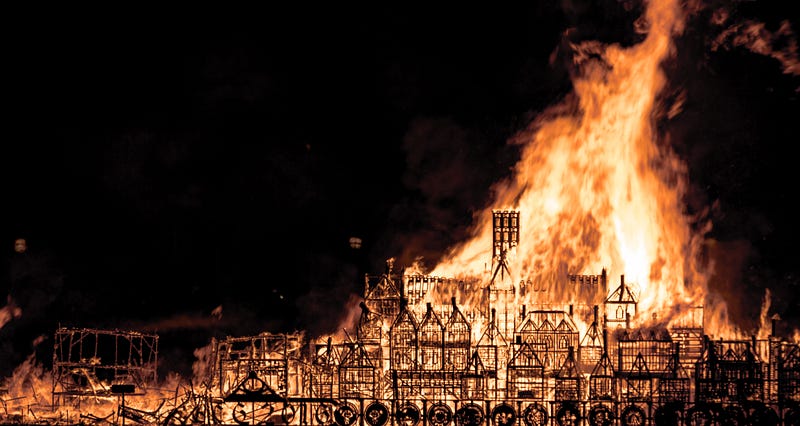
I was born and raised in multiple cities in Indonesia, the world’s largest Muslim population. Several riots broke out in different parts of Indonesia, majorly Jakarta, since the early 1990s. Yet, we never felt unsafe in Situbondo until the communal violence broke out between Muslim-Christians in the city on October 10, 1996. I was seven years old then.
Situbondo is a small town regency of East Java province, Indonesia, with a population of nearly six lakhs. An orthodox Muslim town with 95% of the population officially adhering to Islam. There are 5% of ethnic Chinese who are Catholic and Christians. There are only two families who are Indian Hindus: our family and another.
The other family doesn’t stay there. Uncle Laxman owns a shop, and his family was in Surabaya. So he mostly stays alone and travels to Surabaya, which is around a 4–5 hrs drive from Sitobondo.
Part I
It was Thursday, October 10th, 1996. I was in grade 3 studying at Catholic (Convent) School. I love the school space with a big basketball court, an extensive library, and a tall Church. I struggled to write with a pen because it was just a few weeks since the teacher taught us how to write with it. I used to scribble with Dad’s pen, though.
Everything was perfect. A gloomy day. Indomie in my Tiffin box and Kari Ayam (chicken curry dish) for Lunch at home. Dad promised me Koloke from my favorite restaurant near home for dinner. And scouts the next day!
It was roughly 10 a.m. when the teacher asked us to assemble at the opposite school under the big tree. It was the premise where they have a big basketball ground. I was happy because of no Maths class.
All teachers seem worried. They were calling parents from the teacher's and the principal rooms. I thought we all were punished and I wasn’t care because I knew Dad would bail me out.
Lesser than any of us could guess, we witness a massive fire from behind the Church. It was chaos all around the next second. I saw my dad; I ran to hug him. My dad was terrified. Soon all my friend’s parents were there to pick them up. I could clearly identify; they all were worried.
I was telling dad about the fire, forcing him to see. But instead, he grabs me, makes me wear a helmet, and asks me to hold tight while riding his motorcycle.
I witnessed him riding a bike over speed for the first time. He didn’t say a word, but I could feel his heartbeat racing.
Dad took another route home. He wasn’t answering me, and I thought he might be in a bad mood. But then, I saw people were shutting their shops, and big military trucks were all around.
I saw more fires from a distance; I was terrified.
Soon we were home, and all were broke into tears. Scared. From our salesmen to customers to the neighbors. We shut the door and prayed for safety.
The Beginning
In September 1996, a young gardener named Saleh was brought on trial on charges of having insulted Islam Religion. According to his accuser, a local Islamic teacher (they called them Kiai), Saleh claimed to be Allah's messenger and denied that Muhammad had been Allah’s Prophet. He also accused him of saying that the Quran was a work of humanity and that it was unnecessary for man to preach it daily.
Saleh claimed to have received his spiritual teachings from a highly respected local Islamic leader K.H.R As’ad Syamsul Arifin, who passed away. However, Saleh said that his passing away was not perfect as he died in a hospital, not at home.
At the trial, Saleh denied all accusations that he had disgraced Islam but maintained his opinion that his leader K.H.R As’ad Syamsul Arifin’s death had not been perfect.
Saleh’s opinion angered many people, and at the fourth session on October 3rd, a large crowd gathered outside the courthouse, calling for Saleh’s death.
For the fifth session on October 10th, an estimated 3000 people were gathered. Again, many were from outside of the city.
They sourced hundreds of soldiers from the Military District Command to maintain order for the trial.
At the final trial, the prosecutor demanded five years of imprisonment for Saleh, the maximum penalty for insulting Islam religion according to law.
The crowd, however, was not satisfied and demanded the death penalty for Saleh.
An agitated mob pelted stones at the courthouse, and within a blink of an eye, someone set fire to the courthouse. The security forces saved the judge's life, and Saleh fled out the back over a river.
The rumor spread that Saleh was hiding in the nearby Bukit Sion Church. So the angry mob moved to the church and set it on fire by throwing gasoline they got from the opposite petrol pump.
The masses moved on to attack the other churches in town from the Bukit Sion Church. In less than 4 hours, 24 Churches out of 26 Churches and one Buddhist temple were torched or destroyed by the rioters.
Six Catholic schools, five rectories of Protestant pastors, including the one in which a family of five were burnt alive inside the church, and one Protestant-run orphanage was also destroyed.
A few shops owned by the Chinese were attacked brutally. Later the rioting spread to neighboring towns.
The following years were growing dark. Between 1997 and 2002, at least 10,000 people were killed in ethnic violence throughout the archipelago. In 1996–97 and 2001, two waves of violent clashes between Dayaks and Madurese in West and Central Kalimantan led to the deaths of at least 1,000 people and the displacement of hundreds of thousands of Madurese.
On September 14, 1997, The Indonesian Government declared that Indonesia was under a state of national disaster.
The communal violence has never stopped since then.
Part II
Mom and dad were talking, crying, and hugging each other. I was clueless about what had happened suddenly. Why is there a fire everywhere? Mesir, our trusted salesman for 17 years, held me and said it was a riot and would end soon. He assured me nothing would happen. Then, he left and assured Dad; that he would be around.
Dad has a textile (raw materials) and a curtain shop. A big 6000 square feet. The shop had a big steel grill in the shape of a triangle and had a long little blind visible from the inside but not from the outside.
I peeped to see where the noises were coming from, and I saw three men burning my neighbor alive with his shop and the van. I held Devi Mata’s (Indian Goddess) keychain and couldn’t even say a word. I was numb for several days after that incident.
The only communication we had back then was a landline phone, and they cut the line. They temporarily shut electricity; it was restored by night.
It was around 6 in the evening, and we heard Magrib Namaz. Noises were fading. I was reciting Allahu Akbar with a trembling voice. I was praying like never before, asking God for all the forgiveness for the mischief I did, and made a promise I won’t do it again. It was a long, tough night.
The following day we woke up with a bang on the shop door. It was 3:30 in the morning. There were people outside my shop asking for white cloth. They need it to cover the dead body.
Dad opened up the door after hearing a similar voice. We sold nearly 2000 meters of white cloth in 10 mins. They were sobbing and sharing what had happened with them. They trust my Dad for everything.
The Kiai even stuck a Green Sticker — the star and crescent is an iconographic symbols outside our shop and told us nothing would happen.
Later at 7 a.m., we went to the terrace with immense courage. The only visible thing was the fire. It was huge.
The smoke from the fires must have flown across almost 100 km. The fire causes red skies and black ash.
It took almost ten days for the government to declare the city was safe. We survived having rice + ketchup for all meals because that’s what we left with.
The phone lines get re-stored in 48 hrs, and we could connect with the families.
Aftermath
They torched my school too. The first fire I witnessed was from the courthouse, situated precisely behind my school.
Later my school was shifted to another premise for seven months.
My parents got me a transfer to a Christian school in grade 4 because I was still terrified.
After two years, in 2000, they decided to take me to India for studies when I was 11. I travel to India with mom. We lived in a small town called Adipur in Kutch, Gujarat. That’s where my mom's family lives.
Till the age of 16, I still recollect having flashes of the riots sometimes, generally, after watching violent movies.
It got faded away over time but trigger when I heard such things.
“THERE’S A LONG MEMORY OF INJUSTICE”
Thanks for reading! Check out more of my articles by clicking on my page.
If you enjoy reading stories on Medium and want to support me and others as a writer, consider signing up to become a Medium member. The membership cost is $5 per month, and it will give you unlimited access to stories on Medium.
Furthermore, you can support me as a writer by buying me a coffee — https://www.buymeacoffee.com/lakhwanishweta
Stay safe, and have a great day!


