
How the Body Manages Energy
And what can go wrong
With the increase in rates of obesity in the US, the Body Positivity movement has started to gain more and more traction. Basically, body positivity is a social movement that has a core tenet that all human beings, regardless of size/shape, should be encouraged to have a positive body image. The body positivity Wiki page adds “The movement advocates the acceptance of all bodies no matter the form, size, or appearance.”
I agree with this point-of-view 100%, but I also think it is important to discuss some little-known forces at play on the body one is being asked to accept — and how those forces impact one’s form, size and appearance.
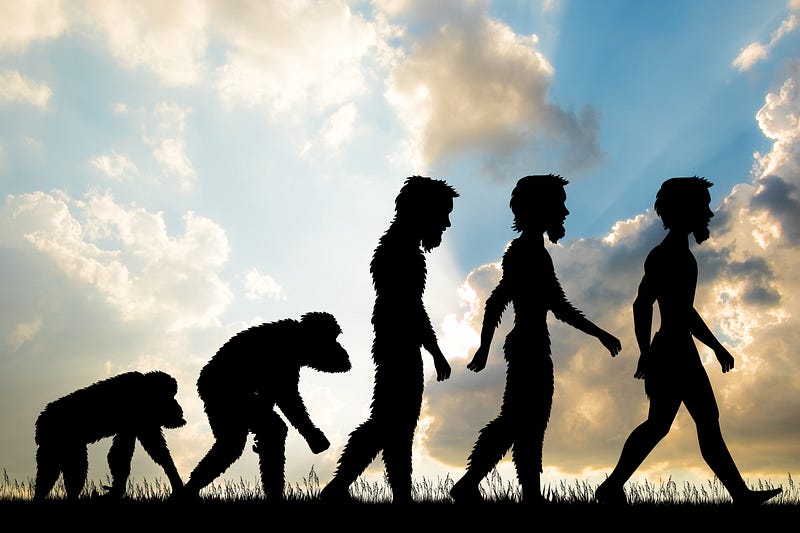
What now stands as the human body has evolved over millions of year, and that’s just counting from our nearest ancient ancestor. By contrast, the food environment, at least in the western world, has been revolutionized over the past 200 years. Our supermarkets are filled with processed foods, low-fat foods and foods with a lot of added sugar that simply didn’t exist even 50 years ago. Evolution is a slow process that hasn’t had time to catch up to this drastically different food environment.
What Goes In
Many of us have only the most basic understanding of nutrition from, perhaps, a high school health class — some don’t even have that. It’s not really a topic that is a high priority in school, and what is taught is typically based on ideas that are unsupported by science. So, here are the basics:
There are three macronutrients: Fat, Protein and Carbohydrate. There are certain fatty acids we need to get from the food we eat — we get these from eating fat. There are certain amino acids we need to get from the food we eat — we get these from eating protein. Everything we need to live on we can get from fat and protein. We do not need to eat any carbohydrate — this is both an interesting fact and a critically important aspect of what drives the form, size and appearance of many of us.
Weight/Energy Management
The human body has a system that, from our point of view, manages our weight. From the point of view of the body, however, it’s really a system that manages its energy. The body doesn’t really care about weight — it cares about energy.
The human body has two (2) approaches to energy storage — one is short-term storage and one is long-term storage. Short-term energy storage includes the energy we are using to live right now (as you read these words) and the energy stored for use over the period of about 2 or 3 hours after you eat. Long-term energy storage is for use from when short-term energy is used up until we eat again.

Short-term energy is in the form of glucose and its high-density form called glycogen. Glucose can be derived from the carbohydrate we eat. But we don’t need to eat carbohydrate to get glucose into our system. The human body evolved such that if we don’t eat a source of glucose (fruit, vegetables, rice, bread, pasta, sugar, etc.), the liver synthesizes it out of fat — either from the fat we eat or the fat we have stored in our body. You can think of this short-term storage like a refrigerator — it doesn’t hold a lot of energy (i.e., food), but it is easy to get to and use what’s in it.

That brings us to the long-term form of energy storage — body fat. We have cells in our body that hold fat. We have them at birth. While we can grow new ones, fat cells can grow in size to the point where we can become very big with just the ones we were born with. Our body fat is like Costco — it holds a lot of energy but it’s not as convenient as the fridge. It takes more steps to get to use body fat for energy and there are some conditions to be met before we can use it.
Here’s an overview of the energy management system in action: We eat a meal. Typically, the meal has more energy in it than we need in the short-term. So, the body uses and stores glucose — either directly from the carbohydrate we just ate or indirectly from fat we just ate — in our cells and muscles for short-term use. Whatever energy doesn’t fit into short-term storage gets converted into fat and stored in either the liver, in our fat cells or both.
What happens when glucose levels lower after you eat will depend on the amount of carbohydrate you tend to eat on how tolerant you are of carbohydrate. These factors get back to the forces impacting our form, size and appearance.
As mentioned earlier, carbohydrate is a non-essential nutrient for humans — we don’t need to eat any carbohydrate to live a normal life. It turns out that many people are intolerant of carbohydrate. This intolerance shows up as a condition called insulin resistance.
The Players

Insulin is one of the hormones involved in managing the energy in your body — among other jobs, insulin is involved in storing fat in your fat cells. It also is required for the other cells in your body to allow glucose and/or glycogen inside their walls to use as energy. When a person is insulin resistant, over time, it takes more and more insulin to rid the blood of excess levels of glucose (the body tries to maintain a certain level of glucose, within a range — too much or too little can be harmful).
Before we get to the problem caused by insulin resistance we need to introduce another hormone: Glucagon. Like insulin, glucagon is made in the pancreas. Unlike insulin, that acts to store fat, glucagon acts to use fat for energy (there are other hormones that stimulate this process but the relevant one here is glucagon). But here’s the rub — the fat-burning role of glucagon is inhibited by high levels of insulin.
The Problem
If you are carbohydrate intolerant and become insulin resistant, you will need more and more insulin to manage the glucose in your system. The more insulin that is secreted into your blood, the longer it takes for blood insulin levels to decrease low enough for glucagon to play its role in using fat for energy. You can end up with so much insulin in your system that you don’t have access to body fat for energy between meals. If this happens, you’ll be tempted to eat a snack between meals — because your 2 or 3 hours-worth of stored glucose runs out and your body can’t “see” that you have body fat to use. So, you get hungry — maybe even hangry — and you reach for a high-carb snack (see here for more details). The high-carb snack, unfortunately, makes you a tiny bit more insulin resistant. This cycle continues — little by little, day by day — until one day, your pancreas can’t keep up with the amount of insulin you need, and you are diagnosed with Type 2 diabetes.
Meanwhile, something else happens. Because your blood insulin levels get very high, you have less and less opportunity to use the fat that’s stored with every meal you eat. So, little by little, day by day, you get a little fatter — you store fat but can’t use it because you have too much insulin in your blood and that inhibits glucagon from doing its job most of the day.
The Food Pyramid
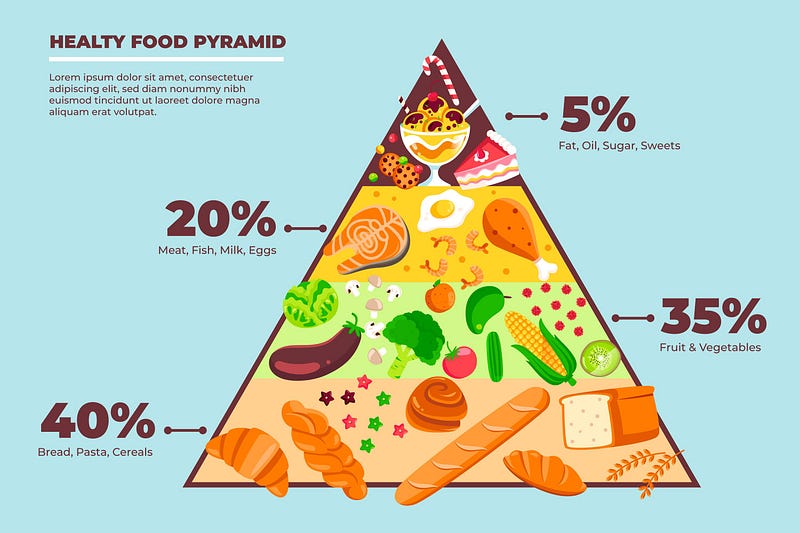
The dietary guidelines developed and promoted by the USDA suggest people get up to 65% of their calories from carbohydrate. For an average sized man, that’s about 320 grams a day — or 320 grams more a day than that man needs to eat. A diet with even just half that amount of carbohydrate could lead to insulin resistance. If one is carbohydrate intolerant and insulin resistant, and one eats in accord with the USDA recommendation, one can become obese just by eating the recommended number of daily calories for their starting height and weight. People with insulin resistance eat as much and as often as they tend to do because they don’t have access to the energy being stored as body fat — so they need to get extra energy by eating more food (see here for more details).
You can probably guess what can happen when insulin resistant people reduce their carbohydrate intake. Insulin resistance reduces, which allows blood insulin levels to lower sooner, which allows glucagon to start doing its job sooner, which leads to body fat being used as energy for longer periods of time during the day, which leads to less body fat. And all that leads to a different form, size and appearance of your body.
This isn’t bending to society’s ideal of what is the “best” or “most attractive” body type is. This is allowing yourself to accept the body you really have — a body that’s not distorted by the food environment you happen to live in.
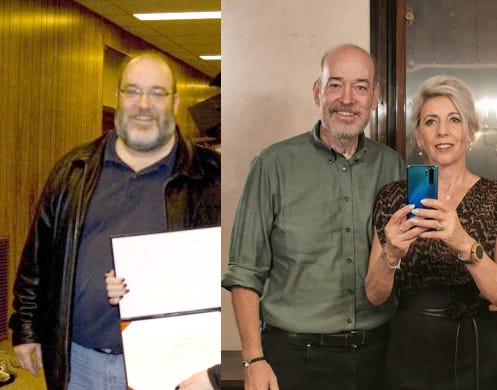
At one point in my life, I weighed 365 pounds. I had tried the eat less/move more advice we hear all the time. But it never worked. It doesn’t work because it fights against how the body manages energy. I started eating less carbohydrate more or less by accident (the full story can be found here) and drastically changed my form, size and appearance. As you can see, I’m no Brad Pitt — and I accept that. But at least I feel like I’m accepting my real body.
I wrote a book about nutrition, metabolism and weight management where I cover topics like this in more depth — but not so much that you need an advanced degree to understand it! See my profile page for more details, if you are interested. It’s available on Amazon.