avatarMarianne O

Free AI web copilot to create summaries, insights and extended knowledge, download it at here

4346

Abstract

<figcaption>Photo credit to <a href="https://www.herbarium.gov.hk/en/home/index.html">Hong Kong Herbarium</a> (the left is the Bauhinia Purpurea and the right is Bauhinia Variegata)</figcaption></figure><p id="e067">Bauhinia Purpurea, which blooms from September to early winter, carries beautiful and narrow purple, pink, and lavender petals and is native to India. Bauhinia Variegata has its origin in China and India. The tree’s large, purple, orchid-like flowers bloom in Spring or Winter.</p><p id="5f5a">The two plants have overlapping flowering periods and share common pollinators, most likely giving birth to Bauhinia Blakeana, which is found to be sterile.</p><blockquote id="fca7"><p><b>Bauhinia Blakeana shouldn’t even be called a species; it’s only an artificially maintained cultivar.</b></p></blockquote><blockquote id="1c89"><p><b>~ Kwan Hoi-shan, a molecular biologist and a core member of the Bauhinia Genome project</b></p></blockquote><p id="8b39">Each Bauhinia Blakeana <a href="https://zolimacitymag.com/how-did-the-bauhinia-a-sterile-flower-become-the-symbol-of-hong-kong/">shares the same genetic materials</a> as its parent and that of its great-great-grandparent: the first Bauhinia Blakeana plant in Hong Kong.</p><p id="d1e1">This hybrid name, Bauhinia Blakeana, honours Sir Henry Blake, plant enthusiast and governor of Hong Kong from 1898 to 1903, and his wife, Lady Edith Blake, an Irish botanical illustrator, noted for her work on the flora and fauna.</p><p id="923d">It makes a beautiful tree for the urban landscape, especially during the colder and gloomier winter.</p><h2 id="11bc">The Story of How the Flower Was Discovered</h2><p id="f439">Now we know the foreign origin of Bauhinia Blakeana (B x B), but how was it discovered in Hong Kong and first planted?</p><p id="ef19">This species was first mentioned in the Report on the Botanical and Afforestation Department in 1903.</p><p id="63ef">There are a few surprising facts about its discovery according to <a href="https://www.igafencu.com/r/history-of-hong-kongs-bauhinia-flower-flag-culture-gafencu/">Gafencu</a>:</p><ul><li>The Hong Kong Bauhinia <b>is not an orchid but a tree from the legume family</b>, including the likes of beans and peas.</li><li>The showy flowers and the unique leaves were accidentally <b>discovered in 1880 in the woods of Mount Davis near the ruins of a house on the seashore by French Catholic missionary</b> Jean-Marie Delavay while he was hiking in Pokfulam (west Hong Kong Island).</li><li>Delavay took a cutting and propagated it nearby in the sanatorium belonging to the French Mission.</li><li>A few years later, the plant was offered to the Hong Kong Botanical Gardens. Now, the plant is found everywhere in Hong Kong.</li><li><b>All Bauhinia Blakeana are likely hailed from that French missionary’s ancestor tree</b>. Since the plant is usually sterile (bearing no seeds or fruits), it has been propagated by someone’s hand via cutting, grafting, or air-layering.</li><li>The flower was chosen as the floral emblem of Hong Kong in 1965 and then used by the Urban Council (municipal services) on its logo and in the promotion of Hong Kong overseas.</li></ul><h2 id="1d1e">How B x B Beat all Others to Rest on the Flag of Hong Kong After the Handover</h2><p id="4323">In 1984 (13 years before Hong Kong was returned to China), design proposals for a new flag were sought to reflect “<a href="https://www.economist.com/the-economist-explains/2019/06/30/what-is-chinas-one-country-two-systems-policy">one country, two systems</a>” — a term coined by Chinese leader Deng Xiaoping.</p><p id="7db7">Although over 7,000 designs were submitted, all were rejected. Designs ranged from dolphins, sailboats, and dragons but hardly captured the required spirit.</p><p id="3a6a">The three judges collaborated and came up with the final design utilizing the official flower of Hong Kong: white bauhinia petals in a clockwise swirling motion on a red background (see the flag <a href="https://commons.wikimedia.org/wiki/File:Flag_of_Hong_Kong.svg">here</a>).</p><p id="926d">One of the designers, architect Tao Ho described on his <a href="https://taohofoundation.org/portfolio/public-commercial/hong-kong-flag/">website</a>:</p><blockquote id="ee04"><p>The stylized flower is asymmetrical, and therefore its form implies movement, # Options alluding to Hong Kong’s democratic energy and economic vitality. The red background represents China and the five stars within the flower’s petals hint at the integration of the “one country, two systems” policy adopted by the Chinese and British governments to preserve Hong Kong’s self-government.</p></blockquote><blockquote id="384e"><p>Today, our stylised bauhinia is omnipresent in the lives of Hongkongers as it appears in a variety of places,<b> from Hong Kong Dollar banknotes and stamps, to passports and official documents, to the symbols of Hong Kong government agencies and major institutions</b>.</p></blockquote><h2 id="ec57">Home is Where My Heart is</h2><figure id="2464"><img src="https://cdn-images-1.readmedium.com/v2/resize:fit:800/1*wjc3UO-iqRJjYMP06CZOiQ.jpeg"><figcaption>West Kowloon Cultural Area; photo by the author</figcaption></figure><p id="f89f">As I tell the story of the Hong Kong national flower, I recall the favourite places where I grew up, like the Zoological and Botanical Gardens and the promenades by the harbour. I spent my childhood there.</p><p id="3a24">Whenever I visit Hong Kong, I now stop and appreciate the ubiquitous Bauhinias. I pause on the flyovers and touch the flowers shaping the passageways.</p><p id="8c72">The Bauhinia Blakeana has a humble origin. It is not even native but an import and a hybrid.</p><p id="d9dc">Nevertheless, its beauty cannot be hidden, and the plant has been propagated throughout the city and eventually chosen as the flag symbol.</p><p id="81e7">I shall remember the lesson of the little Bauhinia Blakeana, which bloomed in the winter and survived against all odds and got picked, loved, and propagated.</p><p id="ca29">It stands for the agility, openness (a mixture of East and West), and vibrancy of Hong Kong. It does not matter which rule it is under. The Hong Kong people find a way to thrive.</p><blockquote id="123b"><p>“Where flowers bloom so does hope.</p></blockquote><blockquote id="9bb6"><p>~ Lady Bird Johnson</p></blockquote><figure id="6617"><img src="https://cdn-images-1.readmedium.com/v2/resize:fit:800/1*OXLFaiMlZJtMWphS_cCG7w.jpeg"><figcaption></figcaption></figure><figure id="0df1"><img src="https://cdn-images-1.readmedium.com/v2/resize:fit:800/1*d5lEg7mjuNOibBjL8s_DpA.jpeg"><figcaption>Photos by the author (the Botanical Gardens and Hong Kong Park)</figcaption></figure><p id="ebc1">Thank you to <a href="undefined">Michele Maize</a> and Globetrotters’ <a href="https://readmedium.com/april-monthly-challenge-floral-beauty-around-the-world-1e244e330386">April Monthly Challenge</a> about Spring flowers.</p><p id="a676">I am particularly drawn to 2 fellow Globetrotters writers’ articles on flowers — <a href="undefined">Michael Rhodes</a> wrote about California Carlsbad’s gorgeous flower fields — so many Ranunculus:</p><div id="b7e3" class="link-block"> <a href="https://readmedium.com/the-beautiful-flower-fields-of-carlsbad-5769f6590973"> <div> <div> <h2>The Beautiful Flower Fields of Carlsbad</h2> <div><h3>Globetrotters April Monthly Challenge — “Floral Beauty Around the World”</h3></div> <div><p>medium.com</p></div> </div> <div> <div style="background-image: url(https://miro.readmedium.com/v2/resize:fit:320/1*oo_822UFWzwU9Ek8cyrWtg.jpeg)"></div> </div> </div> </a> </div><p id="541f">The other writer <a href="undefined">Rhonda Carrier</a> wrote about the Singapore Botanic Garden, which is a haven for orchids!</p><div id="8874" class="link-block"> <a href="https://readmedium.com/singapore-botanic-garden-a-key-component-of-the-garden-city-e70e1c83dcc1"> <div> <div> <h2>Singapore Botanic Garden — A Key Component of the Garden City</h2> <div><h3>Explore the Many Activities at the Garden</h3></div> <div><p>medium.com</p></div> </div> <div> <div style="background-image: url(https://miro.readmedium.com/v2/resize:fit:320/1*-mfowlo4gwU6JL6SPY9g5g.jpeg)"></div> </div> </div> </a> </div><p id="afc5">I hope you enjoy these articles. Thank you for reading!</p></article></body>

How Bauhinia Blakeana Arose from Roadside Ornaments to Hong Kong’s National Flower and Flag

Globetrotters April Monthly Challenge
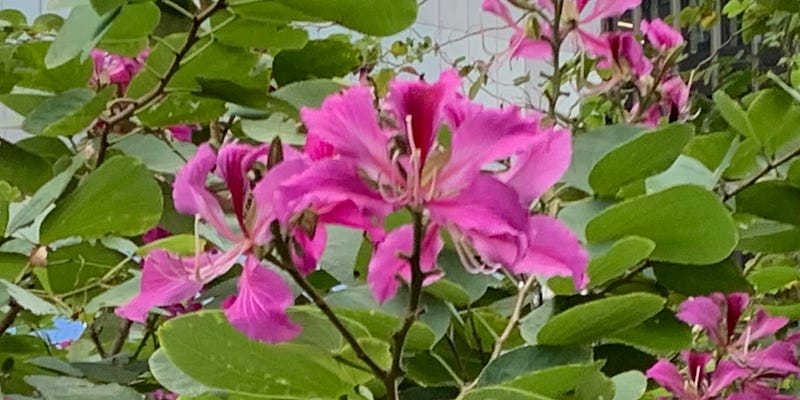
Bauhinia Blakeana, the Hong Kong National Flower. All photos are by the author except otherwise stated.

If you walk around Hong Kong, when you look up, you will easily see blossoms of flowers outlining the base of the tall buildings.

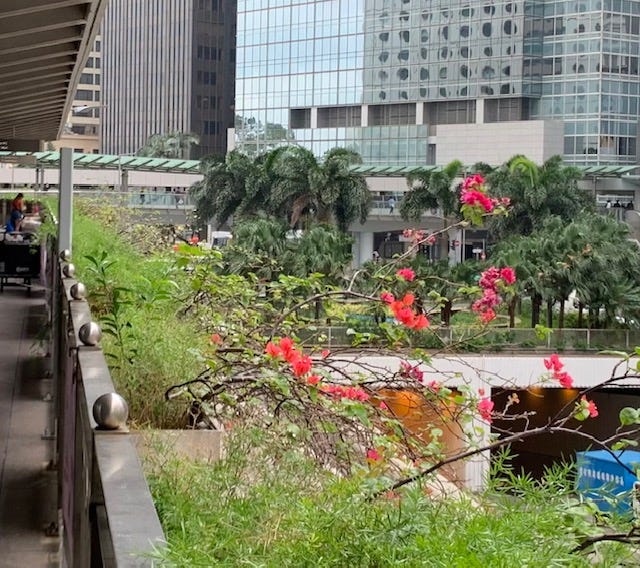
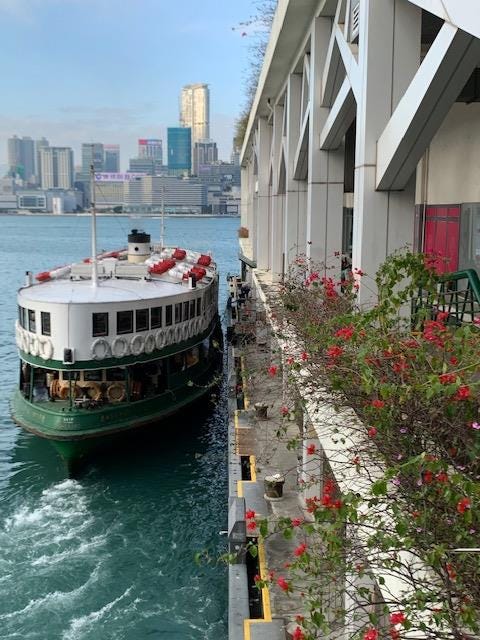
Photos by the author (a flyover and a pier)
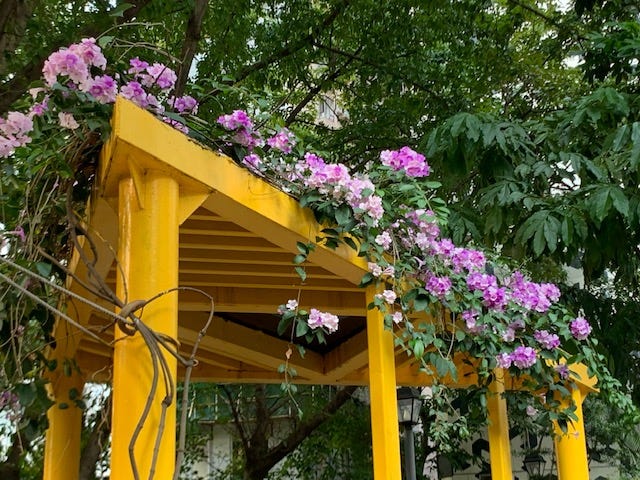
Photo by the author
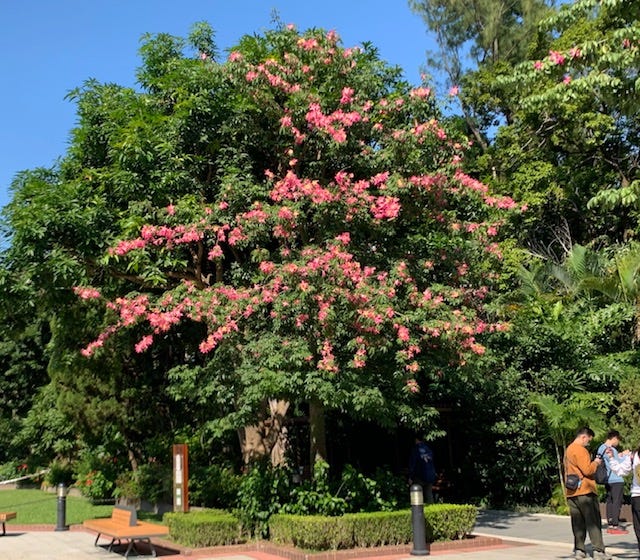
The Hong Kong Orchid Tree (Bauhinia Blakeana) at the Hong Kong Zoological and Botanical Gardens; photo by the author
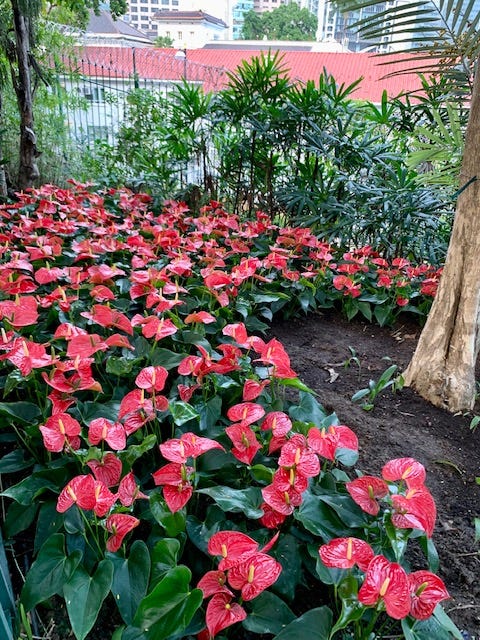
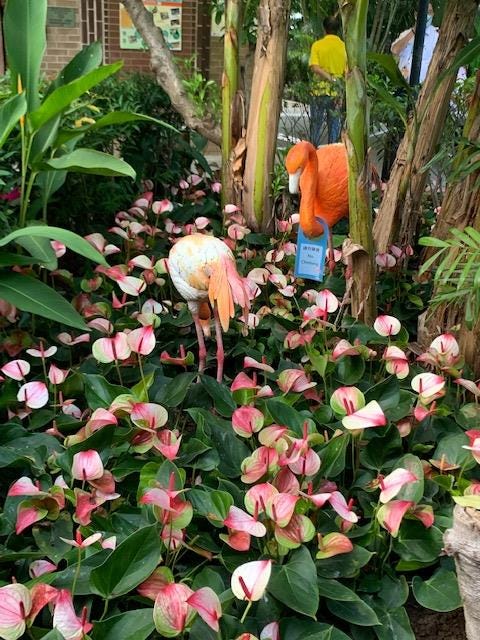
Photos by the author
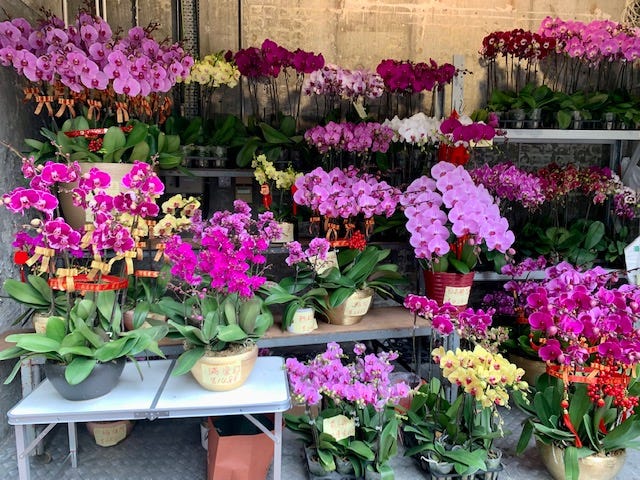
Photo by the author
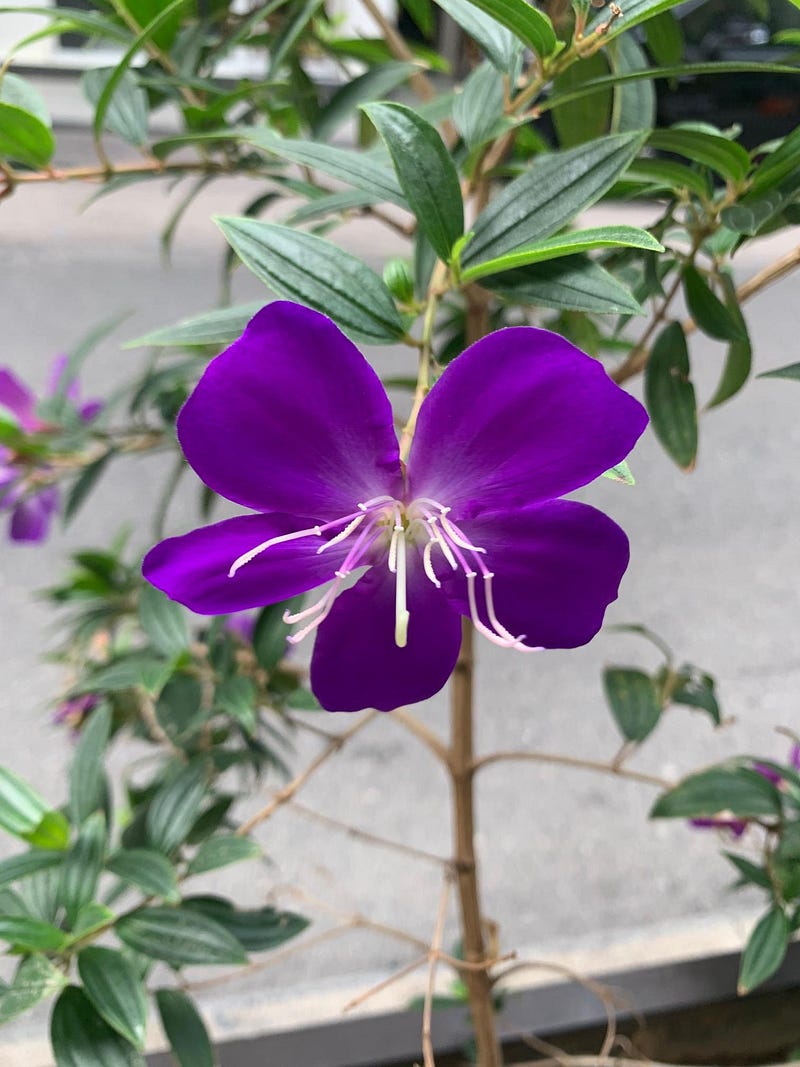
Photo by the author

There are more than 3,300 native and exotics plants in Hong Kong, according to the Hong Kong Herbarium.

However, one ubiquitous flower has a rather unassuming origin, but it transpires to be the national symbol of Hong Kong, my birthplace.

It is the Bauhinia Blakeana.

Bauhinia Blakeana, the Hong Kong National Flower; also notice the leaf form (like a camel foot)

Considered the most beautiful tree available, with exceptionally long-blooming, flamboyant, deep rose-red, orchid-shaped flowers that have a touch of white. The sterile flowers produce no seedpods. Develops as a tree with a rounded crown in warmer winter regions, more shrub-like in cooler winter regions. Provides stunning winter interest. Semi-evergreen.

~ Monrovia.com (description of Bauhinia Blakeana)

The plant, also named the Hong Kong Orchid Tree, is found to be the result of hybridization between the Bauhinia Purpurea and Bauhinia Variegata.
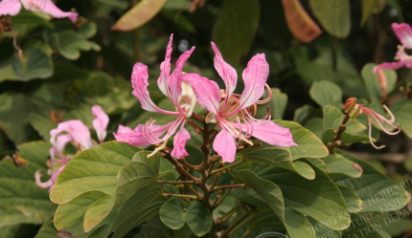
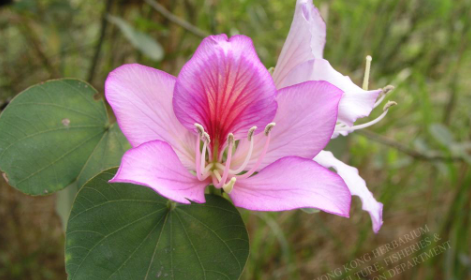
Photo credit to Hong Kong Herbarium (the left is the Bauhinia Purpurea and the right is Bauhinia Variegata)

Bauhinia Purpurea, which blooms from September to early winter, carries beautiful and narrow purple, pink, and lavender petals and is native to India. Bauhinia Variegata has its origin in China and India. The tree’s large, purple, orchid-like flowers bloom in Spring or Winter.

The two plants have overlapping flowering periods and share common pollinators, most likely giving birth to Bauhinia Blakeana, which is found to be sterile.

Bauhinia Blakeana shouldn’t even be called a species; it’s only an artificially maintained cultivar.

~ Kwan Hoi-shan, a molecular biologist and a core member of the Bauhinia Genome project

Each Bauhinia Blakeana shares the same genetic materials as its parent and that of its great-great-grandparent: the first Bauhinia Blakeana plant in Hong Kong.

This hybrid name, Bauhinia Blakeana, honours Sir Henry Blake, plant enthusiast and governor of Hong Kong from 1898 to 1903, and his wife, Lady Edith Blake, an Irish botanical illustrator, noted for her work on the flora and fauna.

It makes a beautiful tree for the urban landscape, especially during the colder and gloomier winter.

The Story of How the Flower Was Discovered

Now we know the foreign origin of Bauhinia Blakeana (B x B), but how was it discovered in Hong Kong and first planted?

This species was first mentioned in the Report on the Botanical and Afforestation Department in 1903.

There are a few surprising facts about its discovery according to Gafencu:

  • The Hong Kong Bauhinia is not an orchid but a tree from the legume family, including the likes of beans and peas.
  • The showy flowers and the unique leaves were accidentally discovered in 1880 in the woods of Mount Davis near the ruins of a house on the seashore by French Catholic missionary Jean-Marie Delavay while he was hiking in Pokfulam (west Hong Kong Island).
  • Delavay took a cutting and propagated it nearby in the sanatorium belonging to the French Mission.
  • A few years later, the plant was offered to the Hong Kong Botanical Gardens. Now, the plant is found everywhere in Hong Kong.
  • All Bauhinia Blakeana are likely hailed from that French missionary’s ancestor tree. Since the plant is usually sterile (bearing no seeds or fruits), it has been propagated by someone’s hand via cutting, grafting, or air-layering.
  • The flower was chosen as the floral emblem of Hong Kong in 1965 and then used by the Urban Council (municipal services) on its logo and in the promotion of Hong Kong overseas.

How B x B Beat all Others to Rest on the Flag of Hong Kong After the Handover

In 1984 (13 years before Hong Kong was returned to China), design proposals for a new flag were sought to reflect “one country, two systems” — a term coined by Chinese leader Deng Xiaoping.

Although over 7,000 designs were submitted, all were rejected. Designs ranged from dolphins, sailboats, and dragons but hardly captured the required spirit.

The three judges collaborated and came up with the final design utilizing the official flower of Hong Kong: white bauhinia petals in a clockwise swirling motion on a red background (see the flag here).

One of the designers, architect Tao Ho described on his website:

The stylized flower is asymmetrical, and therefore its form implies movement, alluding to Hong Kong’s democratic energy and economic vitality. The red background represents China and the five stars within the flower’s petals hint at the integration of the “one country, two systems” policy adopted by the Chinese and British governments to preserve Hong Kong’s self-government.

Today, our stylised bauhinia is omnipresent in the lives of Hongkongers as it appears in a variety of places, from Hong Kong Dollar banknotes and stamps, to passports and official documents, to the symbols of Hong Kong government agencies and major institutions.

Home is Where My Heart is
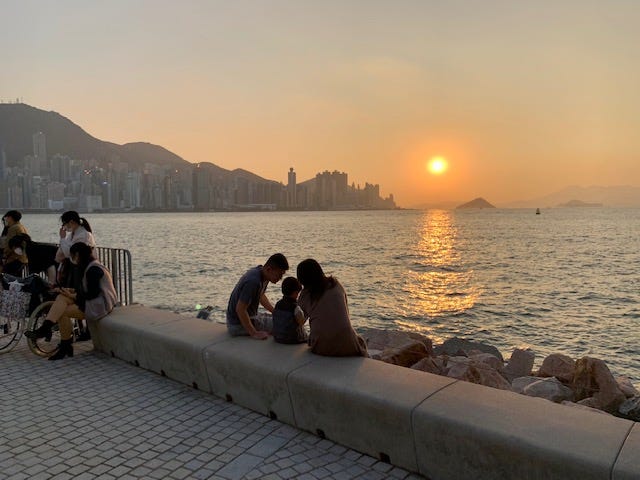
West Kowloon Cultural Area; photo by the author

As I tell the story of the Hong Kong national flower, I recall the favourite places where I grew up, like the Zoological and Botanical Gardens and the promenades by the harbour. I spent my childhood there.

Whenever I visit Hong Kong, I now stop and appreciate the ubiquitous Bauhinias. I pause on the flyovers and touch the flowers shaping the passageways.

The Bauhinia Blakeana has a humble origin. It is not even native but an import and a hybrid.

Nevertheless, its beauty cannot be hidden, and the plant has been propagated throughout the city and eventually chosen as the flag symbol.

I shall remember the lesson of the little Bauhinia Blakeana, which bloomed in the winter and survived against all odds and got picked, loved, and propagated.

It stands for the agility, openness (a mixture of East and West), and vibrancy of Hong Kong. It does not matter which rule it is under. The Hong Kong people find a way to thrive.

“Where flowers bloom so does hope.

~ Lady Bird Johnson
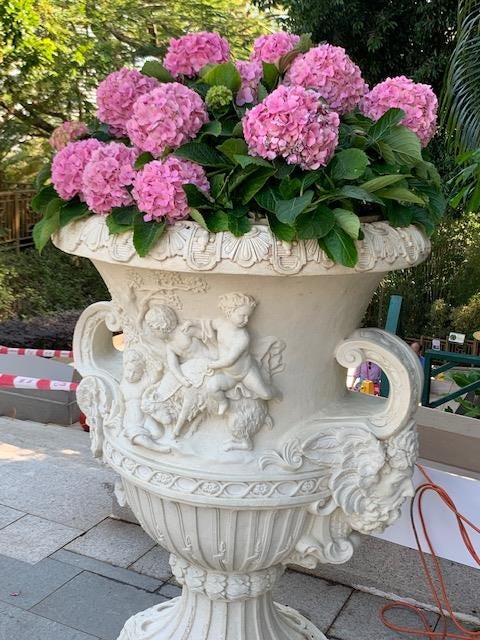
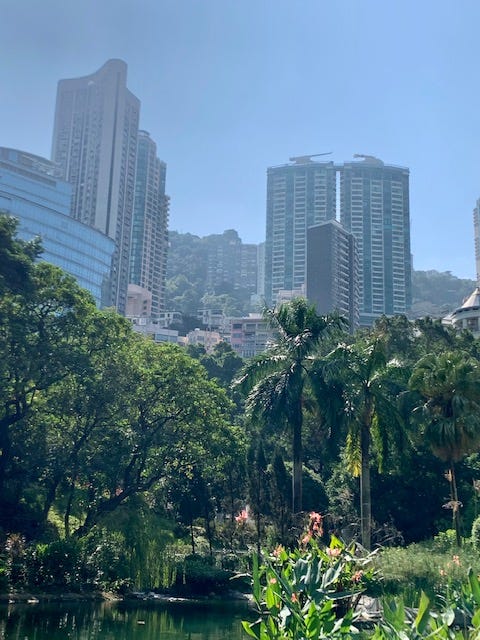
Photos by the author (the Botanical Gardens and Hong Kong Park)

Thank you to Michele Maize and Globetrotters’ April Monthly Challenge about Spring flowers.

I am particularly drawn to 2 fellow Globetrotters writers’ articles on flowers — Michael Rhodes wrote about California Carlsbad’s gorgeous flower fields — so many Ranunculus:

The other writer Rhonda Carrier wrote about the Singapore Botanic Garden, which is a haven for orchids!

I hope you enjoy these articles. Thank you for reading!

Flowers
Travel
Hong Kong
Emblem
Monthly Challenge
Recommended from ReadMedium