
How Techs’ Gonna Transform Your World As You See It
The Tesla story: from evolution to revolution.
Be less wrong.
If you want to change the world, you have to follow the be less wrong philosophy. Cause you’ll be wrong so many times, that if you don’t go inside this motto, you’ll quit at the first corner.
Even this article about our future, about Tesla, about Elon Musk, is gonna be a be less wrong piece of futurology.
It cannot be otherwise. You can’t predict the future. But you can design it.
And oh boy, Elon is designing our future, for sure. Some of this outstanding news I’m going to share with you, will make you, at least, reflect on who did we managed to accomplish such achievements.
Yet, I must be honest with my readers and say I will try to be less wrong on my predictions.
Batteries Are the Most Dramatic Object
Other things stop working or they break. But Batteries…They die.- Demetri Martin
The big challenge for Testa has always been that they are battery constraint. They can’t construct enough batteries for all the products they make and sell.
As Elon Musk said in Battery Day:
We do see the fundamental constraint as total cell production. That’s why we’re putting so much effort into making cells. Because it’s the fundamental constraint. Because it’s the fundamental factor for the limited growth.
While everything Tesla does is hard, scaling battery production has always been the hardest thing.
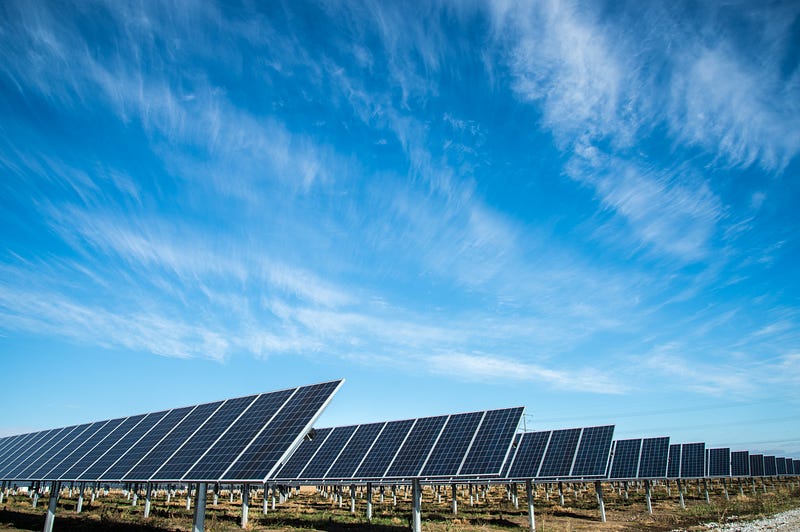
They know how to make cars. They know how to make grid store devices, building power walls, power packs, cell solar panels.
It’s batteries that are critical and it’s batteries that are holding them back.
Tesla is still improving the way they make cars and the way they make factories.
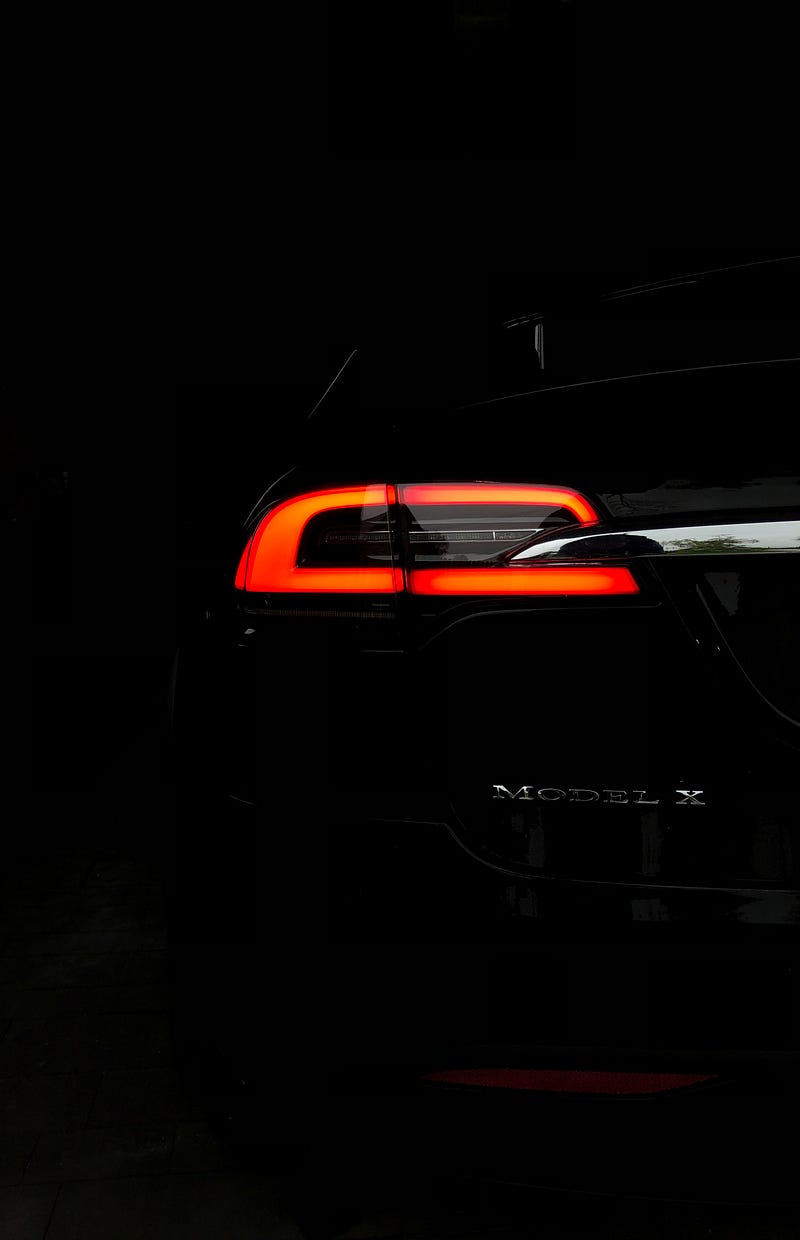
Improvements that they are making in cars are amazing because Tesla is already doing the best cars. Particularly the Model Y and the Model S.
Tesla Grid Storage is already cost-competitive. They’re probably the best solution in the market for their segment.
However, they have just not enough batteries to satisfy their production.
The numbers. Show Me the Numbers.
Tesla is learning to build lower-cost factories that build more cars at a faster pace.
If you build a $2 billion factory that produces 500K cars per year for 10 years, that CapEx cost per car is going to be $400, considering the interest costs.
Now suppose you learn from that and lower costs to build a $1 billion factory that produces 2 million cars per year for 10 years. Your CapEx per car lowers to $50 per car.
You’re saving $350 per car so that you can lower the price of the car and increase your profits.
Tesla is building its factories closer to its suppliers and closer to its customers, which lower the cost further. The cost of delivering cars is less. The cost of transporting the materials from the supplier to the factory is less. The timing is better.
All of these vertical integrations lower prices, increase efficiency, and increase profits.
The numbers start to appear.
2022
Elon Musk and Drew Baglino said they will produce 100 Gigawatt/hour of high nickel batteries in 2022.
Some estimates say that the other companies like Panasonic, LG Chem, and CATL will produce another 100 Gigawatt/hour of batteries.
Panasonic produces about 35 Gigawatt/hour at the present day, in the Nevada giga-factory. And they presume to reach the 54 Gigawatt/hour range soon.
It’s possible that at least, these 3 companies will reach the 100 Gigawatt/hour production in a short time.
Yet, there is a good chance that 200 Gigawatt/hour is a low projection for 2022.
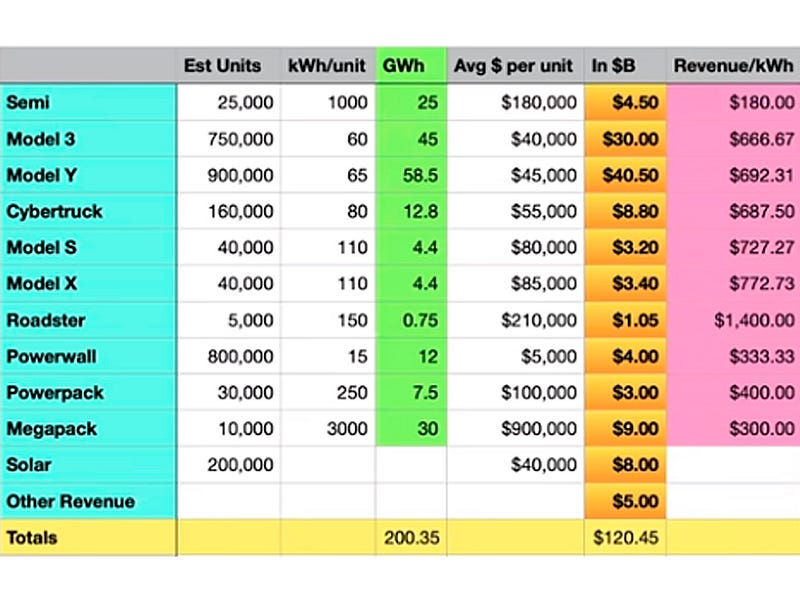
However, in a low perspective, with a 200 Gigawatt/hour battery production for all power walls, power packs, solar panels, and battery cars, it’s possible that Tesla will reach a revenue of $120 billion.
Why is this growth, in two years, not crazy at all?
Tesla is currently trading at about 10 times its annual revenue. Actually, it’s slightly more than that.
But let’s assume it’s trading 10 times its revenue.
If Tesla grows into $120 billion in revenue, and you do 10x, it ends in a market cap of 1.3 trillion dollars. And a share price of $1,200.
In a moderate perspective, these are the numbers.
Because we’re expecting increasing economies of scale, increasing profitability, and increasing margins in the Tesla business model.
So, we’re being conservators, when we predict a price share between $1,200 and $1,500. In 2022, we can see a price share of $2,000. That can be a strong possibility.
Keep Going Keep Growing
Who could Tesla possibly grow this fast?
It seems crazy if Tesla goes from $35 billion to $125 billion or even $145 billion in 2022.
Let’s start with this unusual year of 2020.
Tesla has only 1 and a half of the factories producing cars. One in Fremont. And half in Shangai. In Shangai, they are in the early stages of the manufacturing power in that factory.
So, the 500,000 cars Tesla is probably producing in 2020 is artificially low. Don’t forget all the constraints caused by Covid-19, that affect all the production lines globally.
And still, with 1 and a half factories, they made it. They reach their goal of half a million cars. Or at least they will be too close to reaching that target.
Now, in 2022, Tesla’s going to have 4 full giga-factories producing at a highly efficient pace.
Fremont is going to be more effective and producing like never before.
Shangai with 2 factories. Producing Model 3 and Model Y.
Berlin with a giga-factory producing Model 3 and Model Y.
Austin producing Model Y, Cyber-truck, and probably Model 3.
The newer factories are going to produce in a more integrated and efficient way. Faster and cheaper.
The Berlin and Austin factories, especially, are going to use advanced techniques. Fewer parts, fewer processes.
Fremont is going to be able to produce 600,000 vehicles a year, including Cyber-truck.
Berlin and Austin with a capacity of 2,000,000 vehicles each, per year.
We are talking about producing, in 2022, more than 5,000,000 vehicles, if you include Shangai.
This doesn’t even assume that Elon Musk is considering starting the production of more factories around the world, starting next year.
Positive Energy Can Heal the Universe
Elon Musk consistently speaks about a 50% annual growth.
A path from 100 GigaWatt/hours to 3 Terawatt/hours from 2022 to 2030, corresponds to a 53% annual growth. So, Elon is very aggressively pursuing very fast growth.
In 2023, with possible production of 300 Gigawatt/hour, Elon, Drew Baglino, and his team, they are assuming the compact car. The $25,000 car they announced, is going to be on the road, in a self-driving mode, making its first appearance.
It’s a massive increase in power capacity.
Warren Redlich, in his full analyzes of the 2020–30 potential growth scenario on Tesla, projects a $195 billion in revenue by 2030.
Still, with a small portion of the robot-taxi business model integrated into the total macro-projection. And if you apply that 10x from revenue to market cap, we’re looking at a share price from $1,600 to $2,000.
2023 is the year we might start to see robot-taxi profits start to take off. And the margins on this segment are huge.
Projecting the 50% growth year over year, by 2030, the numbers are astonishing.
10 years from now, in a fairly conservative approach, Tesla is going to be a $2 trillion company, with a $20 trillion market cap, and the price of a share at about $20,000.
And this is not the big optimistic estimates.
We’re talking about the possibility of Tesla become the biggest company in the world.
Conclusion
Remember, this is just a projection. It’s playing with numbers and see where they take us.
It’s also a be less wrong projection.
I used the fantastic work and research of Warren Redlich on Tesla. He has been one of the most enthusiastic bullish I’m following. He has experience and knowledge. And he is a person with good sense.
These projections don’t include the robot-taxi full projection.
As a Tesla stockholder, I sometimes get nervous, when I start playing with numbers.
If I include the robot-taxi net business in the projections, the numbers are astonishing.
I prefer not to do that.
And I know that my subconscious what’s these projections to be real.
But let me just be less wrong.
Not less, less, less wrong!
Thanks
Nuno