
How Teachers Get 100% of Their Parents Involved
The truth about what they need to do to make sure uninvolved parents participate in their child’s education

Introduction
Some teachers really experience real struggles with parent involvement. The reasons are varied. For some parents, life circumstances prevent them from being involved in their child’s education. For these parents, they are very focused on the day-to-day survival of their family.
Others parents may not be involved in their child’s educational experience because they may carry bad school memories in their heart. Since participating in their child’s learning activities reminds them of their terrible experiences at school, they remain inactive.
Sadly, there are some parents who do not care about their child’s education. These parents are apathetic because they believe that it is the exclusive responsibility of the school to educate their child. Finally, there are cultural barriers that may prevent parents and teachers from working together as a team. This results from a lack of mutual understanding.
Regardless of the reasons why some parents may be inactive, it is very possible for any teacher to significantly increase the level of parent engagement among the families they serve. In fact, it is definitely possible for all of the parents that they serve to actively participate in their child’s education.
I offer four strategies that teachers can easily use to make sure that 100 percent of their parents work with them to support student learning.
1. Target Invisible Parents

Regardless of the reasons why some parents remain invisible to their child’s teacher, they cannot continue to exist this way. This is very true because the students of parents who remain anonymous to their teacher and totally disconnected from their educational process experience a higher level of struggle at school. These include the following.
- Missing homework and other assignments that need to completed outside of the regular school hours.
- Maintaining a poor school attendance record.
- Experiencing more academic problems.
- Making inappropriate behavioral choices at school.
- Having negative peer and teacher interactions.
Teachers must embrace their professional power to transform invisible parents into involved parents. Here are the things that teachers must initiate to get parents connected to their child’s learning.
- The teacher must take the time to seek the parent out to have a courageous professional conversation with them. Whether on the telephone, using a virtual platform, or meeting in a public place following safety guidelines during the pandemic, the teacher must talk to this parent about their absence from their child’s education. Without being judgmental, the teacher must let the parent know that their absence from their child’s educational experience is harmful. In doing so, the teacher must also take the initiative to welcome this parent as a member of their child’s educational team.
- The teacher must remain patient with the parent. While the parent was formerly unresponsive, they must be given the space and guidance to learn how to become involved in their child’s education.
- The teacher must be willing to provide opportunities for the parent to learn how to become involved. Developing parent training programs with school leaders that are devoted to teaching parents how to partner with the teachers will help in this area.
- As the parent adjusts to becoming an active participant in their child’s learning, they need to be encouraged and celebrated for their progress in this area. Teachers must be willing to develop creative ways for supporting the growth of their parents.
Teachers have the ability to affirm the existence of each of their parents to foster their participation in their child’s education.
2. Communicate Outside of the Box

Teachers must be willing to develop creative ways to communicate with parents. Such techniques must be fully embraced and implemented so that they remain uniquely their own. The strategies must also be those that parents respond to favorably.
Finding communication methods that reach the heart of parents involves trial and error. It also requires differentiation. The reality is that one communication tool that works with some parents may not work with all of them.
It is important for teachers to realize that communicating with parents is all about sharing important information with them. While it does not matter how the message is delivered, providing the information to them is what is most important.
Here are a few ways that teachers can diversify their communications to reach all of their parents.
- Use fun social media tools for delivering messages to parents like Tik Toc in a fun, non-threatening manner.
- Plan virtual coffee breaks with parents to enjoy a beverage as information is shared.
- Develop and mail colorful flyers and postcards instead of lengthy letters. Be sure to interpret these and all communications in the native language of the parent.
- Embed fun family activities in newsletters distributed to families to build interest in educational information. A great idea is to develop a scavenger hunt. Creating games and puzzles are other examples of fun additions to newsletters.
- Safely make home visits to personally reach out to parents at their homes or at a mutually agreed upon space to provide relevant information to them. I especially advocate for a method that I created called the BFF Visit, which stands for Bonding Face-to-Face. This includes efforts to get to know parents. The BFF Visit may also be done virtually and especially recommended during the pandemic.
- Teachers who have access to free billboards within their regions should consider placing unique messages to parents.
- Obtain permission for unique, caring, and brief yet informative communications to parents and families to be posted within community centers, faith based communities, and shopping area. These can include things like a teacher slogan with their picture added or a picture of the classroom or school with reminders included.
- Send a weekly or periodic automated check-in call to parents to make sure all is well and to share general good news about student learning. These calls can be made to provide parents with reminders and recommendations for helping their children at home, too.
- Facilitate occasional parent classes to give parents an overview of new curricula as well as to provide strategies and suggestions for supporting their children at home. These sessions should be held virtually during this period of time. However, these sessions may be held within the homes of parent leaders or within community settings whenever it becomes safe to do so.
Once teachers release the power of their imagination, they will be able to develop additional creative ways to communicate to parents by thinking outside of the box. Simply stated, they cannot be bound to relying on conventional communication methods.
3. Work Up a Sweat to Get to Know Your Parents

The best way to build a relationship with the parents of your students is to get to know them. Teachers must power-up their efforts to connect with them interpersonally. Doing so involves hard work and a lot of effort.
It is critical that teachers establish relationship building among their parents as a singular priority. Building strong alliances with parents must become an intentional and continuous part of their professional responsibilities. Just as teachers utilize quality time to plan their instructional and assessment programs, they must also carefully plan their parent engagement techniques and programs.
This must become another critical dimension to their work. Therefore, teachers must remain dedicated to this part of their profession. They must also remain authentically focused on connecting with each of their parents.
4. Let Your Parents Know That You Care

The saying
“actions speak louder that words”
boldly speaks truth with fire. When a person cares, their action show it. Caring people always allow their true humanity shine brightly.
Caring actions will make a difference in relationship building efforts initiated by the teacher. Contacting the parent of an absent child to make sure they are okay and providing parents with a direct connection to resources that will help them through a difficult time helps them know that the teacher cares. What caring actions do is help develop a mutual partnership between the parent and the teacher.
Parents will respond favorably when a teacher demonstrates that they care. They will reciprocate by becoming more involved in their child’s education both at home by supporting their efforts and at school by becoming more responsive to the teacher when he or she communicates with them.
Each parental response to a caring teacher will be individual. For some, their change in their level of involvement may be more incremental as they grow to trust their child’s teacher. For others, just knowing that the teacher genuinely cares will be enough for them to become more engaged more quickly.
Ultimately, when the teacher and their parents function as a team committed to learners, students experience higher levels of success at school.
Conclusion
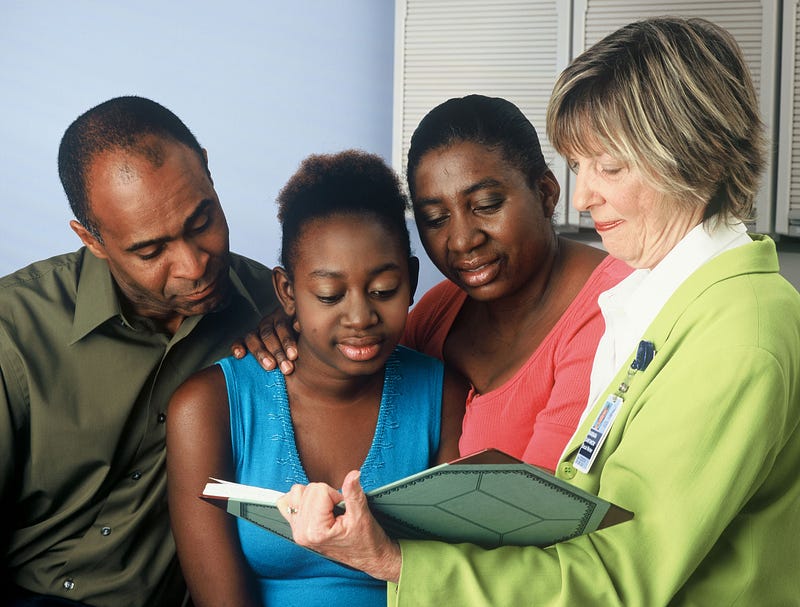
A teacher really does has the power to engage 100 percent of their parents in their child’s education at school and at home.
Parent participation increases among those who were once classified as totally disengaged when teachers make a calculated efforts to establish a meaningful bond with them. Teachers who use strategic and creative ways to communicate are able to increase parent involvement. Additionally, teachers who work very hard to prioritize parent engagement as a critical function of their role as teacher will make significant progress in this area. Finally, when teachers model a caring professional demeanor while working and interacting with parents, the results will be positive. Parents will become an active member of their child’s educational team.
Increased levels of school success will be on the horizon for students when their parents are actively engaged in their education at school and at home.
Here’s my golden ticket that helps me accomplish my mission.
Dr. Deborah M. Vereen is a retired Teacher and School Administrator. Her website is www.Drdeborahmvereen.com and her YouTube Channel is https://www.youtube.com/channel/UCS1DPhBeA29UlybU9jzDkdQ .