
How Sustainable Enterprises Prevent the Next Pandemic. And Cope with the Current One.
Enterprises are embedded in societies and environments. That needs to be taken into account when dealing with the current pandemic and future challenges.
The term sustainability became quite trendy in business contexts. Not to say that it is used quite inflationary nowadays.
The concept, however, is impressive, especially in the light of the current pandemic.
In the following story, I will narrow down the term. I will explain the concept and how companies and their stakeholders can benefit from it. Finally, I will draw the arc to the current pandemic and how to fight it back. And how to take precautions for any future crisis, like a new virus that spreads globally.
What makes a company sustainable? And what is in for all of us?
I am sure many of you remember news stories about fraud, brushing up balance sheets, short term speculation, and illegal endeavors.
You probably also remember environmental disasters such as the oil spill caused by deep-sea drilling. And the tremendous amount of compensation that the oil company in charge had to pay.
Entrepreneurial “success” that is owed to exploiting the environment or the society or even by breaking the law is likely to come to a sudden end.
The sustainability concept, on the other hand, aims for long-lasting success. It takes into account three dimensions, i.e. the economic, the social, and the environmental dimension. Those three pillars make up the sustainability concept. Below we look at each of them.
The Economic Dimension.
Let’s assume that every company / every organization follows a purpose. In other words, the organizations aim to add value to society, usually in exchange for assets — with money being the most common of them.
Companies are assumed to earn a profit. Otherwise, they will fail to attract shareholders, get loans, develop innovation, grow ahead of competitors, and establish financial reserves to cope with market swings and also with crises.
NPOs (= Non-Profit Organizations) do not emphasize earning profit per se. Nevertheless, they are supposed to use their funds economically. That means most of the raised funds are supposed to be spent purposeful (taking care of patients in the case of the “Red Cross”, establishing means for environmental protection in the case of “Greenpeace”, safe wild animals in the case of the “World Wildlife Fund” etc).
Acting economically usually means using the provided resources as smart as possible. Or to achieve a pre-set goal with as few resources as possible. In other words, funds and any other asset must be used as effectively and as efficiently as possible, following the organization’s purpose.
If the economic dimension were neglected, the organization would sooner or later drop out of business. That’s of course not sustainable then.
But wouldn’t it be enough to focus on the economic dimension solely? If a business earns a profit and stays in business all the time, that would be sustainable, right?
Well, not just — please read on.
The Social Dimension.
Companies and Organizations do not operate in a vacuum. They are embedded into or at least linked with societies.
One such link is the organization’s employees. At least one person is working in every organization. In a garage company, it’s the founder; in matured organizations, there are internal staff and contractors. Their needs can’t be neglected: Staff, for instance, is eligible to form a worker’s council, and unions back them in most countries. If the organization acts against the needs of that group, it might face resistance, strikes, and there is a reputation risk, especially for well-known enterprises (as there could be a news story on media featuring the incident).
Another link to society is, of course, the clients. If they do not feel treated fairly, they not just won’t buy. They likely file claims with consumer protection organizations or -depending on the incident- may approach NPOs that could follow-up on issues within their scope. If the event has the potential to raise public interest, again, the media could pick it up.
But the social impact of a company is not limited to those two groups only. As already hinted above, those groups can reach out to media and NPOs that have the means to facilitate social protest if the matter is likely to get enough attention. Such a campaign can negatively impact an organization’s business success.
Last but not least, there is the legal dimension. If an organization breaks the law, it will face the consequences besides prosecution and further legal action that can also lead to campaigns, as stated above.
Taken together, violating the social dimension can lead to dropping out of business, even if the numbers would suggest otherwise. But again, sustainability is not about short-term “success”.
Please stay with me so that we can explore the next dimension.

The Environmental Dimension.
Organizations also interact with the environment. For some industries, that seems to be more evident than for others. A hydroelectric facility appears to be more exposed to the environment than any IT company. But is that the case?
Think for instance of an IT giant like Google that relies on a large data center. The hardware installed there had to be manufactured, which used several raw materials. The equipment has to be powered and for a large data center that demands a lot of electricity. Heat is generated and needs a lot of cooling. A large data center would likely require it’s own power plant, thus making the environmental footprint comparable.
I referred to the raw materials above. As they can become scarce over time due to exploitation, the means of extraction become more and more invasive. Think for instance of deep-sea drilling for crude oil — and the oil spill that it caused in 2010 at a British Petrol Facility.
Another example is precious metals, which are mined. That implies an impact on the environment. Think of gold mines that dig down very deep to win the metal. Or think of the Chinese copper mine in a cave that was full of bats and rats, caring viruses. Seven years before the current pandemic, a virus similar to SARS-CoV-2 was found to harm mineworkers. A sample of that virus was sent to the bat lab in Wuhan, Hubei province — which became the supposed origin of the current pandemic.
It appears that natural resources are borrowed. And if they are exploited for too long, nature might strike back. Metaphorically of course. But still physically as we are currently experiencing.
So how is sustainability linked to the current pandemic?
A company can be considered to be sustainable when it takes care of all the three pillars. Therefore I will discuss the three components under the pandemic’s perspective.
Two industries are facing a massive impact from the pandemic: One, of course, is the pharmaceutical industry: The whole world is currently waiting for them to release an effective vaccine or at least an effective treatment against COVID-19.
The other one is the airline industry. Planes remained grounded due to contagion measures. Therefore airlines around the world got into trouble and needed funding from the states they are based in.
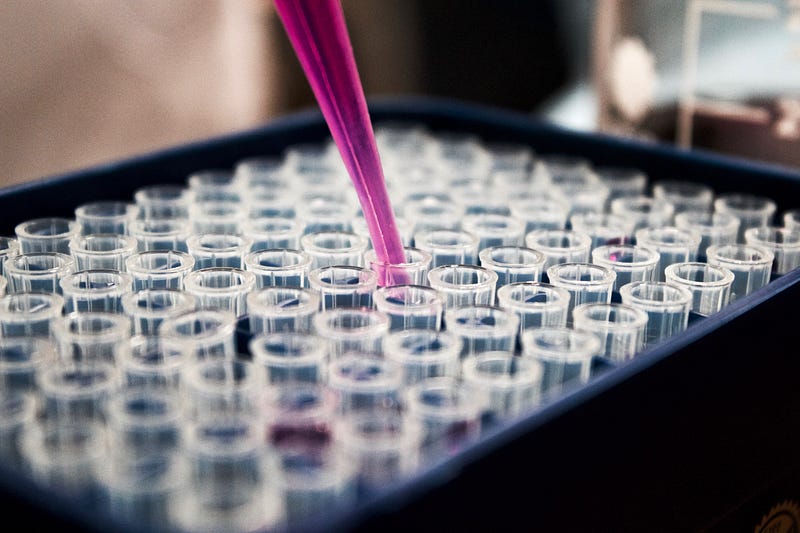
Sustainability and the Pharmaceutical Industry in the Shadow of COVID-19.
The Pharmaceutical industry receives a lot of attention during the COVID-19 pandemic. From the current point of view, an effective vaccine is required to overcome the crisis or at least an effective but good-natured treatment.
The sustainability concept can be applied to analyze their current situation. Thus, let’s reflect on each of the three pillars and then draw a resume.
The Economic Dimension (Pharmaceutical Industry). The economic dimension is quite crucial for a pharma company. Researching and developing a vaccine is a risky business. From first ideas to a final product, it often takes ten years, and there is no guarantee for success, for instance, that a vaccine is working and gets approved by authorities. In the case of the current pandemic, the process for a promising vaccine candidate may be shortened, but there is no guarantee that investments made in research will pay off.
And there is, of course, the competition that could enter the market with a comparable product earlier. And therefore file the patent more first.
To cope with such significant risks, a pharma company must maintain a solid financial ground.
The Social Dimension (Pharmaceutical Industry). The pandemic creates some challenges: There are of course high expectations from the whole society: The people, governments, economy — all stakeholders wait for the availability of a vaccine as it is seen as a chance to return to a “better normal” and to be able to plan again reliably. Our whole economy depends on viable forecasts — without those, many businesses are stuck (please refer to the airline use case below).
The expectation is that a high-quality product is produced in about one-tenth of the usual time duration. And that the product can be offered at a price that is affordable for everybody. Employees are expected to give their best while the company must take care of their well-being (many in that industry can’t do home-office as they work in labs).
This sounds a bit like “mission impossible”. But that is what is demanded. Otherwise, the economy could break down due to lacking forecasts — with severe implications for the society that depends on its economy to allocate and distribute goods and services. A breakdown of the economic system would likely result in social unrest, as many could not keep-up their standard of living.
To achieve their goal, pharma companies need to team up with former competitors. They also need to apply the latest technology to extract more information from data than ever (one key ingredient for rapidly finding a vaccine).
And even under that pressure, they need to adhere to the highest ethical and research standards.
The Environmental Dimension (Pharmaceutical Industry). Regarding that dimension, there is a direct link between COVID-19 and the pharma companies: The virus (SARS-CoV-2) is a natural phenomenon. To contain its spreading has, therefore, an impact on the environment.
On the other hand, companies need to protect their facilities. Researching the virus means having it in the lab — and that demands the highest security standards.
Besides that, the industry uses raw materials and should do so without exploiting natural resources.
Waste management and recycling of chemical substances are further vital considerations within pharmaceutical organizations.
There is a way out. The pharmaceutical industry must consider sustainability to maintain a viable business model. Otherwise, they would drop out of business quite quickly. Be it due to bankruptcy, social pressure, or facing legal actions.
The COVID-19 situation further stressed that. The industry is a major player in overcoming the pandemic. It gets even more attention as usual. The stakes are very high, although the short term financial benefit is likely not to fully compensate the organizations’ current efforts, especially when they rank second.

Sustainability and the Airline Industry in the Shadow of COVID-19.
The Airline industry was hit very hard by the pandemic. Nearly all planes were grounded for several months (and some are still while I am writing this story).
Their cash reserves were drawing up, and states had to jump-in to cover their losses so that the companies could stay in business. Airline operations are very cash-intensive. Besides the volatility they need to cope with, they need staff at various locations of the world, and the fleet needs to be appropriately maintained.
Airlines became part of social life. International business depends on it. But also tourism (a part of the market for the host, a part of lifestyle for the guests). So the industry is responsible for getting operational as soon as possible and providing its services. They, however, need to take care of their employees and customers in order not to become the next cluster for the spread of the virus.
There are also environmental constraints that are linked with the social dimension: Think of the campaigns featuring Greta Thunberg protesting against CO2 emissions caused by planes as one cause for global warming. Besides reshuffling politics that had an impact on airlines as well. The state aid mentioned above in some countries was coupled with concessions from airlines to make their fleets greener. Green innovation demands investments — and so the loop closes back to the economic dimension.
Also, Airlines can’t avoid the impact of COVID-19. They will have to adhere to sustainable business models and advertise them in their PR. They will also need to take into account altered preferences from their customers: It is not clear whether they will agree to sit in tight tubes even after the pandemic will have been overcome.

In Conclusion: How to apply the sustainability model to cope with current and future challenges?
Companies and Organizations can not be seen as isolated entities. They interact with society, with the environment, and they need to do so in an economically successful way.
Analysis of the current situation and strategically planning the future, therefore, should consider those three pillars.
The COVID-19 situation can be better understood and, therefore, better be managed when the sustainability framework is taken into account. I have illustrated that for two industries, namely the pharmaceuticals and the airline industry. Both of them are pretty much impacted by COVID-19 but part of potential solutions.
Future scenarios can be analyzed by applying the framework as well. As the view will be more comprehensive, so will be the strategy that is based on that view.
Sustainability, however, does not replace all other management approaches and tools that you know. So when preparing for future challenges, you should still consider business continuity management. But when identifying the potential scenarios you want to make for and setting up procedures to do so, the comprehensive view suggested by the sustainability framework comes in handy. Give it a try.