
How Studying Economics Changed the Way I Think
Economic principles that I’ve applied to my life
Economics is the study of scarcity. There’s a limited amount of resources, and economics explores how these resources are allocated. Recently, I graduated with a Master’s in Economics, and one of my favorite branches of economics to learn about is behavioral economics. Behavioral economics is more psychological and explores the factors that influence human decision-making.
Here are a few principles from behavioral economics that changed the way I think:

- Opportunity Cost — Your time is expensive: Opportunity cost is the potential alternatives you miss out on by choosing one alternative over another. For example, if you watch Netflix for an hour, you can’t spend that same hour exercising or listening to music. Everything you give up to watch Netflix (exercising & listening to music) is the opportunity cost of spending an hour watching Netflix.
I used to make my decisions based on the pros and cons that I could see in the present moment. Thinking in terms of opportunity cost helped me realize that my time and energy are limited.
Every hour you spend doing one thing, you give up the infinite things you could be doing instead. This realization alone has made me more selective with who I chose to spend time with and what I chose to spend my time doing. Every hour I spend with someone I do not trust is an hour I could be spending with my best friend. Every hour I spend thinking about a past situation that upsets me is an hour I could be using to enjoy the present moment. And sometimes the best use of your hour IS being upset and moping around. But the point is, when you start to see your life through the lens of opportunity cost, you start to ask yourself: is this the best use of my time? Is this worth all the alternatives I’m giving up? How valuable will this be to future me? This principle has also made me more mindful of my spending habits and if I’m spending my money wisely.
2. Present Bias — choose short-term pain over long-term suffering: As humans, we tend to discount the future and put a lot more weight on the present moment. Often, decisions made based on instant gratification over long-term gains are not the best decisions.
The dichotomy of life is: if you do what’s easy in the short term, your life will be hard. If you do what’s hard in the short term, your life will get easier. — Dr. Layne Norton in the Huberman Lab Podcast
Choosing instant gratification is usually the easier choice. It’s easier to lay in bed than go to the gym. It’s easier to stay in a relationship you’re comfortable with than to leave. It’s easier to spend your money instead of saving it. Sometimes doing the right thing (usually the hard thing) feels horrible. It’s emotionally and physically challenging. Do it anyway. The truth is, either way, you feel pain. There are consequences that come with not exercising, not saving money, and staying in bad relationships. In fact, the consequences, are more long-term. Endure the temporary pain of choosing the harder thing over the long-term pain of choosing the easier thing.
And to be clear, instant gratification isn’t ALWAYS a bad thing. It’s okay to indulge from time to time. But the truth is many things in our society such as social media, clothing stores, and fast food chains, exploit our present bias and rely on it to make money. Being aware of present bias allows you to be more intentional about the things you choose to indulge in and not fall into the trap of mindlessly choosing what’s most convenient in the present moment.
3. Sunk-Cost Fallacy — learn to cut your losses:
The Sunk Cost Fallacy describes our tendency to follow through on an endeavor if we have already invested time, effort, or money into it, whether or not the current costs outweigh the benefits. — The Decision Lab
Knowing when to give up is difficult. Once we put time and money into something, it’s hard to stop, even when we know it’s no longer worth it. Since we can’t get back the time and money spent, we continue investing in the present hoping will get some gain.
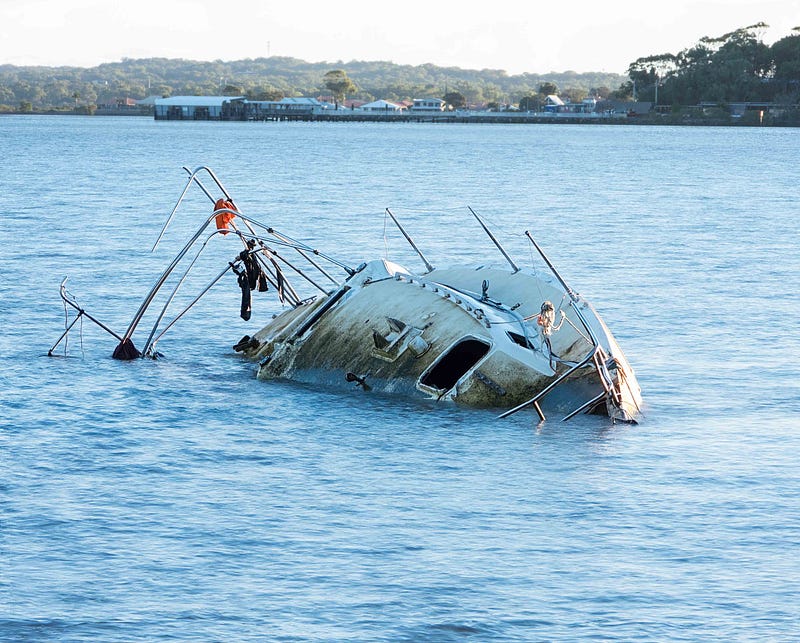
Being aware of the sunk cost fallacy has taught me to cut my losses and identify when I’m continuing to invest in something that isn’t serving me. It’s human nature to want to double down, and it’s almost easier to continue on the wrong path than to turn around and admit that you invested in the wrong thing. The sunk cost fallacy reminds me that although it might be difficult to face losses (sunk cost is related to loss aversion) that it’s useless to continue in the wrong direction. Instead, of thinking of my time & money as wasted, I try to reflect on the lessons I learned from the experience so I can view it less as a “sunk cost” and more as a learning experience, making it easier to cut my losses and move on.
Thanks for reading, I hope some of these principles were useful!