ens up numerous opportunities for the Brand to demonstrate the value of human connection across many intersections of society. The challenge, though, is to ensure that the brand stands out in a way, where consumers can relate at an emotional level. This is where the storyline of an Indian father accepting his trans son in a highly conservative society becomes a distinct storyline.</p><p id="7065">Mental Availability in Action</p><p id="68aa">When consumers can remember your brand without any prompts, that’s Top of Mind Awareness. And when a brand has very high Top of Mind Awareness, it’s an indication that the brand is likely to be purchased when the time is right.</p><p id="0328">Mental Availability is the “brand’s propensity to be thought of or come to mind in buying situations.”(pg. 26 — Building Distinctive Brand Assets, Jenni Romaniuk)</p><p id="b502">To break this down further, there are 2 key dimensions behind Mental Availability, Fame and Uniqueness. Fame is measured as how many of the people you are trying to influence link your brand to the brand asset. (p82). And Uniqueness provides an assessment of the level of mental competition the brand faces from other brands in the category. (p88). This advertising is likely to score highly on Fame and Uniqueness given Starbucks is reaching out to a broad audience of coffee drinkers, and the storyline is unique.</p><p id="633d">Imagine an alternative direction for advertising. Starbucks coffee is superior in taste vs. its competition and it’s showing a couple enjoying coffee at Starbucks. Would this alternative help the brand stand out and break through the myriad choices that are available in a tea-drinking society? Too many brands look at consumer responses literally, or worse, superficially, and conclude to create communication that is limited to features/benefits with minimal emotional connection. For a brand to be memorable, and recalled by many, connect at the emotional level alongside the rational level.</p><p id="0600">Empathy, inclusion, and belonging will build brand reputation and revenue</p><p id="5809">Starbucks is not immune to this type of backlash in India either. There are challenges in India as well as it relates to gender, regional origin, religion, sexual orientation, etc as reported by SHRM. “<a href="https://www.shrm.org/shrm-india/pages/diversity-equity-and-inclusion-dei-in-india.aspx">Diversity, Equity, and Inclusion in India</a>”. With brands like Bud Light, Target, and North Face experiencing significant backlash in the US, how brands react to this backlash is critical. Within the US, Pew Research Center recently published data that showed 56% of US workers said that focusing on <a href="https://www.pewresearch.org/social-trends/2023/05/17/diversity-equity-and-inclusion-in-the-workplace/">DEI efforts</a> is a good thing. For brands to grow, it’s critical to grow
Options
their base of users, which means that there will be a diversity of user groups within the brand’s user base.</p><p id="d14c">Finally, this ad has been on air since May 8th, 2023 and results are still coming in. What should be clear from this Starbucks case study is that you can accomplish multiple objectives — deliver on your brand mission, build brand reputation, and deliver business results. Everyone may not agree with their stance.</p><p id="50eb">But they will respect you for taking a stand.</p><p id="8762">Call us if you’d like to discuss further. Or drop a comment!</p><p id="a6c5"><a href="https://www.linkedin.com/feed/hashtag/dei">#dei</a> <a href="https://www.linkedin.com/feed/hashtag/mentalavailability">#mentalavailability</a> <a href="https://www.linkedin.com/feed/hashtag/fame">#fame</a> <a href="https://www.linkedin.com/feed/hashtag/uniqueness">#uniqueness</a> <a href="https://www.linkedin.com/feed/hashtag/brandpurpose">#brandpurpose</a> <a href="https://www.linkedin.com/feed/hashtag/mission">#mission</a> <a href="https://www.linkedin.com/feed/hashtag/insights">#insights</a> <a href="https://www.linkedin.com/feed/hashtag/marketresearch">#marketresearch</a> <a href="https://www.linkedin.com/feed/hashtag/marketing">#marketing</a> <a href="https://www.linkedin.com/feed/hashtag/brands">#brands</a> <a href="https://www.linkedin.com/feed/hashtag/distinctivebrandassets">#distinctivebrandassets</a> <a href="https://www.linkedin.com/feed/hashtag/innovation">#innovation</a> <a href="https://www.linkedin.com/feed/hashtag/future">#future</a> <a href="https://www.linkedin.com/feed/hashtag/disruption">#disruption</a> <a href="https://www.linkedin.com/feed/hashtag/y2sconsulting">#y2sconsulting</a> <a href="https://www.linkedin.com/feed/hashtag/lgbtq">#lgbtq</a> <a href="https://www.linkedin.com/feed/hashtag/starbucks">#starbucks</a> <a href="https://www.linkedin.com/feed/hashtag/starbucksindia">#starbucksindia</a> <a href="https://www.linkedin.com/feed/hashtag/customerexperience">#customerexperience</a> <a href="https://www.linkedin.com/feed/hashtag/empathy">#empathy</a> <a href="https://www.linkedin.com/feed/hashtag/emotionaladvertising">#emotionaladvertising</a> <a href="https://www.linkedin.com/feed/hashtag/benefits">#benefits</a> <a href="https://www.linkedin.com/feed/hashtag/normal">#normal</a> <a href="https://www.linkedin.com/feed/hashtag/newnormal">#newnormal</a> <a href="https://www.linkedin.com/feed/hashtag/stigma">#stigma</a> <a href="https://www.linkedin.com/feed/hashtag/stigmapromoters">#stigmapromoters</a> <a href="https://www.linkedin.com/feed/hashtag/fencesitters">#fencesitters</a> <a href="https://www.linkedin.com/feed/hashtag/brandadvocates">#brandadvocates</a> <a href="https://www.linkedin.com/feed/hashtag/pride">#pride</a> <a href="https://www.linkedin.com/feed/hashtag/howbrandsgrow">#howbrandsgrow</a></p></article></body>
How Starbucks India Delivers on Its Brand Purpose
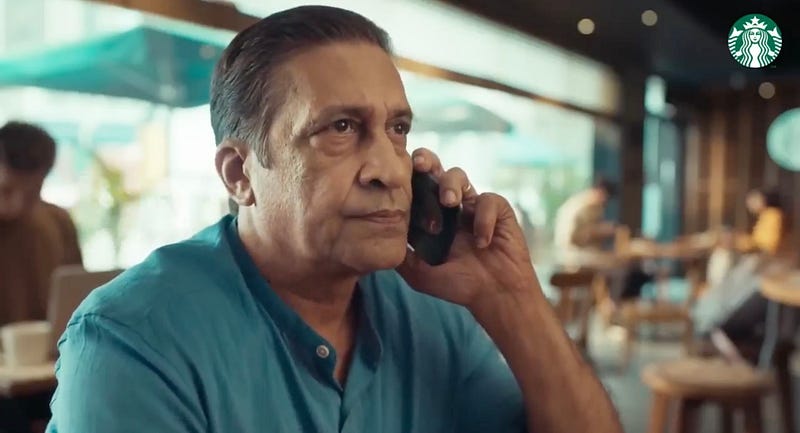
As the Bud Light, and now Target controversy, continues in the US, a lot of questions and concerns have arisen about Diversity, Equity & Inclusion in advertising, and how to navigate this highly charged landscape. This post addresses this issue with Starbucks in India. You can watch the commercial below.
As to be expected, consumer reaction has been polarizing. You can literally divide social media reaction into 4 segments:
The haters: Or as I define them “Stigma Promoters” ie. people who viscerally react negatively to anything that’s outside their definition of “normal” and feel threatened by this change
The “I don’t get what coffee has to do with this topic” reacters: or consumers who view brand advertising with a perspective that only talks about the product and keeps other issues out of the discussion
The silent segment: who are aware of what’s happening, but not saying anything publicly
Brand Advocates: Those who connect the message with the brand, and are attracted to the brand because the brand took a stand on an issue
It’s too soon to tell the size of these segments or how this story will play out in India, however, there is clarity on which segments are shouting the loudest.
Having said that, there are 3 additional learnings for brands as they are navigating this stigmatized landscape. And they all relate to brand-building communication.
Brand Purpose Matters
Starbucks revised mission statement which was unveiled by the new CEO, Laxman Narasimhan on April 23, 2023, reads as follows:
OUR MISSION
WITH EVERY CUP,
WITH EVERY CONVERSATION,
WITH EVERY COMMUNITY–
WE NURTURE THE LIMITLESS POSSIBILITIES OF HUMAN CONNECTION
Besides, this mission statement incorporating inclusion and belonging, this mission statement opens up numerous opportunities for the Brand to demonstrate the value of human connection across many intersections of society. The challenge, though, is to ensure that the brand stands out in a way, where consumers can relate at an emotional level. This is where the storyline of an Indian father accepting his trans son in a highly conservative society becomes a distinct storyline.
Mental Availability in Action
When consumers can remember your brand without any prompts, that’s Top of Mind Awareness. And when a brand has very high Top of Mind Awareness, it’s an indication that the brand is likely to be purchased when the time is right.
Mental Availability is the “brand’s propensity to be thought of or come to mind in buying situations.”(pg. 26 — Building Distinctive Brand Assets, Jenni Romaniuk)
To break this down further, there are 2 key dimensions behind Mental Availability, Fame and Uniqueness. Fame is measured as how many of the people you are trying to influence link your brand to the brand asset. (p82). And Uniqueness provides an assessment of the level of mental competition the brand faces from other brands in the category. (p88). This advertising is likely to score highly on Fame and Uniqueness given Starbucks is reaching out to a broad audience of coffee drinkers, and the storyline is unique.
Imagine an alternative direction for advertising. Starbucks coffee is superior in taste vs. its competition and it’s showing a couple enjoying coffee at Starbucks. Would this alternative help the brand stand out and break through the myriad choices that are available in a tea-drinking society? Too many brands look at consumer responses literally, or worse, superficially, and conclude to create communication that is limited to features/benefits with minimal emotional connection. For a brand to be memorable, and recalled by many, connect at the emotional level alongside the rational level.
Empathy, inclusion, and belonging will build brand reputation and revenue
Starbucks is not immune to this type of backlash in India either. There are challenges in India as well as it relates to gender, regional origin, religion, sexual orientation, etc as reported by SHRM. “Diversity, Equity, and Inclusion in India”. With brands like Bud Light, Target, and North Face experiencing significant backlash in the US, how brands react to this backlash is critical. Within the US, Pew Research Center recently published data that showed 56% of US workers said that focusing on DEI efforts is a good thing. For brands to grow, it’s critical to grow their base of users, which means that there will be a diversity of user groups within the brand’s user base.
Finally, this ad has been on air since May 8th, 2023 and results are still coming in. What should be clear from this Starbucks case study is that you can accomplish multiple objectives — deliver on your brand mission, build brand reputation, and deliver business results. Everyone may not agree with their stance.
But they will respect you for taking a stand.
Call us if you’d like to discuss further. Or drop a comment!