
How Spanish Am I?
Now the question is, do Spanish roots still live in Filipinos these days?
As you may have known, the Filipino culture had been greatly influenced by Spanish. Having been colonized from 1521, when Ferdinand Magellan came to Cebu, up until the Philippines Revolution in 1898, there is no question that Filipinos have acquired a lot of Spanish cultures and traditions.

My Religion
Catholicism was established in the Philippines as soon as they set foot in the archipelago. Prior to the colonization, native Filipinos used to worship many Gods including one whom we call Bathala, meaning the powerful god. At present, there are about 80% Filipino Catholics, that includes me, making the country one of the only two countries in Asia in which the Catholic religion is still predominant. If you visit a home of a Filipino household, you can see statues of their saints and crosses on altars. This is one of what is left of the Spanish’s influence in terms of religion.
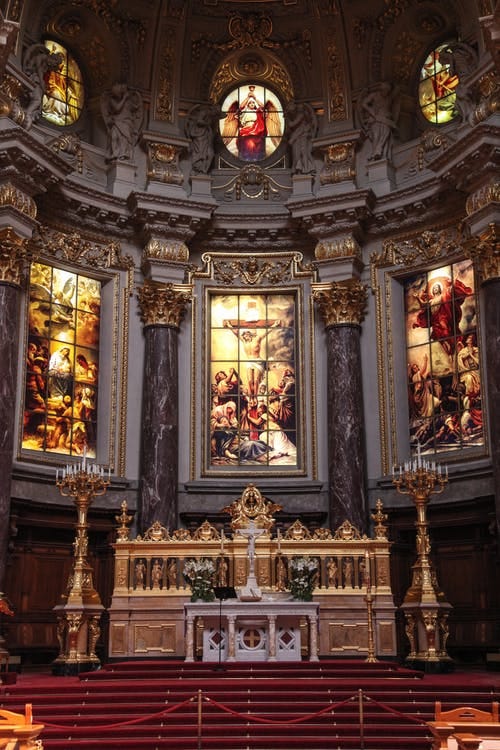
In spite of being born a Catholic, I honestly do not practice much of Catholicism anymore after the death of my grandmother who was a devoted one. Our family used to diligently go to church on Sundays and spent most of the day there attending mass, joining a prayer meeting, and praying the rosary. Now, or since about twenty years ago, we gradually lessened our church visits. Many of my cousins are now Born-again Christians. I am still a Catholic but I am married to an Islam-convert man who also used to be a Catholic. Our children have been baptized in the Catholic church but we rarely go there and sometimes go to our cousin’s Methodist chapel and join them on Sunday worships.
My Language
Spanish used to be our country’s official language until 1986. According to my elderly relatives, they used to study the Spanish language in their elementary and high school years. Now, only less than 0.1% of the population are native Spanish speakers. In the region of Zamboanga, however, people continue to speak a little Spanish and mostly speak Chavacano, a Spanish-based dialect. The Filipino or Tagalog language also incorporated Spanish loanwords with 33% of words base on Spanish. Interestingly, my family always finds ourselves amazed every time we watch a Spanish movie or our favorite tv series, Money Heist because we can hear some words similar to ours.
In our household, we do not speak Filipino nor Spanish. We always speak in our local dialect, Bisaya, and sometimes we speak English. Though a few of our local dialect’s words were Spanish loanwords too. I have listed the most common Spanish loanwords below with the format, Spanish — Bisaya — English.
- puede — pwede — may/can
- vacuna — bakuna — vaccine
- estudiante — estudyante — student
- baño —banyo — bathroom
- trabajo — trabaho — job
My Name
Most Filipinos have Spanish or Latin-sounding surnames but it does not necessarily mean we have Spanish blood. It was only a result of the implementation of the Spanish naming system in the Philippines during the colonization. When they started baptizing our ancestors to become Catholics, our ancestors also changed their names to religious things or saints' names such as de Los Santos (Saints), de la Cruz (Cross), and del Rosario (Rosary).
Before I got married, I had a Spanish surname too, Conchas.
My Favorite Dessert
Leche Flan is a popular Filipino dessert made from milk, sugar, and eggs. Originally though, the sweet caramel custard was brought to the Philippines during the Spanish colonial period thus, the name Leche means milk. Funnily, in Filipino, Leche is a curse word. Haha!
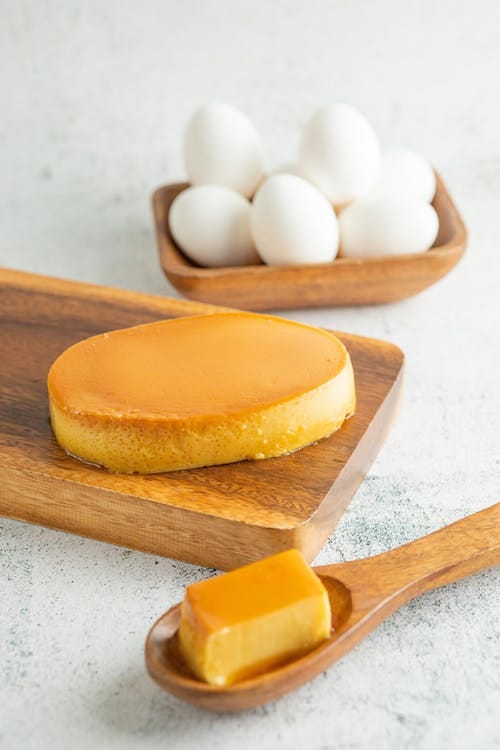
Aside from this dessert, Filipinos often cook a variety of Spanish influenced cuisines such as Lechon, puchero, fabada, paella, morcon, embutido, and churros. These are specially served in Noche Buena or the Christmas eve dinner that Filipinos consider as the most important family gathering.
My Takeaway
Even though our country was colonized by the Spanish for more than 300 years, I do not have any resentment towards it. It ended decades before I was born and I do not fully know what had actually happened aside from what I read in the history books.
Doubtlessly though, Filipinos were already civilized even before the Spanish colonial. Spaniards just made them more civilized. Furthermore, in my opinion, the best of all the influences is celebrating Christmas day. If Christianism and Catholicism were not introduced, we would have had different beliefs and religions. We would not have been celebrating Christmas.
So to answer the question, “Do Spanish roots still live in Filipinos these days?” I would say, it depends on each Filipino. In my case though, no. It never did. Despite being a catholic and having a Spanish-sounding maiden name, I have Filipino roots and will always have them in me.


