
How Some Writers Move Off the Stage
To make room for their readers
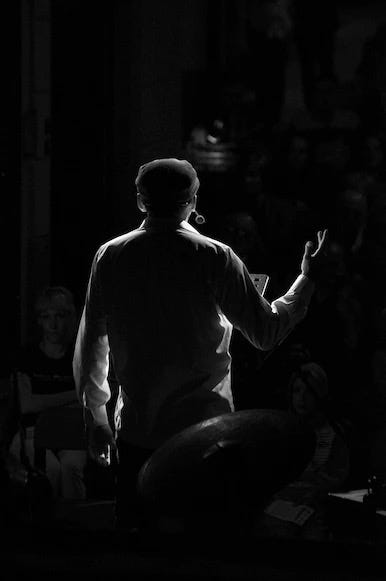
When you write, are you like an actor, alone, on center stage?
Or do you, somehow, make room for your audience?
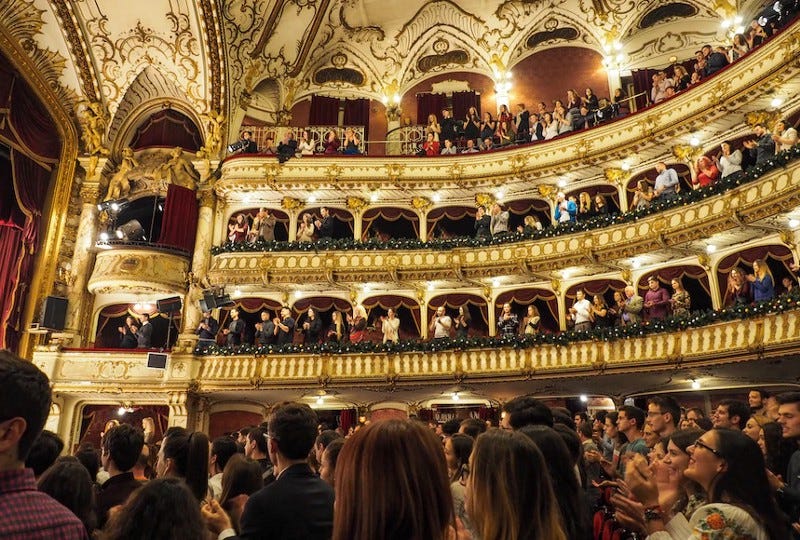
How do writers make room for their readers?
The beginning of an answer comes from Boateng Sekyere who wrote here about the importance of a writer asking how she can make her words relevant to the reader.
How does a writer do this?
To answer this question, I put on my Medium-reader hat and asked what value I receive from some of my favorite writers.
I came up with four categories, with a treasured writer representing each.
A writer can:
Teach us something we don’t know
Toni Greathouse teaches here how the original intention of France’s Statue of Liberty gift to America was to commemorate the abolition of slavery. The statue’s original hue was bronze to underscore this intention. Like all good teachers, Toni fits this story around a personal narrative.
Toni provides valuable detail about how all this late 19th-century history was airbrushed away by America’s Jim Crow politicians. This fall a colleague and I are teaching a Life Long Learning course on the 1619 Project. In the first session we will begin with Toni’s illustration of revisionist history.
Ask an important question
What does it mean to be spiritually awake? Dave Karpowicz asks that question here and, just as important, provides answers from many perspectives. Dave provides a 5-minute mini-tutorial on Socrates’ dictate that an unexamined life is not worth living.
For a spiritual searcher like me, Dave’s “nothing, however, is linear; there are setbacks and failures” was both balm and boost.
Challenge a settled notion
Viktor Frankl’s Man’s Search for Meaning is one of my favorite books. Frankl’s book is about survival in Nazi concentration camps and about life’s purpose. Purpose writes Frankl, comes not from one’s inside but from the outside, from “what life expected from us.”
I still love Frankl’s focus on how my life’s purpose comes from how life questions me “daily and hourly.”
But Nan Hutton, ThD challenges my thinking about purpose. About a month ago, I spotted an article of hers with this subtitle: “Your purpose will not be found “out there”.
This is a wonderfully nuanced essay that helped me see my binary thinking about purpose, either from the outside or inside, is too simplistic.
Model vulnerability
Many Medium writers do this for me so I was tempted to list names. But I don’t want to risk leaving someone out.
Instead, I will mention Mukundarajan V N who is new to me but not to many of you. His essay on how Medium helped him through loneliness is very powerful.
And encouraged me to risk describing my vulnerabilities in my writing. That is still a work in progress but another unexpected treat on my Medium journey.
Universalize experience
It’s a mystery to me how some writers can describe their experiences, internal and external, in a way to help the reader see how he might feel or see or do in a similar way.
Sara Burdick is a master at this, in all her articles. She writes about living in another country (Columbia), relationships, family, travel, the land, children and work in a way that transcends her stories.
I got the idea for the actor on a stage metaphor for a writer from Marion Roach Smith’s wonderful little book The Memoir Project.
Smith says that a writer must continually ask “what is this piece about?” If the answer is it is about my story, this isn’t enough.
The actor is hogging the stage, paying no attention to the audience.
When I wrote, “Do You Remember Your First Date?” I asked myself Smith’s question, what is this about, as I wrote and edited. My first date experience was the illustration but the article was about the insecurity of all 17-year-olds.
To use my categories, I tried to model vulnerability and universalize experience.
Medium is a treasure trove of writers who teach, ask, challenge, model and universalize.
It is an honor to join them, as readers and writers, on this journey.