How Solar Energy Technology Is Becoming More Efficient
An explanation of three generations of solar cell technologies
Credit: This article is based on the scientific article “Solar photovoltaic technology: A review of different types of solar cells and its future trends” by Mugdha V. Dambhare, Bhavana Butey, and S. V. Moharil (Full citation and link available at the end of the article)
Under the current warming of our planet due to increased CO2 levels, energy sources like fossil fuels are being replaced by renewable sources. One important renewable energy source is solar energy. It is valuable because we receive large amounts of energy, it is free and doesn’t emit CO2. And although it is a great alternative, very little of the available energy is used.
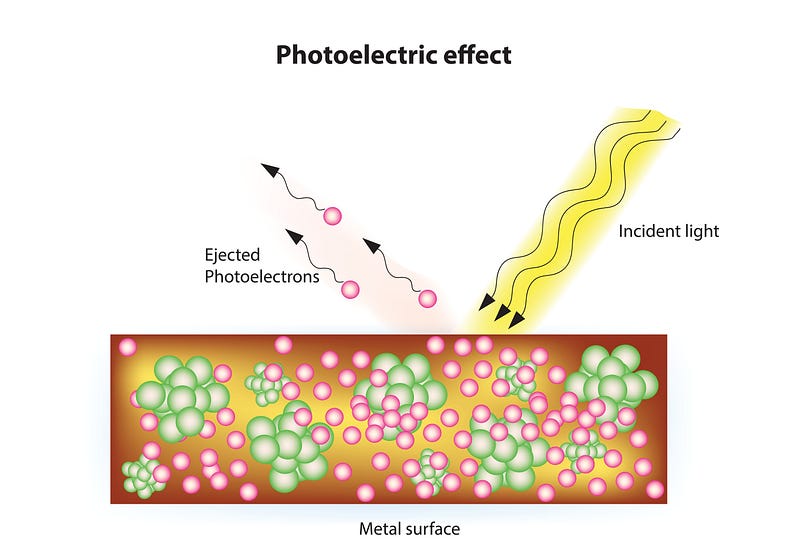
To convert sunlight energy into electricity, solar photovoltaic technology has been invented. This technology is based on the photoelectric effect. This effect means that photons from the sunlight can be absorbed by electrons, which are set free and become part of an electric flow or current. A photon is a tiny package of energy in light and an electron is a particle in an atom that travels around the nucleus of this atom. When electrons travel to another atom, they carry electricity.
In this video is explained how this effect is used in a solar cell (from 2:42 to 6:41):
This photoelectric effect has been used to develop different solar technologies. This is how different generations of solar technologies work and become more efficient. More efficient in this case means that with the same amount of sunlight more electricity can be generated:
First generation solar cell technologies
The first generation of solar technology are crystalline solar cells, which use pure silicon crystals, and is currently with 80% market share the most commonly used technology. There are two types of crystalline solar cells: mono and polycrystalline solar cells. In monocrystalline solar cells, the crystal purity of the panel cells is higher than in polycrystalline solar cells. This makes monocrystalline solar cells more costly, but also more efficient. Their efficiency is just above and below 20%. In this video, differences between both types are explained:
Second generation solar cell technologies
As obtaining pure silicon is complex and costs a lot, the second generation of solar cell technologies uses a very thin layer (1μm or 39.4 μin) of silicon instead. That is why it is also called thin-film solar cell technology. One major advantage is that producing thin film solar cells requires a lot less energy than cells from the first generation so the energy payback period is a lot shorter.
One example of a solar cell that uses thin film technology is Copper Indium Gallium Di-Selenide (CIGS). This thin film solar cell is manufactured by putting a thin layer of copper, indium, gallium, and selenium on glass or plastic, with front and back electrodes to collect the current. The efficiency is 20.8%. This technology is explained in this video:
Another example is Cadmium Telluride Solar Cell Technology, which has an efficiency of 21%. In this video, this technology including advantages and disadvantages is explained in more detail:
Third generation solar cell technologies
As the efficiency of the first and second generation technologies is around 20% with a theoretical maximum between 31 and 41%, the third generation focuses on increasing the efficiency by absorbing more incoming photons.
One example of solar cells with higher efficiency is Multi-junction or Tandem solar cells. They use multiple layers with different characteristics, which can absorb different parts of the light spectrum. With these cells, the efficiency is increased to 26% with a theoretical limit of 86.8%. In this video is explained, how combining layers works:
Another example is Dye-sensitized Solar Cells (DSSC). The working of these cells is inspired by the photosynthesis of plants. By integrating different dyes into a cell, photons from a wider solar spectrum can be used to generate electricity. In this video is explained how these cells work (the last minute of the video is missing, but as the rest is really helpful, I refer to it anyway):
A third example is Perovskite Solar cells. These cells use a material called perovskite instead of silicon. The advantage of this material is that it can be manipulated so that different parts of the solar spectrum can be absorbed. By combining different versions of this material in different layers, more light can be absorbed. In this video, Perovskite solar cells are explained in more detail (from 6:42 to 12:50):
A fourth example is Quantum Dot Solar cells (QDSC). These cells consist of tiny particles of only a few nanometers in size, which can absorb photons. As these particles can have different properties, such as size, shape, and material, they can absorb a broad solar spectrum and reach a theoretical efficiency of 44%. In this video, researchers explain what they are researching and the advantages of this technology:
Conclusion
So, solar cell technologies are becoming more efficient, because the second generation makes the production of solar cells cheaper, and the third generation makes better use of the available sunlight, by capturing energy from a broader solar spectrum.
Related articles
Why Energy From Waves is A Great Renewable Energy Source
Credit
This article is based on: