
How Socks Led To Firebombs — The ‘Allah’ Sock-Gate Controversy in Malaysia Explained
A Test for Malaysia’s Fragile Unity
In Malaysia, On 13 March 2024, Islamic preacher Firdaus Wong Wai Hung brought attention to the sale of socks bearing the word “Allah” at KK Super Mart, a prominent 24-hour convenience store chain in Malaysia. Firdaus Wong has always been one of the most respectable and influential Muslim figures. In a deeply pluralistic and polarised Malaysian society, being a Chinese Muslim convert presents an opportunity for Firdaus Wong to act as a bridge for Malaysian non-Muslims who are interested in Islam, a responsibility I believe is incredibly important in Malaysia. And he has indeed fulfilled this role through his efforts like founding Multiracial Reverted Muslims (MRM).
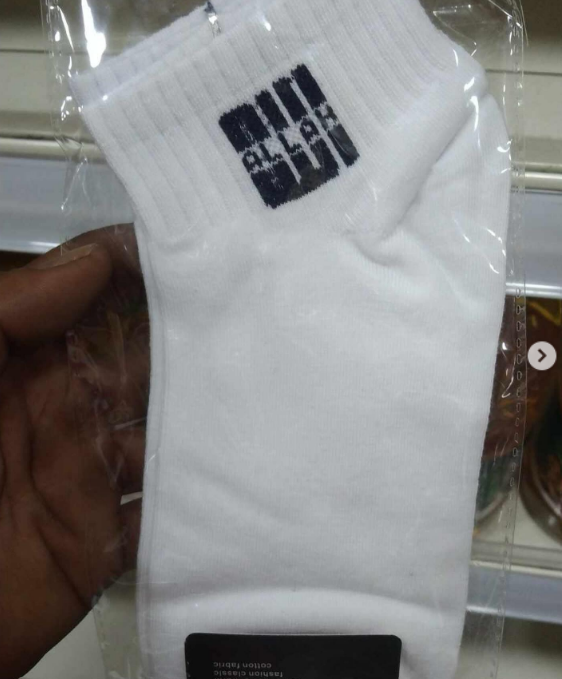
Amidst his commitment to fostering understanding, he inadvertently found himself embroiled in an event that ignited further friction and controversy. His post quickly gained traction, stirring concerns among Muslims who perceived the depiction of religious symbols, particularly on garments like socks, as disrespectful. The placement of the word “Allah” on any item should be handled with utmost care and respect. However, as is often the case in Malaysia, the issue extends beyond religious sensitivities to include racial tensions and underlying subtexts.
Fanning the Flames
Anyone familiar with Malaysia’s political landscape understands the significance of the 3R elements (Royalty, Religion, and Race), which have long played a defining role. The controversy isn’t solely about the misuse of the word ‘Allah’ on socks; it’s about Muslims feeling marginalised by a Chinese business. The underlying sentiment is that Muslims perceive the actions of the Chinese business as insensitive to their beliefs, further exacerbating racial and religious divisions. Arguably, Malaysia has never been more polarised. Despite being under a unity government led by Prime Minister Anwar Ibrahim, religious and racial tensions persist, amplified more than ever through social media platforms.
The escalating 3R issue is fueled by politicians who consistently exploit such sentiments for political gain. This was evident when Akmal Saleh, the Youth chief of UMNO, the country’s oldest Malay National political party, announced plans for a boycott against the chain. Despite the founder and executive director of KK Mart Group, K. K. Chai, issuing a public apology during a press conference three days after the incident and displaying apology messages on electronic screens and cash registers at KK Mart outlets nationwide.
“We don’t want to offer mere excuses,” — Founder and executive director of KK Mart Group, K. K. Chai
Dissatisfaction lingered among netizens. They questioned how such a product could have been sold without proper oversight and called for stricter measures to prevent similar incidents in the future. As of 25 March 2024, the police have received 178 reports regarding the socks and 30 reports expressing displeasure over Facebook postings on the issue.
KK Mart clarified that the socks with the offensive print were on consignment from a vendor, Xin Jiang Chang Sdn Bhd, and had been removed from shelves. Xin Jiang Chang, located in also issued an apology, stating that the socks were imported from China and that they were previously unaware of the inappropriate print. Meanwhile, the factory temporarily halted operations due to concerns about personal data leaks of its employees and threats to burn down the premises.
KK Mart has also filed a lawsuit against Xin Jian Chang for alleged sabotage. The company is seeking over RM32 million in damages, as well as RM1.5 million for every week from the date of judgment on the suit, as compensation for lost profits. On 26 March 2024, K. K. Chai, along with his wife Loh Siew Mui (a director of the company), was charged with intentionally wounding the religious feelings of Muslims. Three officers from Xin Jian Chang were also charged for abetting the offense. All five defendants pleaded not guilty to the charges.
From Boycotts to Attacks
Regrettably, the situation has worsened. In the past week, there have been three incidents involving Molotov cocktails or petrol bombs being thrown at KK Mart stores in the states of Perak, Pahang, and Sarawak. These attacks resulted in small fires at the shops. Fortunately, no injuries were reported. Law enforcement agencies are actively investigating each assault to apprehend those responsible. There is also circulating footage showing individuals vandalizing merchandise and food products inside KK Mart outlets.
Final Thoughts
As events unfolded, an important question emerged: How far do we go? As a Malay Muslim, I grapple with a religious dilemma; does showing compassion and forgiveness make me any less of a Muslim? When the socks issue arose, my initial reaction was one of dismissal. I wanted those who are responsible to be held accountable and that's it. This is because Islam cannot be diminished by the actions of a few who choose to act foolishly. The message has been made clear; the director of the Criminal Investigation Department confirmed that investigations have been completed and legal action is imminent. What Akmal did however, is ‘outside the law’, he called for a boycott.
The boycott movement has escalated in Malaysia as the conflict in Gaza worsens. Somehow, the movement has also spilled over into intra-ethnic tensions among Malaysians, as some Chinese and Malays have chosen to boycott each other due to the racial tension caused by the socks issue. There have been calls to boycott Firdaus Wong from entering business premises owned by Chinese.
The decision to boycott is left to individuals; the choice to participate arises from a desire to contribute to the opposition against Zionist oppression, driven by the disappointment of Muslims with the ongoing suppression. This ‘small act’ is seen as the least they could do to alleviate the suffering of Muslim brothers and sisters in Gaza. It’s not that they don’t care about the economy; rather, it stems from a sense of helplessness and frustration.
However, the boycott movement should also be approached with caution. The fact that some politicians call for boycotts irresponsibly, causing harm to racial relations in Malaysia and escalating to attacks, is something to ponder. How sentiments are used, particularly in politics, should be carefully considered. Many fellow politicians, including those within UMNO, have urged Akmal to stand down.
Another one of my concerns is how non-Muslims perceive the sensitivities of Muslims, particularly in the context of commercial products. The design of the “Allah” print was created by a Muslim artist for free use. A comment on X from a user who didn’t understand the uproar raises question about non-Muslims understanding on the issue, and this needs to be actively addressed by Muslims ourselves. Non-Muslims may assume that Muslims would appreciate any item bearing the name of God, given the importance of God in our lives. However, this assumption is not accurate. For Muslims, it’s not simply a matter of having an item with the name of God, it’s about the context and manner in which religious elements are used. It is quite different from owning a fan item.
The verses of the Quran and any words with Islamic connotations, especially those referring to entities held in the highest regard such as Allah SWT and Muhammad SAW, should be treated with utmost respect. In Islam, it is uncommon to adorn clothing or everyday items with such elements. This is because items bearing sacred elements must be handled with care and cannot be placed haphazardly for fear of disrespect. Even I have always avoided acquiring decorations, mugs, lamps, posters, or anything with Islamic prints because they can be difficult to maintain in a limited living space. You cannot simply dispose of them in the trash if they break or take up space.
In response to the recent events, Yang di-Pertuan Agong Sultan Ibrahim has expressed his displeasure and called for stern action against those responsible. He has also urged all parties to refrain from taking advantage of the controversy. With Eid approaching, the potential for violence at any of the 881 branches of KK Mart across Malaysia is deeply concerning. As Muslims gear up for their celebratory occasion, it’s crucial to prioritize peace and harmony. Malaysians should take a moment to reflect on the core teachings of Islam and strive to embody them in our interactions, fostering unity, compassion, and understanding within our communities.


