
How Smartphones Killed Travel
Hello, officer? I’d like to report a murder
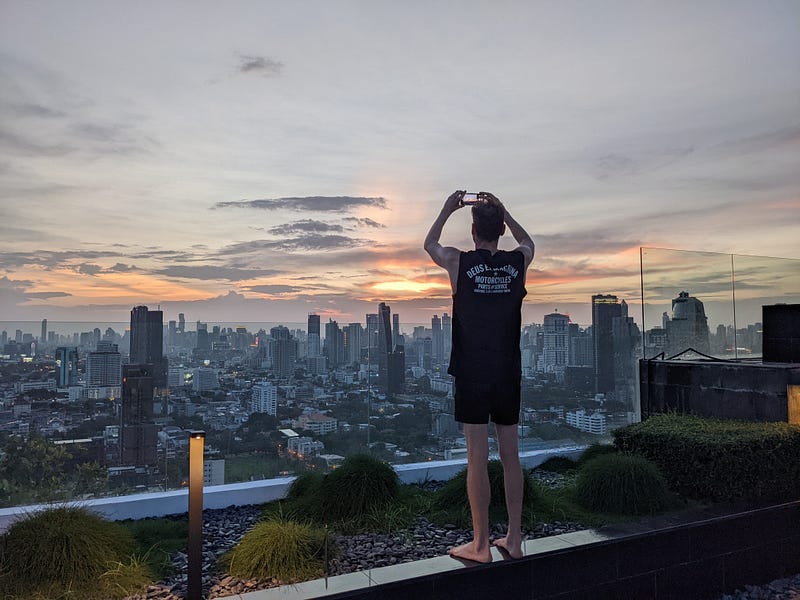
I was one of the lucky ones. I got to experience what it was like to travel before smartphones somehow made us all that little bit dumber. This was back at a time when if you wanted to take a photo, you had to do so with a physical camera, and the internet was something you could only access by paying for it at an internet cafe or using one of the dodgy computers at your hostel.
That’s not to say travelling with a smartphone isn’t convenient. I couldn’t imagine travelling without one now, not with my terrible sense of direction and Google lens translating the Japanese menus that I’m surrounded by here in Okinawa. And yet for everything that the smartphone has given to us in this age of budget airlines and Airbnb, it has also stolen so much of what made travel such a magical experience in the first place.
Going to another country was like unraveling a mystery.
You had to peel away the layers as you searched for the nebulous truth that was lurking beneath, completely unaware that the more you saw, the more you were seeing reflected in yourself. These days, the mystery is gone. Anything that can be done has been done. Not just done, but recorded, edited, filtered, and served up to us by algorithms that are specifically designed to keep our heads buried in our phones while the world blurs around us.
There was a time when going out with a camera was a conscious choice. You had to be strategic about it, you see. You couldn’t just take your camera out every night, there were too many dangers with that. Maybe you were going to a sketchier neighbourhood in Bogota or you planned to get incredibly drunk at a beach bar in Railay, meaning that your camera would stay locked in your backpack. Some nights, you’d just have to remember [if you could], and were free to experience them without the window of a lens.
And it was fantastic!
I was in Koh Tao recently with a buddy of mine. We were enjoying a beer on the beach at sunset when a group of girls came and sat next to us. They proceeded to take about seven hundred photos of themselves, all the while one of nature’s most spectacular displays set the horizon on fire in front of them. I took one photo and this was it.
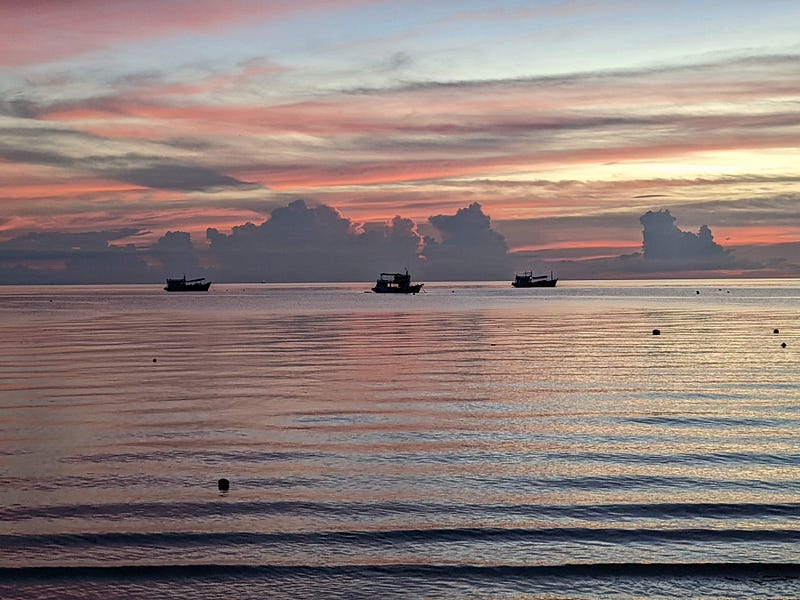
Did they actually enjoy the sunset?
I’m not sure, it didn’t seem like they were paying much attention to it as they took photos of themselves, picked out the best ones, edited them, and posted them on social media while it vanished below the horizon. It was like they forgot to enjoy the moment in favour of showing people back at home how much they were enjoying the moment.
I’m not quite sure where I would be without Google Maps. Like, literally, I’d still be lost and wandering aimlessly, I have absolutely no sense of direction. I once got lost in Riga’s old town, spending hours trying to find my hostel in what is essentially four streets.
But it was an adventure turning up to a new city with the directions to your hostel written in your notebook. It was like going on a treasure hunt. Turn left as you leave the station, right once you pass the man selling pelmeni on the side of the road, head up the alley with the little hole-in-the-wall bar on the corner, cross the bridge and voila, there you are.
Now, you follow a little arrow everywhere. To your guest house, your hostel, and more importantly, to places that are measured in one of five stars. The bars, restaurants, and cafes that we experience when travelling have now been curated for us thanks to a review system that seems to define everything we do in this modern age.

Let’s say you’ve just finished walking around Shinjuku Gyoen. Okay, great, time to find somewhere for lunch, so whip out your phone, start scrolling, and search for somewhere that is four stars and above only, please. Cool, there it is, you’ve found it, and it’s only two hundred metres away. You look at the photos and check the menu and decide what you want to eat before you even get there and…
Doesn’t that just sound boring?
Look, I get it, no one wants to have a bad meal when they only have two weeks to experience a country. But if we dictate all of our travels based on reviews and photos that other people have left behind for us, it robs us of our agency to discover something new. It makes us passengers in our own journey, tunneling towards a predetermined destination and I have no idea how to stop doing this myself.
There was something so romantic about the joy [and the pain] of arranging to meet your new best friend or lover in another bar, another city, a different part of the world and seeing them come walking through those doors, or waiting for them to never arrive. It was beautiful and it was horrible and it was perfect, if only for all its imperfections.
Okay, so maybe I got stood up on more than a number of occasions, but I’d much rather that than the Instagram graveyard that I have now. All these people that I can barely remember are haunting my feed and distracting me from the people that I can’t forget. They never speak to me, I never speak to them, they’re simply the ghosts of half-remember motorbike rides through Laos and cruises in Halong Bay.
Our phones have given us the ability to contact anyone at any time and yet it’s somehow made us all so much more insular when we travel. I stayed at a hostel recently although why, I have no idea. I’m way too old for that shit and yet there I was, in a common area surrounded by people who were scrolling through their phones.
There was no talking about places they’ve been or sharing information, the most valuable currency to any traveller. They were sinking into the couches and engorged in their screens until happy hour started and they all got drunk and tried to sleep with each other.
I’m fully aware of the irony of lamenting smartphones when that is no doubt where you’re reading this article. I think I’m just sad. Sad about all those experiences that I’ll never get to have again, because I’ve become so reliant on this damn thing in my pocket that I have no idea how to live without it.
You can’t put the toothpaste back in the tube and smartphones are here to stay, irrevocably changing the way we all travel. But if there is any comfort I take from this, it’s that travel will endure. Just ask Bashō, Seneca, or Cicero, travel has been around for thousands of years and it will be around for many more to come. The truth is that it will take more than smartphones to kill travel, they simply killed the bits that I loved about it the most.


