
How Small Goals Can Lead to Big Writing Success
Find your sustainable writing level
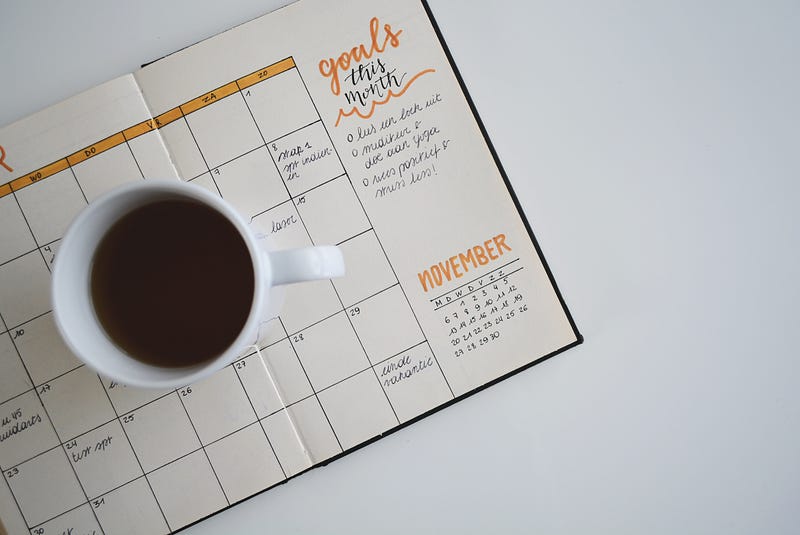
The first time I participated in NaNoWriMo, I failed big time. The goal is 50,000 words, and I didn’t even quite reach 20,000. Ouch. Given I’d announced my participation on social media when I started, I felt like I might as well have had ‘failure’ tattooed on my forehead by the end of it.
I was disappointed, but also convinced I was an incredibly slow writer and that NaNoWriMo was just not for me.
With that in mind, I didn’t attempt NaNoWriMo again for another 5 years. Not only that, but my writing afterwards was sporadic and I felt like I wasn’t getting anywhere with any of my projects. I wasn’t pushing because it all felt so unattainable. Why did it feel that way? Because I was well and truly guilty of biting off more than I could chew, and then letting it all overwhelm me.
I’m still guilty of that, to be honest, but I’ve learned the power of breaking big tasks down into tiny little tasks to stop my brain from thinking too far ahead.
Why did I attempt NaNoWriMo again at all when even the small daily task of 1667 words is obviously too big for me? Because I discovered Camp NaNoWriMo and the power of tiny goals. Camp takes place in April and July every year, and participants get to set their own goals. Hell, yeah!
This was way more up my alley.
Be a writing rebel
Not only do I love Camp NaNoWriMo because I can set my own mini, baby goals, but I’m a total rebel during November NaNoWriMo (where the aim is 50,000 for the month) and continue to set my own goals then too.
While I’ve got a million and one things on my to-do lists, and I’m trying to juggle it all while simultaneously looking after my two small humans, my writing goals need to stay teeny.
I need to feel a sense of achievement to keep me motivated and moving forward — tiny goals give me that in spades.
Plus, my writing goals apply to lots of different writing projects. I’m constantly working on a few fiction stories at once, in addition to working on multiple non-fiction pieces at once. I flit back and forth between them all and always work on what takes my fancy at the time.
Why not focus on only one and get it done sooner? So my brain stays positive and I’m constantly writing something. I can push through the hard parts of writing a first draft because I can work on other projects in the meantime and give my mind time to come around to those hard parts without forcing it. This way, writing never feels like a chore to me. And my writing is better for it in the end.
When I do force myself to work on something I don’t want to work on, my writing absolutely sucks. I’m okay with writing bad first drafts, but when they’re absolutely stinkin’, I’m better off using that time to work on something I know I can produce decent writing on.
So, be a rebel, I say.
Work on whatever you feel like working on and set a small goal. And don’t forget, every piece of writing adds up. Even if you’re adding your journal entries to your daily word count. If it helps flex your writing muscles — it totally counts!
Start with a ridiculously small goal
We can’t all spew out thousands of words a day. Most of us have children, work and/or a bunch of responsibilities that get in the way of writing. But thankfully, we don’t need to write thousands of words a day.
Even a couple hundred words every day equals 73,000 words a year — that’s a first draft right there, my friends. And a year really isn’t a long time to be working on the first draft of a novel.
So, what’s the harm in starting with the tiniest goal you can think of?
Five minutes of writing a day? Sounds like nothing at all and nothing to brag about. But, if you’re struggling to reach your big writing goals and feeling shit about it, try going for a ridiculously small goal instead. You’ll definitely be able to write for five minutes every day and you’ll feel damn good to have something to tick off your daily to-do list. And you know what? I bet most days you’ll write for longer than those five minutes.
Once your tiny goal feels good and you’re achieving it all the time, feel free to up it a bit. But, if it’s working to get you writing consistently and chipping away at that big end goal, why change it?
What my small goals look like
What do my goals look like, you ask?
I set a goal of 15,000 words for my first Camp NaNoWriMo. And I reached it! I can’t tell you how much I ended up with because I lost some of my stats and word count when the NaNo site updated (wah) but I reached my goal, and it felt damn good.
The next time I participated in November NaNo, I set my own goal of 18,000 words and ended up with 23,814 words!
When it comes to every other day of the year when I’m not participating in NaNo, I don’t set word count goals. My goals each day involve small writing or writing-related tasks that I can tick off at the end of the day.
They might look something like this:
- Finish picture book draft
- Outline newsletter
- Start writing new article
- Work on town meeting chapter of MG novel
- Queen Elizabeth I research for YA novel
You might need to be more specific with your goals to feel like you’ve done enough to enable a tick-off for the day, but for me, this works really well. Even if I have something I need to continue the following day, I tick it off then add a variation. E.g. I might need to add in more specific Queen Elizabeth I research for the following day, but I needed it more general on that first day so I could figure out what I needed (and what I didn’t need) — make sense?
The psychology of small achievements
Short-term goals provide the foundation for something greater.
Breaking down a big goal into smaller parts makes that big goal suddenly achievable.
If your goal is to write a 70k plus novel, that sounds incredibly daunting, doesn’t it? And you’re likely to procrastinate without setting smaller goals and milestones to reach for along the way.
If you break that 70k down into chapters or daily/weekly word counts, that’s much more attainable. Moreover, you’ll feel great at every minor step and not just at the end. That positive reinforcement will keep you going right until you can finally type ‘the end’ (and prepare yourself for all the editing to come!).
It’ll also keep you wanting to write more. If it feels amazing to have reached your small goals day after day, it’s gonna feel amazing to keep doing it once that big project is done. You won’t want to stop, it won’t feel like a massive chore, and you’ll have created a habit you can stick to.
Track your progress
Make sure you keep track of your writing progress in some way. I’m currently participating in NaNo and using their website to track my word count. I also use Trello to track all my writing.
Trello works well for me because I can create cards for all my articles and move them around depending on what stage they’re in (draft, edit, submit, published). I cannot tell you how amazing it feels to move a project into the ‘published’ or ‘completed’ list.
When you track your progress, you can also set rewards for certain milestones. Rewarding myself with a new book is the perfect motivation for me!
To sum up …
Setting small, achievable goals with your writing will keep you going and will stop you from feeling overwhelmed by the big end goal.
- Be a rebel — do things your own way. If jumping around on different projects works for you, do it!
- Set the most ridiculously small goal possible — make it definitely, no doubt about it, achievable. Reach that goal every single day, and exceed it for a bigger boost.
- Record your progress — and reward yourself when you reach bigger milestones (even the smaller ones, if you wish. I’m not gonna judge you if you eat an M&M every 100 words).
For more of my stories plus access to writing resources, you can sign up for my newsletter here.


