
How Shinrin-Roku, the Japanese Art of Forest Bathing, Changed my Life
I found solace in the forests of New England to get me through a dark period of my life.
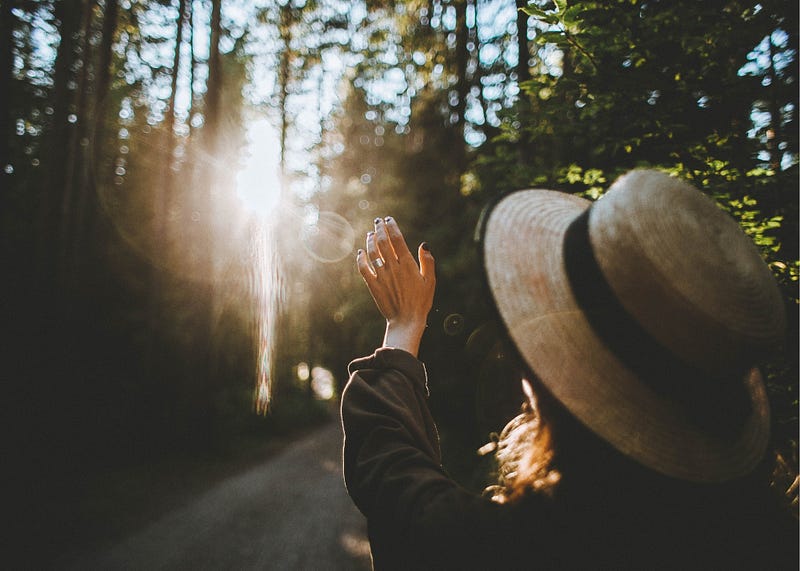
In my 8 years of living in New York City, I have never experienced tension in the air like there was at the beginning of the Covid-19 Pandemic. One week I was taking the subway from my home in Brooklyn to Greenwich Village to commute from work, the next week, the city mayor was shutting down schools and restaurants.
I lived alone in a one-bedroom basement apartment in Brooklyn and started to imagine what my life would be quarantined at home with no one to keep me company, without even sunlight streaming through my windows in the morning.
Uprooting Myself to be Closer to Nature
I happened to have a good friend who lived in Rhode Island, and we had visited each other in our opposite worlds many times. New York City was fast-paced, loud, and exciting. For an emerging writer and makeup artist, it was the best place I could be. Rhode Island was quiet, filled with friendly people and beautiful Victorian homes. Most importantly, Rhode Island was full of beautiful parks, forests, and surrounded by the ocean.
My friend suggested that I come to stay in Rhode Island for a few weeks until the whole Covid-19 thing blew over. Obviously, the thing never blew over, and 1 year later I’m still here, and I have no plans on leaving.
Processing Grief and Trauma Through Shinrin-Roku
It’s been a difficult year of loss, transition, and growth. I lost a friend to suicide and a beloved aunt to Covid-19. Stress mounted to the point of exhaustion, and I fell into a deep depression.
The only thing that remained a consistent friend to me throughout the pandemic was long walks through beautiful forests.
I had always loved nature, working as a camp counselor and a state park employee in the past. I was torn between the neon glow of the city and the grounding energy of the outdoors throughout my life. During my 8 years in New York City, moving somewhere closer to nature was always in the back of my head. The pandemic and the shift to remote work gave me the opportunity.
Making Shinrin-Roku a Daily Practice
One of the biggest changes from city life to the ‘burbs was the amount of walking I would do becoming massively reduced. In Brooklyn, I’d walk a mile to the train since my apartment was on a bus line, and NYC buses leave… a lot to be desired. I would walk from the subway to the office, and often take midday strolls around the city. I would always walk a minimum of 10,000 steps a day, and when I moved to Rhode Island, that was massively reduced.
I began going for walks every day. My friend lived atop a mile-long gravel driveway in the woods, and the surrounding areas were full of winding footpaths through the woods.
Discovering Forest Bathing From a Witchy Guide
In November, I took a trip to one of my favorite places, Salem, Massachusettes, and took part in a witch’s forest tour. That’s when I was introduced to the concept of Shinrin-Roku. The Japanese Ministry of Agriculture, Forestry, and Fisheries created this phrase in 1982, which translates to ‘forest bathing.’ The lovely witch leading the tour explained to us the magical healing that occurs when one spends time in the woods.
The Japanese government has officially dedicated 48 forest trails for the specific use of Shinrin therapy. The practice is considered a form of preventative medicine, since it lowers stress hormones and reduces blood pressure, preventing heart disease and stroke.
When the New England winter became colder and snowier than New York City, and it was too cold to spend time outdoors, I felt so deprived. I had gotten used to my daily meditative time spent in the woods. Studies show that even just 15 minutes of Shinrin-Roku can make a difference in your stress levels, so I did my absolute best to spend even a little time in the woods, even if it was freezing outside.
How to Practice Shinrin-Roku
Consider Shinrin-Roku to be more of a meditation than an exercise. You can practice in whatever way works best for you, just be sure that your phone is turned off, and you’re present without the distractions of technology.
An important aspect of forest-bathing is allowing your senses to experience everything around you. Don’t use headphones to drown out the sounds of the woods around you. Pay attention to the sights, smells, and sounds you experience. Notice when a fern brushes against you or a thorn pokes you. Look out for any animal friends you may come across on your journey.
Do the best you can do follow your intuition. Maybe one day you want to briskly hike through the woods, and the next you may want to sit on a rock and meditate. Do what feels right to you. If you become quiet within yourself, your intuition will guide you effortlessly.
When you begin your practice, you may find yourself coming across some difficulties. It can be hard to slow down in the midst of such a hectic world. Tempting as it may be to turn your forest bathing experience into a high-intensity hike, try and see it more as a healing practice.
The most important thing is that you continue to practice Shinrin-Roku every day. Once you begin to absorb the healing energy of the forest around you, it will become a lifelong habit.


