
How Seneca Can Save Your Life — 24 Stoic Lessons for Modern Living
#12. No one ever became wise by chance
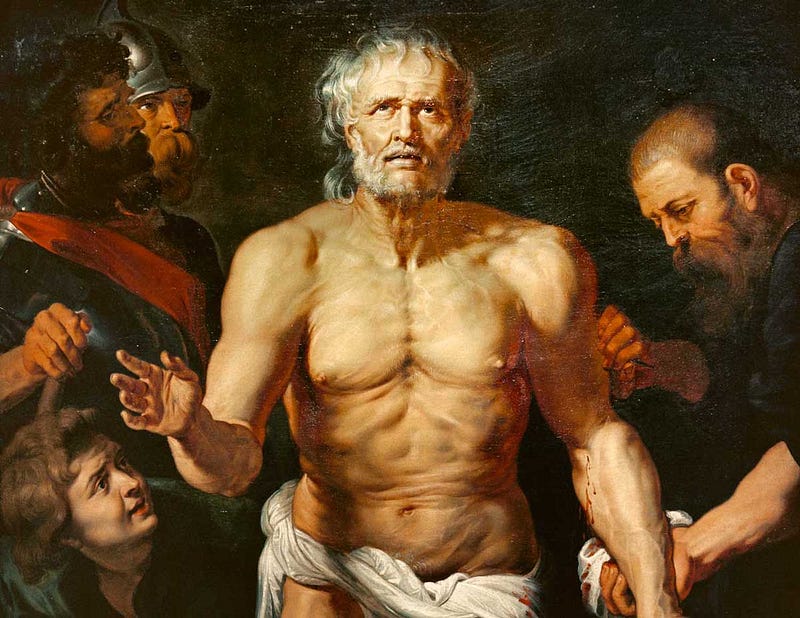
The wisest students of human nature in ancient times, and perhaps of all time, were known as the Stoics, writes Ward Farnsworth (author of The Practicing Stoic). But what can Seneca, a Stoic philosopher from two thousand years ago, teach us about modern living? As it turns out — much of Seneca’s writing reads as if it were written today.
Letters from a Stoic
Seneca exchanged a series of letters (mainly to Lucilius) on wisdom, death, and everything in between. These letters are known today as Letters from a Stoic, and during the pandemic, sales increased by more than 700 percent due to the practical and timeless wisdom they provide.
24 Ways Seneca Can Save Your Life
(1) A great captain sails on, even with his canvas in tatters; even if he has scrapped the ship’s equipment, he keeps the remnants of his vessel on course.
(2) No one can live a truly happy life, or even a bearable life, without philosophy; while complete wisdom renders a life happy, even to begin that study makes life bearable.
(3) What man can you show me who places any value on his time, who reckons the worth of each day?
(4) It is not the man who has too little, but the man who craves more that is poor.
(5) True happiness is to enjoy the present without anxious dependence upon the future.
(6) We suffer more often in imagination than in reality.
(7) Difficulties strengthen the mind as labor does the body.
(8) If a man knows not to which port he sails, no wind is favorable.
(9) You act like mortals in all that you fear and like immortals in all that you desire.
(10) Wisdom is a right understanding, a faculty of discerning good from evil; what is to be chosen, and what is rejected; a judgment grounded upon the value of things, and not their common opinion.
(11) Begin at once to live and count each separate day as a separate life.
(12) No one ever became wise by chance.
(13) As long as you live, keep learning how to live.
(14) It is not that we have a short time to live but that we waste a lot of it.
(15) Let philosophy sink deep into your heart and test your progress not by speech or writing but by the strength of mind and lessening your desires.
(16) We should every night call ourselves to an account.
(17) It is a rough road that leads to the heights of greatness.
(18) To be everywhere is to be nowhere.
(19) Reaching the heights means knowing what to rejoice in — finding prosperity in that which no one else can control.
(20) There is but one good, and that is both the cause and the mainstay of happiness: trust in oneself.
(21) Complete virtue consists of the evenness and steadiness of a life in harmony with itself through all events, which cannot come about unless one has the knowledge and skill of discerning things human and divine.
(22) A seed is just a little thing, yet when it lands in the right spot, it unfolds its resources and expands into a great growing plant.
(23) Take time to consider whether or not to receive a person into your friendship, but once you have decided to do so, receive him with all your heart, and speak with him as candidly as with yourself.
(24) Let us seek out what is best to do, not what is the most established practice, and what can place us in possession of eternal happiness, not what is approved by the crowd.
Final Thoughts
Over the past few years, I’ve been slowly but surely scouring Seneca’s letters in search of wisdom (and even started a Sundays with Seneca series on Perennial Meditations). And I’ve had the privilege of interviewing people like David Fideler (author of Breakfast with Seneca) and James Romm (author of Dying Every Day) on In Search of Wisdom.
If I’ve learned anything from the life and philosophy of Seneca, it is that as long as we live, “one should never stop learning how to live.”
Thank you for reading; I hope you found something useful.
Until next time, be wise and be well,