
How Sara Little Turnbull Developed The N-95 Facemask Out Of A Bra Design
A brilliant female designer helped conceptualize one of the most widely used items in the world at a time when women were typically not in such positions
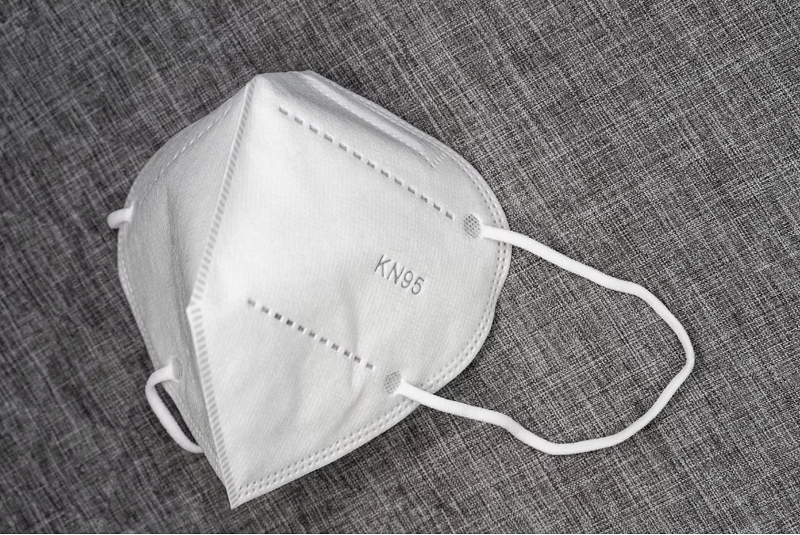
In recent years, the N-95 mask has become a staple of everyday life. With the COVID-19 pandemic, nearly everyone has worn one at some point, and seen countless others similarly equipped. The face covering has been invaluable from a health standpoint and numerous other utilities. However, it got its start from Sara Little Turnbull, who helped develop it from a new bra design she was tasked to create.
Born in 1917 to Russian immigrants in Brooklyn, she grew to a height of only 4'11”, earning her the frequent nickname of Little Sara. She apparently liked this moniker; so much so that she later incorporated it into her name and went by Sara Little Turnbull professionally.
Turnbull was a design consultant working for the 3M company in 1958 for their gift wrap and fabric division. She was tasked with working with Shapeen, a non-woven material crafted from polymers, primarily used to make decorative ribbons. She became intrigued by the way the material molded to forms and began to see numerous possibilities for its utility.
Ultimately, Turnbull gave a presentation to 3M executives titled Why, which showcased more than 100 ideas she had dreamt up for products that could be made from the material. Impressed, the company asked her to design a molded bra cup from Shapeen, marking the beginning of Turnbull’s journey with the fabric.
Despite holding a lower level position with 3M, Turnbull was eminently qualified for her work. She graduated from the Parsons School of Design in 1939. Before joining 3M, she wrote an article critiquing companies for not designing more user-friendly products, catching the attention of industry leaders. She also worked with major companies like Corning, Ford, General Mills and Revlon, at a time where such an impressive resume was not frequently associated with a woman. During her more than 65 year career, the list of companies and products she worked on reads like a veritable who’s who list.
While working on the molded bra cup, Turnbull had a revelation for yet another Shapeen product. She had observed healthcare workers constantly adjusting their surgical masks which were typically tied at the back at the time. Recognizing the discomfort and awkwardness of the masks, she proposed using the molded fabric to create a more comfortable and effective face mask.
Once again, 3M embraced Turnbull’s idea, and by 1961, they introduced a non-woven lightweight medical mask with elastic bands, an aluminum nose clip, and a form-fitting “bubble” shape to fit over the wearer’s face with comfort and ease. Initially marketed for dust filtration instead of medical grade, it wasn’t until 1972 that an improved respirator suitable for industrial purposes was released. 23 years after that, in 1995, the N95 respirator was officially introduced in healthcare settings, more than 30 years after Turnbull’s original vision.
There were few women to achieve the level of success of Turnbull in post World War II America. In addition to her prolific career as a consultant and designer, later in life she lectured and opened a Laboratory for Innovation and Design at Stanford University’s Graduate School.
Turnbull passed away in 2015, having seen the impact of her work that resulted in the N-95 mask. Although she wasn’t here to see how it truly exploded during the recent pandemic, her work will continue to impact the world in significant ways for many years to come.