
Psychology, Self Development, Human Nature
How Rules of Lying Make People Weak and How You Can Use It if You Want
Not being led by liars is not only cool; it’s often beneficial.
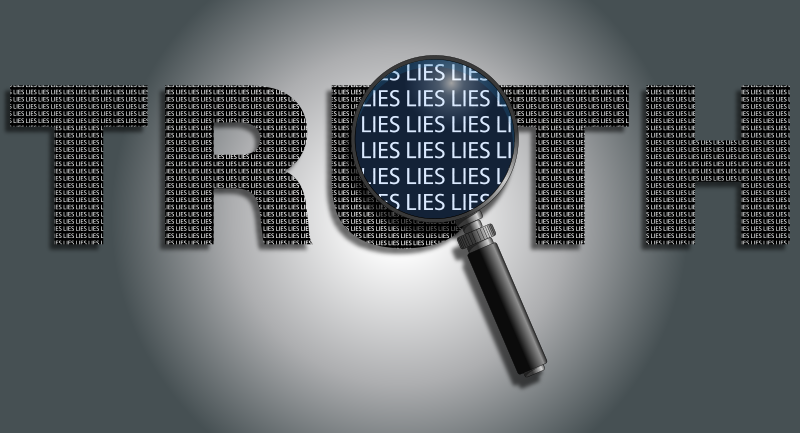
Everyone lies to each other.
That is the plain truth. Believe me.
Parents and children lie to each other, teachers and students lie to each other, bosses and subordinates lie to each other, and so on.
Why? For many reasons, but primarily out of fear.
If people stopped lying, many of them would have to admit so much that it would simply destroy their self-esteem. Others would point fingers at them, and they would be stigmatized forever. There is nothing worse than that.
Yet, lying is a problematic method of self-protection. There is a better one, and one day you will discover that going your own way is more advantageous.
Because if you encounter liars, and they recognize you as someone who can afford not to lie, they get confused. They don’t know what to do. They quickly realize that it’s better to give way to you. It’s safer to back off and harm someone else.
In a word, lying makes one weak, to the point of turning them into a “trembling creature,” as one of Dostoevsky’s characters put it.
Okay, but who am I to talk about this?
I am one like you, doing my best not to lie. And at least I managed to get to the point where if I lie to anyone, it’s to myself. Anyway, it’s better than lying to others.
So, let me give you a couple of examples from my life to corroborate my statement.
To understand these examples, however, you must take into account one important circumstance. Until 2016, I lived in Russia, a thoroughly corrupt country where lies at all levels were the norm.
Of course, Russians are not more deceitful than other people. But historically, it was simply impossible to survive in Russia otherwise. People had to hide from the state for decades and trust no one.
Case of a traffic police officer
For example, if a road police officer stops you, you have to pay a bribe. It is cheaper than paying a fine at the police station. This is mutually beneficial, and almost everyone acts this way. However, when I had a car, I never did it.
I don’t want to portray myself as a hero, I was just disgusted by doing it. Generally, I took an unconventional path, which turned out to be beneficial not just morally but also financially.
So, when a traffic police officer once stopped me for the first time, I was sure he would fine me. But something unexpected happened — he simply let me go.
I was confused, but then I realized what had happened. My behavior broke his pattern of interaction with drivers. When he realized that I wouldn’t offer him a bribe, he experienced what is called a “pattern break” in psychology.
He got nervous and lost his confidence. He understood that there was no point in continuing with me. Perhaps he feared that if he fined me, I would sue him, which was certainly not in his best interest. Other corrupt police officers would have looked at him askance — like, why did you mess up like that? This could have damaged his career.
And in general, it’s better not to deal with psychopaths who brazenly violate unwritten rules, right? (I’m not actually a psychopath, but in that situation, I probably seemed like one).
This was not the only case. About 9 out of 10 times, I wasn’t fined. These policemen were corrupt and avoided dealing with someone who refused to play by the illegal rules.
It’s funny that every time I heard the same key phrase, which meant that there would be no consequences for me — “What is your job?”
You know, in corrupt societies, it is crucial to know who does which job. It immediately gives an idea of a person’s connections within the corrupt network and what can be expected from them. When the law means less than “connections,” a mistake can be costly. If the official targets the wrong person, serious troubles may arise for them.
Case of the Head of the Tax Inspection
Case #2 is even more curious. This time I had to deal with the head of the tax police in our city. Here’s what happened.
I received a job offer in Latvia (where I live now for the last seven years). It so happened that I couldn’t get a certificate from the tax inspection on time because of an error in their digital accounting system. By then, I had already firmly decided to leave Russia, anticipating that Putin’s regime would not lead the country to anything good (you know what’s happening now).
Correcting the error would take at least two weeks. But I only had four days; otherwise, my move to Europe would be at risk. Thus, I had only one option to meet the deadline — to directly contact the head of the tax inspection.
Of course, there is a special ceremony in Russia because the head of the tax police is a big shot. You must find a mediator to help you settle this delicate matter. There may be several such intermediaries, and you lose time and pay money at each stage.
But I knew that there was a more effective way. Here it is: you must go to the Big Shot and tell them directly what you need. The only condition you must adhere to is firmly, holily, and unswervingly believing in your rightness and looking them straight in the eye.
It is a wild, absolutely fantastic pattern break.
And that’s what I did. I entered the reception and asked the secretary where her boss was.
She stared at me in amazement, then became embarrassed and began to babble something like, “What did you want?”
I explained to her that their department was not working as taxpayers expect it to, that this had jeopardized my plans, that this was unacceptable, and that I needed to discuss this problem with her boss.
She found the boss. He looked ridiculously like Michael Douglas, or rather one of his negative characters, Gordon Gekko, a shady dealer from the movie “Wall Street” (1987). Seeing me, he tensed up and invited me to his office.
I repeated to Mr. Gekko what I had said earlier to his secretary — politely but firmly, maintaining eye contact. His body language and speech were almost the same as that of corrupt traffic cops, except that he didn’t ask me what my job was. There was a hint of anxiety behind his seemingly confident behavior.
Two days later, everything was ready. Without any intermediaries, bribes, or other stupid things.
Summary
The lesson I learned from these cases is that lying makes a person vulnerable. If you have to deal with such people, you gain an advantage over them. Often, you can take them down with your bare hands if you have enough life experience.
Notice that I’m not saying that you should treat these people as prey or feel morally superior to them. Many of them are perfectly normal and maybe no worse than you and me. I simply encourage you to avoid the pitfalls, inconveniences, and obstacles that come from those who follow dishonest rules.
My examples may seem very specific, but they are universal to human nature. People prefer to lie too often; over time, it becomes their second nature. They get tangled up in a web of lies and may also try to entangle you in it.
You should not play along with them, and you will need the determination to avoid following their rules when others do.
I am not saying that it is easy. Those people may have significantly more resources than you. The ability to stand your ground demands a lot from you. It’s a subtle and sometimes risky game.
But the truth is on your side, and if it is essential to you, relying on it will give you confidence and strength. You may lose something but still have the most crucial asset — self-respect.
And without self-respect, no one can navigate in the social space. That one will forever wander in the fog, stumbling upon unexpected obstacles.
To lie or to be stronger than that — it is, first of all, your choice. The rest you will receive after you make it.
I wish you to be courageous enough to do without lies, my friend. I will be happy if you do.
You may like my other stories, such as these:
Dear reader, subscribe to my updates and share your thoughts on self-improvement, well-being, spirituality, and our present and future with me!