
BLACK HISTORY
How Robert Smalls’ Found Freedom on Maritime Underground Railroad
The story of a Union army veteran, Congressman, and Black hero
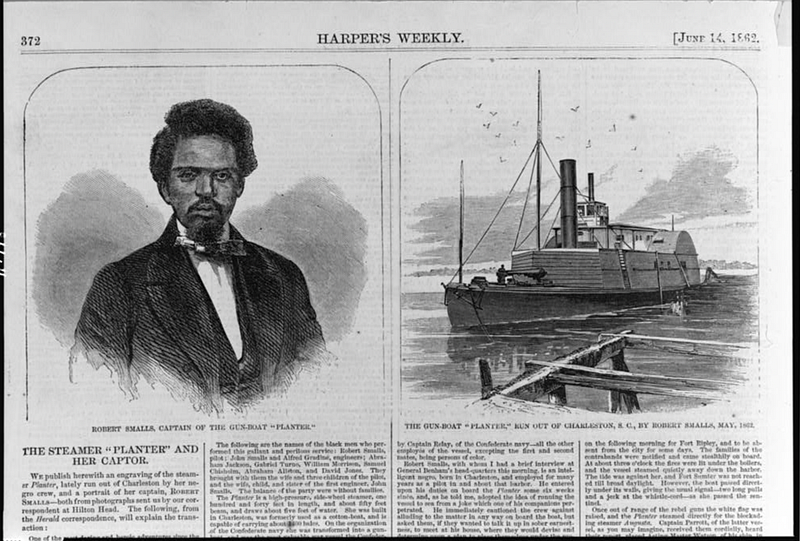
By now, you likely heard many stories about the Underground Railroad, an interconnected network of abolitionists acting as conductors guiding approximately one hundred thousand Black people to freedom from 1810 to 1850. But have you ever heard of the Maritime Underground Railroad?
Those traveling by land often lacked resources due to wide gaps between safe houses. And the steady presence of Slave Patrols made the road to freedom unquestionably dangerous. White patrolmen pursued Black people using hunting dogs. If caught, they faced harsh punishments which served as a deterrent for other Black people dreaming of freedom. Unfortunately, Slave Patrols recaptured most. Professor Michael Robinson noted that the first American Black men to die through law enforcement “can be traced back as early as 1619 when the first slave ship, a Dutch Man-of-War vessel, landed in Point Comfort, Virginia.”
After the Civil War, police officers took Slave Patrols’ place, enforcing Jim Crow segregationist policies. In the modern era, Black people are disproportionately stopped, arrested, beaten, and even killed by police officers — a legacy our country has never fully reckoned with. Kanye West couldn’t be more wrong about his assertion a few years back that “slavery was a choice.” Numerous Black Americans risked life and limb to escape, and many succeeded.
American slavery, as I have seen it in the internal slave trade, as l have seen it on the rice and sugar plantations, and in the city of New Orleans, was full as bad as any slavery in the world — heathen or Christian.
People who go for visits or pleasure through the Southern States, cannot possibly know those things which can be seen of slavery by shipmasters who run up into the back plantations of counties, and who transport the slaves and produce of plantations (Abolitionist Thomas Wentworth Higginson).
While the heroes on the Maritime Underground Railroad are less known than the heroine, Harriet Tubman, “Maritime routes of the Underground Railroad were vital for thousands of fugitives who stowed away, impersonated free Black mariners, bought passenger tickets, or enlisted the aid of sympathetic captains and crewmembers. Runaways depended on maritime Blacks.” Freedom by any means became the unifying mantra of those fleeing the brutal south.
White planters became much more wealthy than their Northern counterparts profiting from cotton, rice, olives, tobacco, coffee, and sugar harvested through forced labor creating an “economic engine of the South.” Consequently, enslaved Black people had every reason to flee, and many did so using the same ships White people used to traffic their goods.
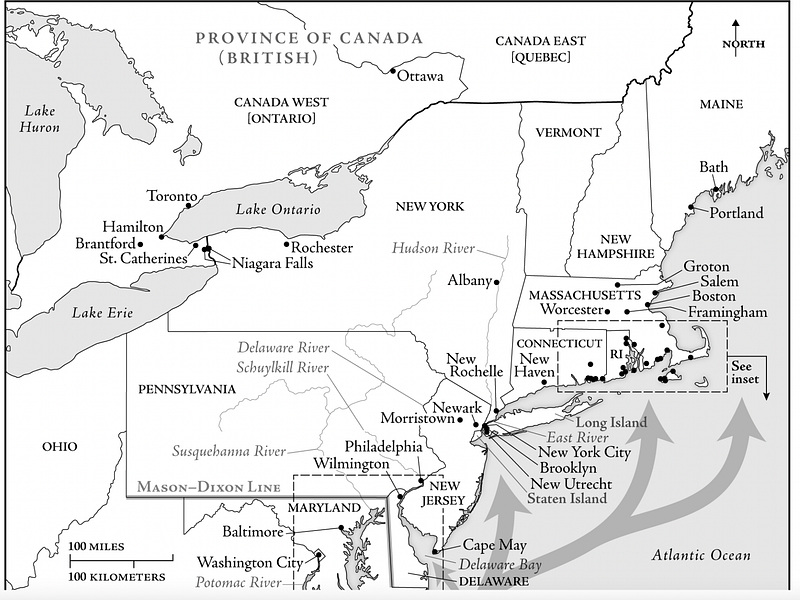
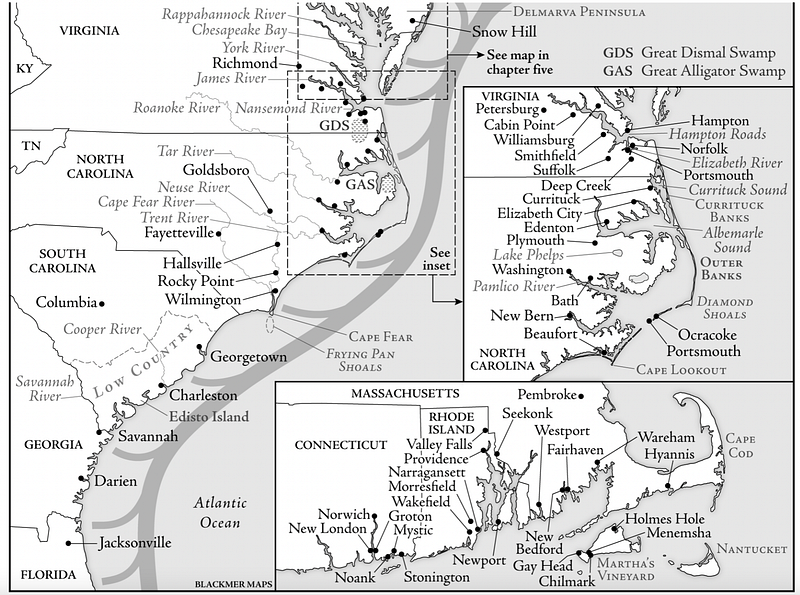
So, what was the Maritime Underground Railroad? It was a network of abolitionists and friendly Black crewmen who “helped slaves travel by vessel from the southern United States to freedom in the North and Canada.” Black people regularly boarded these ships. However, the story of Robert Smalls highlights a narrative few hear about, the Maritime Underground Rail Road, allowing Black people to escape through America’s waterways.
In 1861, Robert Smalls worked as a sailor on the Planter, a position gained through his experiences as a navigator. This steamer held up to“1400 bales of cotton,” helping “planters” turn a profit from their crops. But after the start of the war, the Planter “took supplies to Confederate forts in Charleston Harbor.” Like many enslaved Black people, Smalls bided his time, waiting for an opportunity where freedom would be possible. Unlike the Union Army, which often promised freedom for Black people’s service, the Confederate Army forced enslaved people to participate in warfare, offering no hope of enjoying full citizenship.
My race needs no special defense, for the past history of them in this country proves them to be equal of any people anywhere. All they need is an equal chance in the battle of life — Robert Smalls
The CSS Planter had an all-White crew that went “ashore on unauthorized leave,” trusting that the Black crewmen, including Smalls, would wait for them to return. But, you know what they say about opportunity knocking. So “Smalls and the seven other enslaved crewmen on board decided to try to escape to freedom by sailing toward the Union flotilla that blockaded the harbor.”
Knowing the Union Army could benefit from the Confederate vessel, the codebook, and maps onboard, Smalls risked his life to escape life-long servitude. While the White men enjoyed the local scene in Charleston, South Carolina, Smalls and his small crew of Black men made haste. Wearing “the captain’s uniform and straw hat,” Smalls stopped to pick up his wife Hannah Jones and their children and relatives of the other Black crew members — together, they chose liberty.
At around 3 AM on May 13, 1862, Smalls guided the vessel out of the Charleston Harbor, and the Confederates had no idea Black men controlled the ship. Despite the fears of some onboard, “Smalls steered the Planter directly beneath the walls of Fort Sumter,” staying in the shadows of the “pilothouse,” even bravely waving to the men 40 feet above, who couldn’t identify his race in early morning hours.
“Pass the Planter,” shouted one of the Rebels. “Blow the damned Yankees to hell, or bring one of them in!” Smalls shouted out “Aye, aye!” And the Planter sailed on out of the range of the cannons.
When Robert Smalls got closer to the Union vessel, he waved the white flag and told the Captain he wanted to be free “and serve the United States Navy.” By dawn, the Planter and its crew drew near, and the Union Army captain accepted Smalls’ offer, welcoming the men and their families aboard, gaining knowledge about “locations of mines in the Harbor.” Smalls’ firsthand intelligence helped the Union army understand the inner workings of Confederates in Charleston.
And if you thought Smalls’ co-opting the CSS Planter was impressive, just wait until you hear his next steps.
News of his victory against the Confederates spread, and upon request, “he met President Abraham Lincoln, and he and his crew received substantial prize money for capturing the Planter.” Smalls later used this money to purchase his former master’s home in Beaufort — poetic justice.
And Union servicemen used the story of Smalls stealing a Confederate vessel as justification for why Black people should be allowed to “serve in the Union army.” Finally, after the Union defeated the Confederacy, they celebrated at Fort Sumter, with Smalls steering the Planter into the Charleston Harbor, where they lifted the American flag.
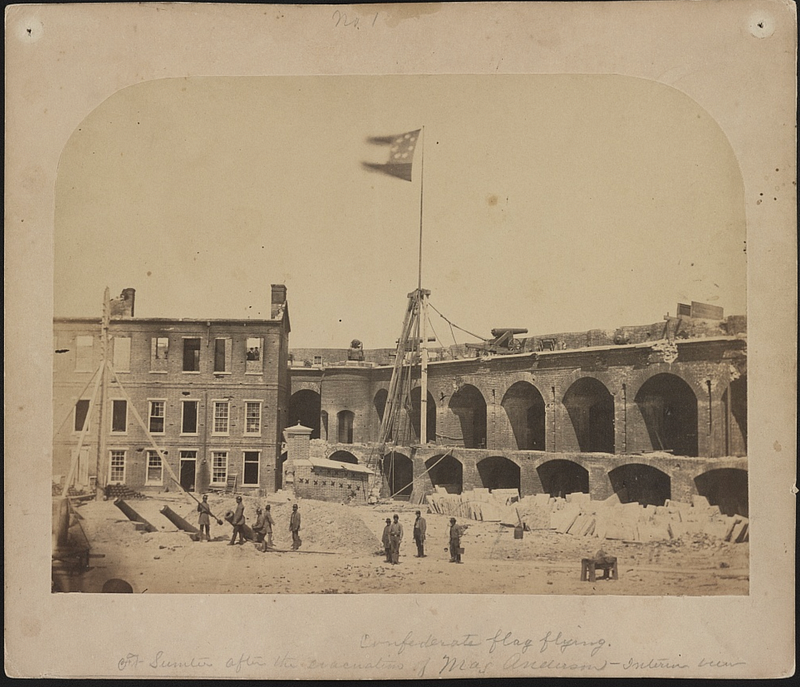
Against all odds, Robert Smalls used the Maritime Underground Railroad to win his freedom and used his legacy as a veteran to run for office. However, because of the Red Shirts, a South Carolinian branch of the Ku Klux Klan’s affinity for the Democrats, Smalls ran as a Republican, back when the “party of Lincoln” supported expanding civil rights for Black Americans.
During the Reconstruction Era, numerous Black men held political office, but Black Americans’ formal attempts to organize started at The National Colored Convention years prior. During 1864, Smalls “joined free Black delegates to the 1864 Republican National Convention,” laying the groundwork for his political career.
Smalls served five terms in the House of Representatives despite numerous assassination attempts, proudly representing South Carolina. Some lovingly referred to South Carolina as “Black Paradise” during his life because of the sociopolitical opportunities available for Black men in the state. Through unwavering service, Smalls made his mark. “My race needs no special defense, for the history of them in this country proves them to be equal of any people anywhere,” Smalls asserted. “All they need is an equal chance in the battle of life.
After the Civil War, pervasive segregation and discrimination made life difficult for Black Americans. Although many White Americans refer to the Civil War as a matter that pit “brother against brother,” Black people like Smalls saw the difference amongst these positions much more clearly.
On one end, the Confederates wanted to maintain a system of slavery that disregarded the civil rights of Black Americans. On the other end, the Union army wanted the country to unify. President Lincoln told the crowd at the Republican National Convention, “A house divided against itself cannot stand,” and “I believe this government cannot endure, permanently half slave and half free.”
A note of caution. In the modern era, Republicans are nothing like the “Party of Lincoln” who believed in using the federal government to force states to respect the civil liberties of Black citizens. Today, many conservatives believe in “small government,” even if that means maintaining discriminatory voter suppression tactics that began during Smalls’ lifetime. “In June 1876, he attempted unsuccessfully to add an anti-discrimination amendment to an army reorganization bill,” a policy that didn’t come to fruition until President Truman’s executive order attempted to end discrimination in the military.
Robert Smalls’ story is unique. While born in a slave state, Smalls became free, saved his family, and became a political success story. Unfortunately, in the years that followed, the Civil Rights Act of 1866 failed to provide Black Americans sufficient protection from white backlash, which led to numerous violent race massacres throughout the country. Students should learn more about the Reconstruction era to make it clear to students how long Black Americans have been fighting for equal opportunities.
Finally, Hollywood will make a movie about Smalls’ life story, and hopefully, his triumph will continue to inspire people. The “Steal Away” film will center around Smalls’ stealing the Planter and turning it over to the Union Army. It will be interesting to see how audiences react to a story from the Maritime Underground Railroad.
🌹Learn more about the author here. 🖊Sign up to read all my stories and thousands more.


