
How real-time RT-PCR help to detect coronavirus?
The application part of Modified PCR
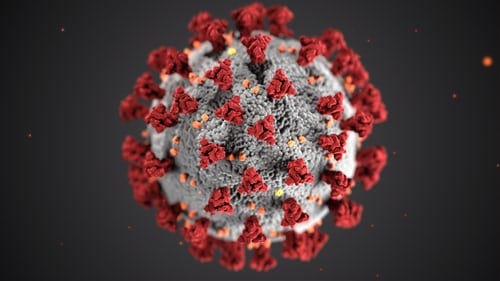
Coronavirus is a newly discovered virus that causes coronavirus disease .i.e. COVID-19. Coronavirus also is known as Severe acute respiratory syndrome coronavirus 2(SARS-CoV-2). It is highly pathogenic to the human population in the twenty-first century. The emergence of the COVID-19 was introduced in late December 2019 in Wuhan, China.
Biology of CoronaVirus
Coronavirus is large and has enveloped RNA .ie.RNA virus. During genome, translation coronavirus replicate entails ribosome frameshifts. Coronavirus viral family has intensified with the causative agent of the severe acute respiratory syndrome (SARS).
Coronavirus has a large enveloped with a positive-sense single-stranded RNA genome. This virus has high genomic nucleotide substitution rates and recombination properties. It is recognized as one of the most rapidly evolving.
How coronavirus spread ?
COVID-19 spread via droplets of saliva or discharge from the nose when an infected person coughs or sneezes and we contact with the infected person.
Symptoms of Coronavirus
- Mild to moderate respiratory illness.
- Cardiovascular disease.
- Chronic respiratory disease.
- Develop serious diseases etc.
Prevention from Coronavirus
Protect yourself from an infected person. Infection may be overcome by washing and sanitize hands properly with water and sanitizer.
Before talking about real-time RT- PCR we should know what is PCR technique?
Here is the Link to the PCR technique
Let’s talk about real-time RT-PCR
What is Real-Time RT-PCR?
Real-Time RT-PCR is based on the general principle of PCR, which is used to amplifying the target DNA. Real-time RT-PCR is a modified version of the regular PCR technique. RT-PCR was used to detect and quantitate a fluorescent reporter. The reporter signal is directly proportional to the amount of PCR product ina reaction means if the fluorescent reporter signal increases the amount of PCR product in a reaction also increases.
Fluorescent reporter signal molecules used to bind double standard DNA is SYBR Green dye or sequence-specific probes( e.g. TaqManProbe) mostly used as a Fluorescent reporter
SYBR Green dye binds to the minor groove of the double-strand DNA. The unbound dye shows exhibits little fluorescence.
TaqMan Probe is designed to anneal the center of the target DNA after the denaturation step occurs. When Taq polymerase extends the primer during the next PCR cycle it will eventually bump into the TaqMan probe. This nuclease activity cuts the probe into single nucleotides. This type breaks the linkage between the two fluorophores. The short-wavelength fluorophore is now free from quenching, and its fluorescence increases. After this, the signal will be detected that is proportional to the number of new strands synthesized.
Steps have done during real-time RT-PCR proceed for the detection of coronavirus -
- The sample is collected from the person’s body where the coronavirus gathers like nose and throat.
- For the extraction of RNA from the sample first, the collected sample is treated with several chemical solutions. The chemical solution helps to remove proteins and fat ( non-required for detection) and helps to extract RNA ( required for detection).
- This extracted RNA helps for the detection.
- Then extracted RNA is reverse transcribed to the DNA. For the process of reverse transcription, specific enzymes are used.
- Now, the addition of a short fragment of DNA that is complementary to a specific part of the transcribed viral DNA, if the virus is present in a collected sample then these fragments attach to the target sections of the viral DNA.
- During the amplification process, add a marker that labels the DNA strands and builds the DNA that helps to detect the virus.
- Then the mixture is placed in a real-time RT-PCR machine.
- A standard real-time RT-PCR machine goes through 35 cycles.
- After several chemical reactions and machine cycles, new copies of the viral DNA formed.
- Marker labels that are attached to the DNA strands help to release a fluorescent dye that is used to measure by the machines compounded presented in real-time on the screen.
- Amount of fluorescence in the sample track by the computer of each cycle.
- When fluorescence is surpassed at a certain level that is confirmed coronavirus is present.
- We can also monitor how many cycles it takes to reach this level to estimate the severity of the infection.
(Fewer the cycle, the more severe the viral infection )
Real-time RT-PCR assay was used during this epidemic to detect coronavirus because it is a highly sensitive technique. There is a commercially ready-to-use RT-PCR kit also available for the detection of this epidemic coronavirus.
References
I.Made Artika et al (2020), “Molecular biology of coronaviruses: Current Knowledge.” Heliyon 2020 Aug;6(8):e04743. PMCID :PMC 7430346, PMID : 32835122. doi: 10.1016/j.heliyon.2020.e04743
Paul S. Masters (2006), “ The Molecular Biology of Coronaviruses”. Advances in Virus Research.Volume 66, Pg 193–292. https://doi.org/10.1016/S0065-3527(06)66005-3
www.iaea.org www.ncbi.nlm.nih.gov
Originally published at https://www.kiranjeetkaurbiotechnologist.com on November 5, 2020.