
What World Housing Markets Say About Real Estate Here at Home
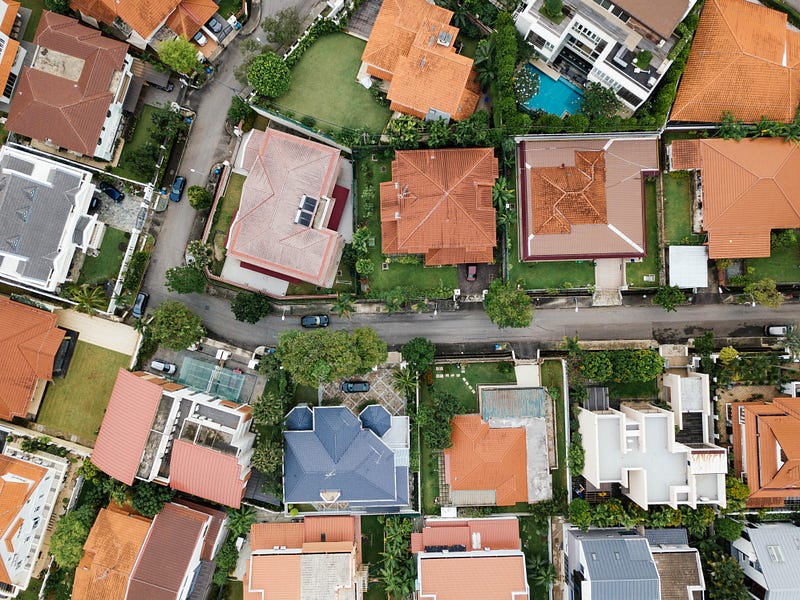
Yes, it’s probably the biggest single purchase of your life, but not every house purchase turns out to be a good investment.
During the bust of 2008, many home buyers walked away from their mortgages, owing more to the bank than the house was worth. It’s not only gut-wrenching economic downturns that affect your investment, however. The potential rewards and risks change with your location, and it’s not just city to city. Every area — urban or rural — is made up of real estate microclimates that can be difficult for the novice to suss out. Understanding the particulars of your specific area will help you avoid catastrophe.
Ask yourself these basic questions: Is high population growth always a good sign? Is falling population a problem or an opportunity? What are the building codes and how well enforced are they? How do materials change from area to area, builder to builder? Do buyers in your area prefer new-built, or existing homes…and how will that affect you when it comes to both purchase price and resale? Looking at lessons learned from markets around the world can help you determine what your best home purchase will be.
Hidden Assumptions: It’s a Location Thing
The other day I drove my daughter-in-law to the airport. She and my stepson had spent ten days with my husband and I in New Hampshire, and my husband and I were each driving one of the kids to the airport so we could have a little private time with each of them before they flew back to Tennessee.

As I was driving, we passed a local farm that was founded in 1660 and is still in operation today. I pointed it out, because the fact that we have houses and farms in New England that have been here, being lived in, for over 360 years inspiring. Both Dover and Portsmouth, towns up the road from us, are celebrating their 400th anniversary in 2023. I’m excited by that.
“I think all these old things should be torn down,” she said.
Torn down? These beautiful old homes were one of the best things about living in New England. I never assumed that was a universal opinion, but in New England, storybook villages where no edifice (save from maybe a gas station) was built later than 1800, are what people come here to see. Like foliage season in fall, maple season in spring, and ski season in between, the houses that pass down through the centuries is what people come to enjoy.
Not everyone, I guess. My daughter-in-law grew up in Nigeria, and I started investigating what Nigerians generally look for in a home. I then started thinking of other countries I’ve lived in, or where my friends are from, and realized that the wisdom of buying a house varies dramatically from country to country…and that those differences are mirrored in U.S. communities as well.
So, what did I learn?
Germany: built to survive the next war
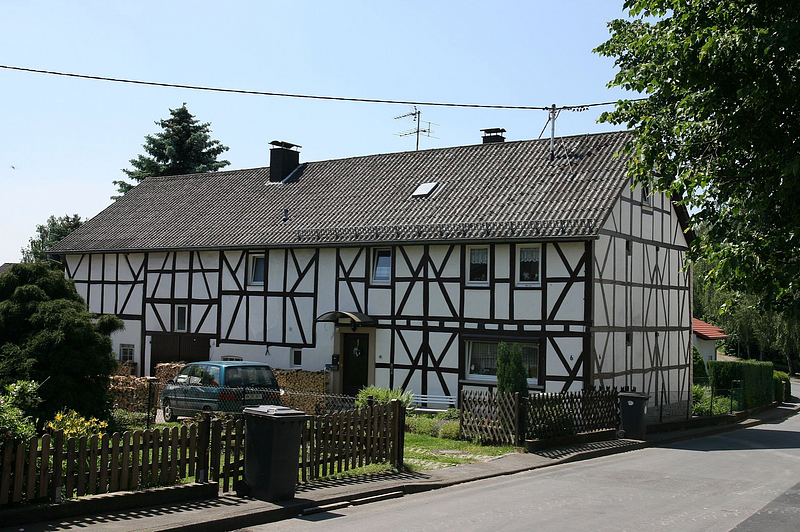
Time moves slowly in Germany.
Here’s a story: Horst, a friend of mine, is a German expat. After marrying Rita, an American he met as an undergrad at Tulane, he has remained in the States with only occasional trips back to his family home in Germany.
This family home, by the way, has been passed down through his family since around the year 1300. Family photos from the 1980s to the 1880’s featured the exterior, which changed very little in the last century. The family had survived two world wars there, the Napoleonic wars, the internecine bloodshed of the Reformation, the Thirty Years’ War, the Hundred Years’ War, and the Black Death — all in this one house. As an American whose family moved every few years, I found this beyond remarkable. I mean, I couldn’t imagine it…but felt it had to be a wonderful thing to be part of.
Years pass. Graduate school, and more grad school. A daughter is born, and then another. Horst and Rita struggle to make ends meet as humanities professors in a shaky academic climate.
Upon his mother’s death, Horst inherited the old manse. “Wow” I said. “When are you moving back?”
“Just for the closing, I guess,” he said. He wasn’t keeping it. After I picked myself off the floor I got some details on why. “Rita and I just got to the place where we both are in tenure-track positions. Plus, the girls are lining themselves up for ROTC scholarships and I don’t want to mess that up.” Within a few months the house, while not exactly history, had passed to a new family, who will begin, hopefully, their 700-year stay. Horst and Rita blessed it and let it go so someone else could take care of it and love it in a way that they couldn’t.
In the US, wood is readily available, cheap, and used in almost every typical American home. Instead, German house builders use a mixture of concrete and rebar, with sand and limestone block-work for the walls, and plenty of insulation too.
I lived in Germany myself for a total of four years — once because I served as a linguist for the U.S. Army, and later because my husband’s job took us there. From those years I remember people telling me that German homes are built to last 500 years. Some say 1,000.
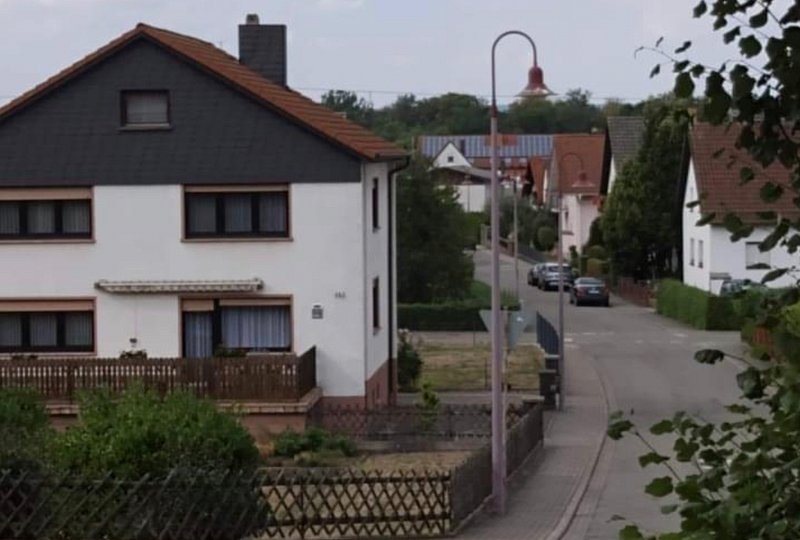
Modern German homes are constructed of solid brick blocks roughly 40 cm thick, which give the whole structure ten times the strength of the typical American house. The roofs are covered with heavy, flame-resistant terra cotta tiles which last 100 years or more. The windows are double and triple paned, and include metal external rolling shutters (or rolladen) that that provide absolute privacy, as well as protecting the interiors from storms, vandalism, or random acts of God.
In his article, “ Is German Home Construction Really Superior to the US? “ Shane Barone explains:
In the US, wood is readily available, cheap, and used in almost every typical American home. While Germany does have vast areas of woodland, there’s not enough of it for timber to be a viable construction material for modern homes. Instead, German house builders use a mixture of concrete and rebar, with sand and limestone block-work for the walls, and plenty of insulation too. The result is a strong and well-insulated home that will stand the test of time. What’s more, the concrete walls keep the house cool during summer, warm during the winter, and it keeps the house nice and quiet too.
It’s not just snow load those roofs are meant to withstand.
German homes homes are built with the assumption that, at some point, they’ll need to withstand artillery barrages and tanks rolling through the streets.
Germans suffered two devastating wars in the past 80 years on their home turf. Throughout the Cold War, they lived with the Iron Curtain running through the center of their country, with massive armies of NATO and the Warsaw Pact lined up on each side, ready to go to war at a moment’s notice. Because of this, German homes homes are built with the assumption that, at some point, they’ll need to withstand artillery barrages and tanks rolling through the streets. These homes feel solid. Nothing shakes or rattles anywhere in the home. The materials are quality.
A German home feels like an investment, because it is.
Japan: the incredible lightness of construction
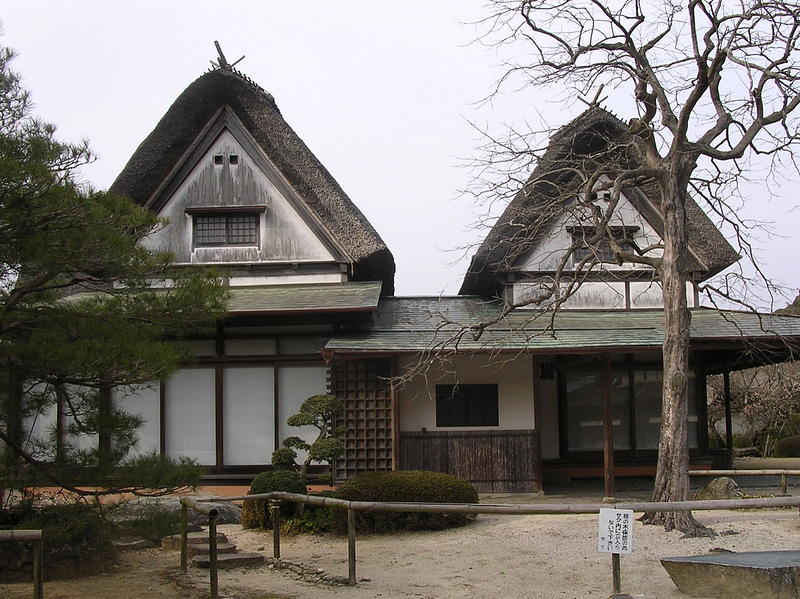

My neighbor Aki’s parents, who live in Japan, just moved into a brand new house in Kyushu.
The home that Aki grew up in once stood on this same parcel of land. Built in the 1980’s, her childhood home simply “wore out,” and this new one stands in its place.
Aki’s now worried about the timing of this replacement. “They’re in their fifties now,” she explains. With a lifespan of 20 to 30 years, this new house might reach end-of-life before it’s owners, leaving them stranded in a decrepit wreck when they’re financially and physically least likely to be able to replace it. “Hopefully this house will last for the rest of their lives, but who knows? It feels wrong to hope my parents die before their house wears out.”
Unlike in other countries, Japanese homes gradually depreciate over time, becoming completely valueless within 20 or 30 years.
“One of the key characteristics of Japan that continues to shock the western world is that houses depreciate here,” says Kyle Johnson of the Stars & Stripes: Okinawa. As a writer whose audience is comprised mostly of U.S. military personnel, he’s familiar with the culture shock many westerners experience in the island nation’s real estate market.
In Japan, houses are looked at more as clothing — albeit expensive clothing. In ReThink Tokyo’s article, “ Doomed to Depreciate,” Lily Crossley-Baxter says:
Doomed from the moment construction begins, the average Japanese home depreciates from Day 1 — losing half its value in 10 years and becoming almost entirely worthless in 25. This depreciation comes hand in hand with the infamous mantra that a Japanese home is limited to a lifespan of 30 years.
In “ Out with the Old, In with the New,” Crossley-Baxter goes on to explan that shrines are often torn down and rebuilt even more often than homes — every 20 years or so.
In his article Raze, Rebuild, and Repeat, Nate Berg explains that many Japanese homes are prefabricated — modules are manufactured in a factory and then the pieces are assembled on site. They typically use a steel frame, with fake brick ceramic siding in a variety of colors. These homes are comfortable, with balconies, patios, and car ports, but are not intended to last. “Unlike in other countries, Japanese homes gradually depreciate over time, becoming completely valueless within 20 or 30 years.”
What Berg is seeing reflects Aki’s experience with her parent’s home: “When someone moves out of a home or dies, the house, unlike the land it sits on, has no resale value and is typically demolished.”
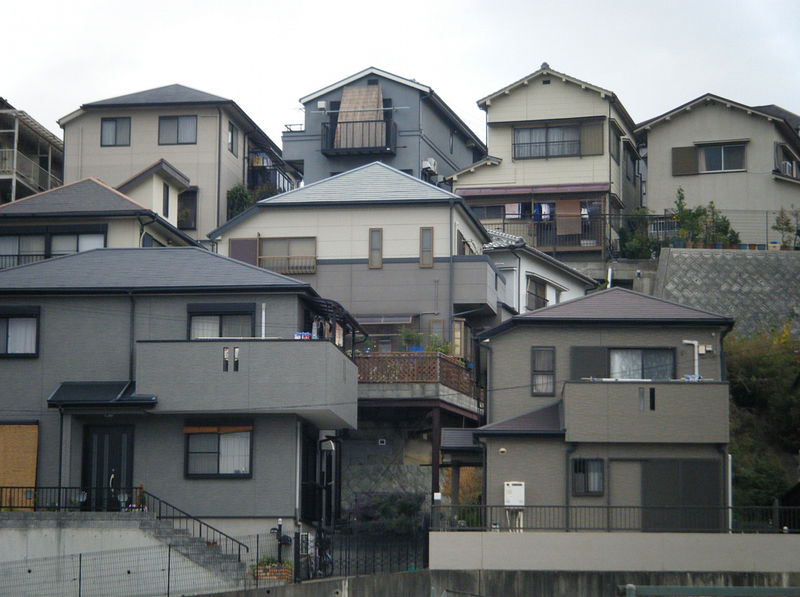
There are many reasons behind Japan’s view of construction as temporary — including not only earthquakes, tsunamis, typhoons, but also war. Whereas Germany adapted to war by building stronger homes that can withstand the next conflict, Japan learned to let the homes be destroyed if necessary- to let them go and build them back again when possible. It’s a position of non-attachment that squares with nicely with Buddhist philosophy.
There are signs that things are changing in Japan, however. Negative population growth means that there is some older housing standing empty — neither rebuilt nor lived in — while new neighborhoods are built further and further away from both jobs and the aging parents of middle-aged buyers. Some companies, such as Sekisui House have started renovating older housing stock, and reselling it to new buyers. Nate Berg captured this thought from one of their executives:
For the company, these simple renovations can turn a vacant home into a new sale. “If we can remodel these old houses, their value will not decrease to zero and we won’t have to demolish them,” says Kenichi Ishida, a managing officer at Sekisui House. “Nowadays young people don’t have much money, so they won’t hesitate to buy older buildings.”
Again, in Raze, Rebuild, Repeat, we meet an owner of one of these renovated units:
He himself lives in a renovated Sekisui House with his wife and two young children, and notes that the price of a renovated home was much lower than that of a new one. “We want to save money for taking care of our kids and parents,” he says. “For us, the renovated home located close to my parents’ home has much higher value than a newly built home that is far away.”
Whether this trend will continue remains to be seen; however, unless the growth rate for the Japanese population turns around, it is likely to be the wave of the future.
Still, this small number of people who will accept a refurbished home is unlikely to change the basic structure of the market. Japan has many houses that stand vacant, without people to live in them. Vacant homes put downward pressure on a real estate market.
Buying a home in Japan may feel like an investment, but it is not.
If you have to buy, consider the money you spend as rent that you pay to the mortgage holder. Forget any thought of equity. Buy the least expensive home you can find, and keep in mind the basic values that go beyond monetary considerations — proximity to jobs, and loved ones.
Nigeria: it’s complicated.
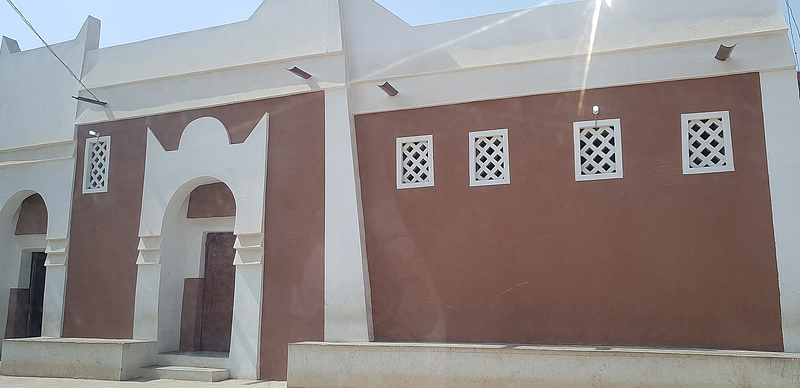

My daughter-in-law’s thoughts on real estate are what sparked this article in the first place, so it Nigeria’s real estate is influenced by two distinct forces.
One is population growth, and the other is its conflicted mix of ownership laws, which throws chaos into the market.
Habitat World Map explains it this way:
After independence in 1960, the state took possession of all the land. It has certainly weakened customary land tenure, but the traditional law has continued to be recognized in areas where land had long been owned by clans and families.
This complex arrangement includes not only traditional land ownership practices and government ownership, but also laws held over from the colonial period. Habitat adds that, “Nigeria inherited a colonial land law has never responded to the needs and expectations of local populations.”
The other factor, Nigeria’s steep rate of population growth, throws the chaos of the ownership law into an accelerator.
Population Matters predicts that by 2050 the population of Nigeria is expected to overtake China as the second most-populous country.
Between 1960 (at the end of the civil war) and 1990, Nigeria’s population doubled — from 44,928,342 to 94,214,257. From 1990 to 2020, the population more than quadrupled to 208,327,405. Even more shocking, with no curbs on current increases, Population Matters predicts that by 2050 the population of Nigeria is expected to overtake China as the second most-populous country:
By 2050, our population is expected to double and by 2100, Nigeria’s population will jump to 791 million, overtaking China to become the second-most populous country in the world after only India. This is something that can’t be neglected as more than 80 million Nigerians already live below the poverty line and could have a better life by choosing a small family.
Given this rapid increase in population, it’s obvious that there simply isn’t going to be enough housing left over from previous generations for current and future Nigerians. New housing isn’t only a preference, but a necessity. What is being built, however, isn’t intended to last.
According to the the Nigerian Institute of Architects, housing in the country is expected to last only 20 to 30 years. To illustrate this in charming detail, check out this renovation of a house from 1959. The structure is in the central cultural and governmental district in Lagos, so the location is amazing…and by my own New England standards this is not even an old house. Still, judging by the owner’s having to explain what he’s doing and why on earth he’s doing it, we can assume that most Nigerians will need a lot of convincing before choosing this type of project.
Nigeria’s changing very quickly, however, and preferences for the brand-spanking new but cheaply constructed doesn’t serve the country’s present needs. Housing that lasts only a couple of decades won’t serve homebuyers longterm in a country that’s undergoing a population explosion, simply because there will be continue to be a dearth of suitable housing as the stock rapidly ages out of usefulness.
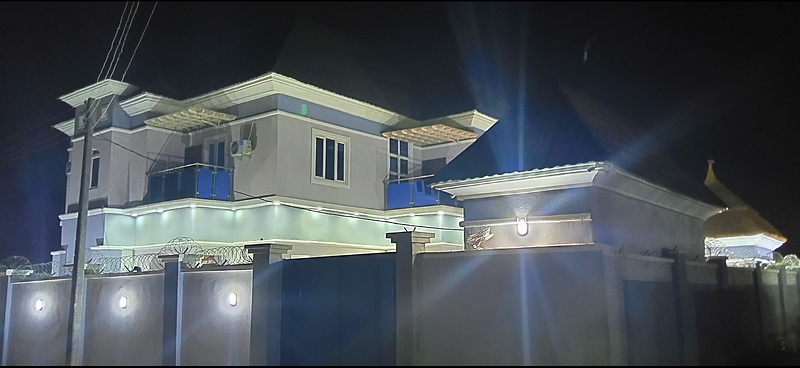
For this reason old housing needs to be renovated for new generations to live in it. Buildings need to be constructed for 100 years instead of 20, and traditional single family homes will have to give way to multifamily buildings. These things are becoming necessary so that, as Sunny Echono, new president of the Nigerian Institute of Architects, says, “with the limited space we can accommodate more people because we have one of the population growth rate in the world currently in the region of 3.2 percent per annum.”
So, let’s compare the two countries with low lifespan housing: Japan has short-horizon building codes — on the surface, similar to those in Nigeria — but a falling population of -0.3%. The net is that Japan is left with many houses standing vacant; there are more homes than people. Nigeria, on the other hand, with short-horizon building standards and a burgeoning population, will continue to have more people than homes.
Nigeria’s population explosion would make all housing purchases an investment, if it weren’t for the short lifespan of the housing stock. A house isn’t an investment here, yet; however, if Nigerian architects and home buyers follow Sunny Echono’s advice, it will be…someday.
For now, if you have to buy, follow the same rules as do buyers in Japan: focus on buying the least expensive house that suits your needs, because even with that mortgage paperwork you’ll still be effectively a renter. Focus on cutting your losses, rather than boosting our amenities. Paying off your mortgage only to have a house that needs to be razed will do nothing for your bottom line.
What this means for your wallet:
So, wherever in the world you are, consider that neighborhood you’ve got your eye on. Does it more closely resemble Germany, Japan, or Nigeria? How can you tell?
Germany:
It’s a Germany if there are population growth is stable with moderate growth (0.4 for Germany), combined with quality, long-term housing stock and a populace who is happy to renovate and rehabilitate older homes for decades, and even centuries. As long as population growth is stable, this sort of area is an investment.
In the U.S., places that resemble Germany are usually those where there is a preference for antique homes, and also where there is an environmental factor that demands sturdy home construction. For instance, snow load along the northern tier demands that housing materials and design be more robust than homes in the sunbelt. Homes that have been reinforced against damage from earthquakes or hurricanes also fall into this category.
Japan:
It’s a Japan if there’s negative population growth, low durability of housing stock, and little desire to renovate or live in an older home. This sort of area will be an investment only if population growth increases, housing codes tighten, and older homes become desirable; with my money, I simply wouldn’t want to gamble on that happening. With population growth in negative territory with no sign of rising, there will likely always be more housing available than potential buyers — tanking the resale environment.
If you live in the U.S., you may be surprised at what areas are experiencing negative population growth. Check this Brookings Institute article and see surprising population shifts in the past couple of years. Basically, only buy if it ends up costing you less over the long run than renting…and while you’re at it, consider the advantages of renting.
Nigeria:
It’s a Nigeria if there’s an exploding population but low durability of housing stock, and renovation is a novel concept.
Given the burgeoning population, this could be a terrific opportunity if certain conditions are met: 1) if you find a builder who’s using enhanced materials and design as recommended by the Nigerian Institute of Architects, 2) if you are in a location that will always draw people to it — close to transportation and amenities.
Bonus: If historic preservation takes off in the future, this could be a great opportunity to get in on the ground floor in some nice old real estate in prime locations while everyone else is, for the moment, chasing new construction.
In the U.S., sunbelt towns like Phoenix, Austin, and much of Florida offer the same type of market as Nigeria. Check the builder, the materials used, and the building codes of the area you’re considering, before putting down that offer.
A last word:
Whenever you’re thinking buying a home, understanding the underlying forces at work in your local market is key to making and protecting your investment. No one can guarantee what the future will hold. Life, by its very nature will keep surprising us, but those who put study time in before putting down their money on anything tend to do better in the long run. Good luck!
Originally published at https://holly-pettit.squarespace.com on October 5, 2022.