
How Poetry Can Ease Your Grief
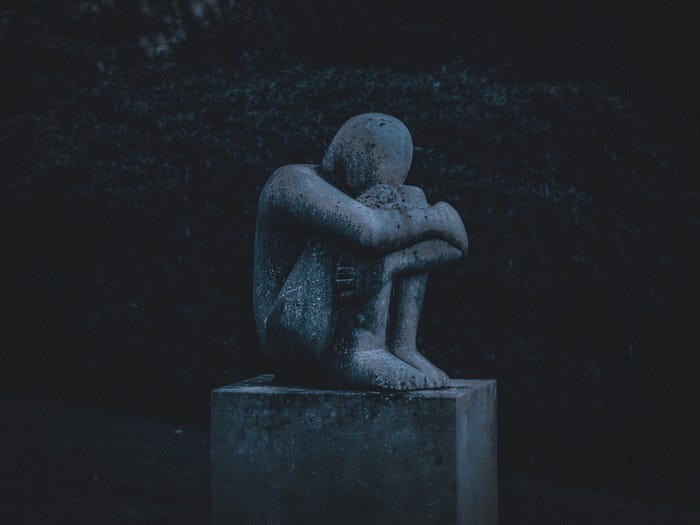
Photo by K. Mitch Hodge on Unsplash
When a loved one transitions from life on earth, you grieve. There is no way around the life-shattering pain. Neither shortcuts nor options exist. No choice exists but to grieve.
The days immediately following that day are long and vacuous. And the nights — forget about it. They put grief in a category all its own. But let’s ttalk about the days for now.
As mentioned, you don’t have a choice of whether or not to grieve. But you do have a choice of how you fill your days during that period of time. You can fill the vacuum, if you wish. This is the story of how I used poetry to ease my grief.
Why Poetry?
The day I’m writing this, March 21, was declared by UNESCO in 1999 as ‘World Poetry Day’. That means 22 World Poetry Days have passed me by unawares. I’d been totally oblivious to its existence.
Today that oblivion gives way to not only awareness but also gratitude.
I’m grateful to be aware of this day that pays hommage to poets and poetry. Poetry has played an important role at certain stages of my life. But it’s in the current (later) stage of life that my appreciation of it has significantly deepened.
In late 2021 when my partner died, I realized grief had already set in months before. He had been living with cancer, dementia, and heart disease. The man I knew no longer existed. Though not consciously, I had already been grieving on another level.
The first nudge (to revisit poetry) came one day during William’s final week of life. I wanted to help relax his restless mind, and noticed a book of Mary Oliver poetry (What Do We Know) on the nightstand in his hospice room. It had been gifted to him by our kind neighbours who visited him earlier that day. I read a couple of poems to him. I love Mary Oliver but neither of us were moved so I closed the book.
On November 21, 2021 we kissed and said good-bye. Packing up stuff I had brought from home to make William’s hospice room comfy, I carefully put that book in a bag. In a daze, I packed up my car and drove home. The first thing I did once inside was gingerly place the book on a bookshelf next to The Collected Poems of Langston Hughes.
The Search for Resonance
Over the next few days I pulled out that book two or three times. Letting it fall open to random pages, I would read the poem presented to me. My goal was to find at least one poem that resonated.
This is my first tip. Find and read poems that resonate. I can’t know what will work for you, nor can you know what works for me. It will be words that speak to the sadness in your heart…the yearning in your soul.
Some days later I decided to give our Mary Oliver another try. I found some resonance in a poem called Stones (p. 15). Here are the first few lines:
The white stones were mountains, then they went traveling.
The pink stones also were part of a mountain before
the glacier’s tongue gathered them up.
Now they lie resting under the waves.
What I found next resonated even more. I opened up The Collected Poems of Langston Hughes. ‘Tower’ (p. 128) grabbed me at once, pulling me into a silent stillness within myself. It reads:
Death is a tower
To which the soul ascends
To spend a meditative hour —
That never ends.
Fill the Void
I read more poetry online around that time. I found a bit of spark now and again. But nothing I read was enough to even begin to fill the void in me. My soul was crying out for something more. I didn’t yet know what that was so I wasn’t even scratching the surface.
But I kept searching. I hope you’ll do the same if you experience this kind of inexplicable yearning for something unknown. The process might take more time than you’d like, so patience will help you stick with it. Patient persistence is key.
I soon found out what my soul had been craving.
My second tip, then, is to listen to your intuition…in other words to your soul. You might greatly benefit from writing your thoughts and emotion out in poem too.
Two or three weeks had passed since William’s departure. By listening to my intuition, I knew I simply had to write my own poetry. I had to get my deepest thoughts out of my head, my deepest emotion out of my cells.
I felt like neither thought nor emotion were cohesive or even recognizable as thoughts and emotion. But I trusted my intuition and just started writing. Here are 3 poems I wrote in December 2021:
PHANTOM TRAVELER LEFT ALONE
Stirred with a start last night from my sleep,
I sensed…
then I knew
my love sat deep
in fear of the phantom traveler.
A gust of wind howled through the trees.
A branch tapped code on the window.
A siren screamed
like a banshee from hell.
Not seductive like Odysseus’ song of the sirens.
My love sat suffering in silence
in the dark of our room.
Where’re you going? I asked
in the light of the moon.
“Couldn’t breathe”, he gasped
between short shallow breaths.
Now the warmth of my hand
Found the small of his back.
Baker hands knead bread dough
Straight up his spine
Our energies twined
Into one.
Phantom traveler
tried taking
my love last night.
With his short, labored breaths
outside in the cold.
Through wind and rain, it felt
inhumane.
But instead, Phantom left
All alone.
My lover breathed easy —
laid back, drifted off.
Phantom traveler
Once again left alone.
© Peggy Lee Nourse
THAT CHRISTMAS WE KNEW
That Christmas we knew
Deep in that place where words
Simply don’t exist.
That place where it’s
Just pure knowing.
We knew that Christmas was
destined to be his last.
Mario, Christmas angel
Sells trees on the corner
Listened with heart
to my story about William.
Tears in his eyes
Held out a tree, whispered
“this is for him”.
A tree full of life and beauty
Brought ineffable joy
To the modified room where the hospital bed
Represented the end of
Life as we knew it.
He laid day to night
Listening to silence
Gazing at luminous lights on the tree.
Fast forward a year
Just weeks before Christmas
He laid once again in a hospital bed
Not at home nor of this world anymore.
Some didn’t know what to say.
Feigned smiles, they’d whisper
“Maybe he’ll make it to Christmas.”
I closed my eyes, shook my head slow
I knew…
just knew deep in my soul
We’d heard his last song, watched his last act.
His angels were coming
To take him away.
© Peggy Lee Nourse
HOME AGAIN
Is a cherry wood box now
home for my lover?
If his sweet soul took flight,
then it’s logical he might
have crossed
to the dimension
that many call home.
Is home another galaxy?
Or parallel universe?
A dimension that some
call Heaven?
Some say that souls
Are energy that flash
From that other dimension
To our man-made invention
From home that once was
To home that now is.
Sometimes they attach
To their ashes in urns
Where they linger near
Those that they love.
Is a cherry wood box now
home for my lover?
I’ll bring him fresh flowers
from the garden
in mornings.
Whisper I love him
last thing at night.
© Peggy Lee Nourse
Healing With Poetry
World Poetry Day 2023 — I found myself reflecting on the role of poetry in my life. Long before William appeared in my world I enrolled in a college ceative writing program.My focus was poetry and I spent the entire first year writing just that.
It was not easy at first. But once I found my rhythm, man, I just knew I’d found “my thing”. It was the creative expression I’d been craving.
Back in late ’21, I saved myself from being pulled too deep into the muddy swamps of grief. Writing poetry healed me because of its very nature. It can do that for you too, if you let it.
Poetry was an effective format to work through my grief and it will potentially do the same for you.
I’m no psychologist but it seems poetry is effective because you can pose questions and/or frame thoughts in such a way that may never be conveyed otherwise. If you don’t release them, those thoughts and feelings might just sit within you, festering or looping in your brain.
Grief is unavoidable. But poetry writing is a cathartic process that has the potential to ease your grief, as it did mine.
Whether abstract or concrete, whether relatable by others or by you alone — it doesn’t matter. The very process of writing poetry can help ease your grief and even help you get to the other side of it.