
How Planning Saves My Butt Daily
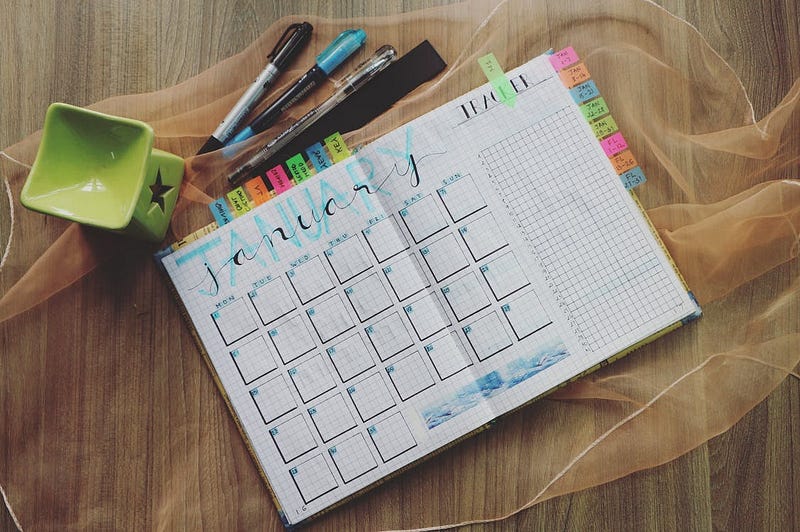
I never planned anything until I turned 21. My life was a chaotic mess, and I flew by the seat of my pants. I was impulsive, over-committed my time, and often became that guy in the friend group that no one ever invited to things. Poor planning is a slippery slope; once I received my first real professional mentor at 21, my life has become more fulfilling and manageable.
I’d like to present how I keep a monthly planner, but it won’t make much sense to you. I’ll try to simplify what each block means. I do want to note that I keep my time flexible; you wouldn’t have to, but if you balance side hustles, a part or full-time job, and a family, I’d recommend doing what I do.
I start my planning page with a general plan for the weeks to come. I did provide a picture of what that looks like, but I basically write down everything I’ve committed to and a rough idea of its time requirement. I guess you can see a little bit of it in the picture I provided. I don’t like to label it a monthly plan because I use it in a different area of the bullet journal.
I then take that information and create a “more specified” weekly breakdown (provided below). I like things to be orderly, but sometimes, you forget to add some blocks of time. For example, you can see my flub-up on Tuesday. My schedule is all over the place, but I can conduct multiple priorities without feeling stressed with a plan. Planning is like a roadmap; sometimes, you take detours because of in-the-moment events, but it helps you visually see how your time is broken up.
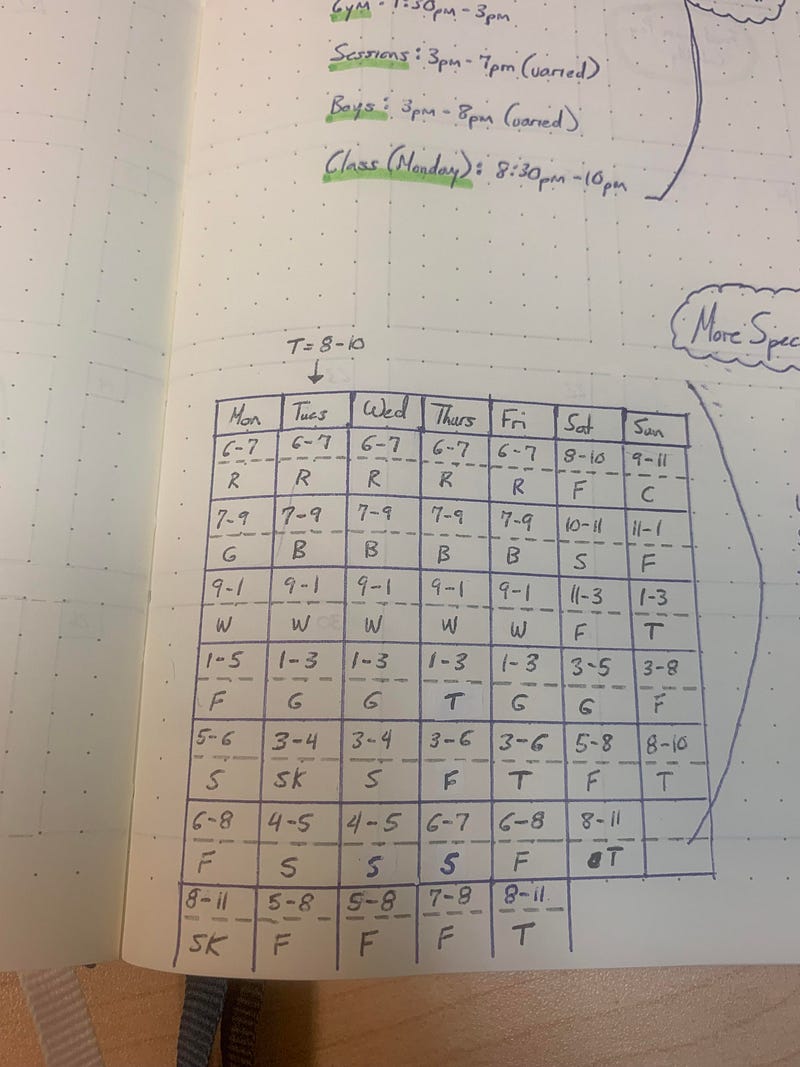
I like to keep a general weekly plan and a more specified weekly plan on one page. I'm not too fond of the idea of flipping pages for some reason. I then create a table with each column representing a day (Monday-Sunday). Since I write small, I use a key on the side of the page and a letter as a placeholder for what goes on. For example, the letter “G” means gym, which I block off two hours from 7–9am on Monday. I won’t detail every letter to its meaning, but hopefully, you get where I am going.
There are two aspects of this weekly plan that I always prepare for:
- Change: You’ll have to stay late at work sometimes, and your kids hardly ever get ready for school in an hour. Be flexible with yourself, like how I emphasized the point earlier in the article.
- Task Switching: Sometimes, a client will want to meet earlier, so I can pull something, like the gym, to later in the day. I can also study whenever I have a free minute. Again, I must reiterate that it’s okay to move things around, but a general plan helps you scope out where your time is going and to who/what.
I go a step further for myself and set alarms on my phone for the respected day. I like using the calendar on my iPhone to help me keep on track. The alarms you can set are pretty amazing. I also write notes in the back of my bullet journal for each month and how the plan went. I don’t grade myself, but I make a simple pros/cons list to improve each month.
If you don’t like the method I’ve presented, then do something else that works. No matter what you do, though, you should plan out your day. Of course, some will disagree, so to you, I congratulate your ability to remember every single priority you have in your life without a plan. Unfortunately, I am not as gifted, so I like to stick to traditional pen-and-paper planning methods.