
How “Piddling” will Make You a Better Writer
Understand this one aspect of the writing process and get more ideas
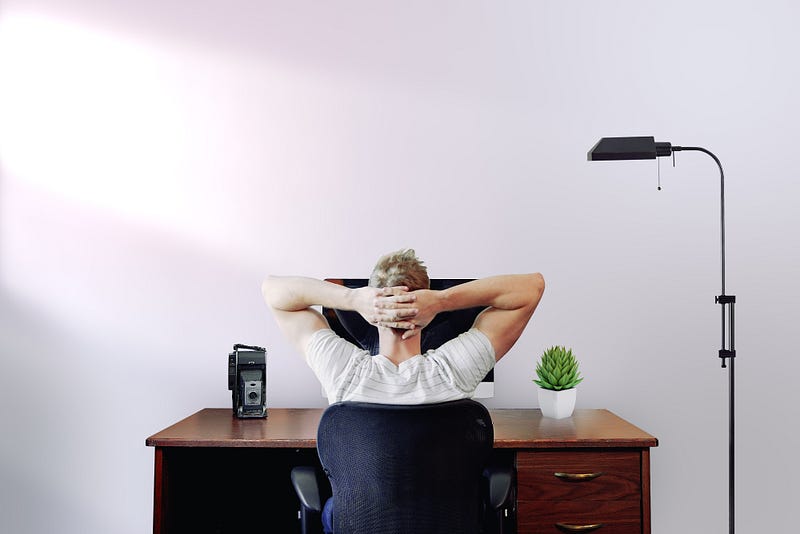
Let’s just say you finished writing your first few paragraphs, and you’re not sure what to write next. You’re thinking about taking a break, maybe pouring another cup of coffee? That concern you heard once keeps creeping into your thoughts, “Keep your butt in the seat and just write!” Stay in front of the keyboard to get inspiration, right?
I disagree. Get up. Take a break and “piddle” around the house a bit. Give your mind a little break and see what happens. If you didn’t grow up in the south, “piddle” technically means to “spend time aimlessly” or “with little importance.” Here’s the definition.
Piddle: verb (used without object), pid·dled, pid·dling. To spend time in a wasteful, trifling, or ineffective way; dawdle (often followed by around): He wasted the day piddling around.
Trifling? Wasteful? Not necessarily. I think there’s creative magic in using this practice of piddling to your advantage.
Getting up from the chair and doing something other than writing gives your mind the space to process what you’ve written and added or improved on it. If you purposefully find different activities to focus on, besides writing for a little bit, then come back to the keyboard, there’s a good chance you’ll get sparks of inspiration for your writing.
I know this may sound difficult but, for many of us, using our time for extracurricular activities like learning, training, and personal reflection gives a feeling of constant growth, so when we’re not doing it, we may feel uncomfortable. Believe me; downtime is a part of work time.
Do you have another hobby you enjoy besides writing? You could get up and play the guitar for a few minutes. Draw in your sketchbook. Even doing household chores can give your mind some space to play with what you’ve written so far.
Once you realize doing these other activities is also a part of writing, you’ve won. Recognizing the act of writing involves more than just putting words on a page will help you appreciate the time you once thought of as wasteful.
“My writing process is a mix of research, personal experiences, washing the dishes, raising kids while thinking — then writing.”
-Jean Craighead George
Do we need to be fully focused at all times to think? An experiment conducted by Mareike Wieth, an associate professor of psychology at Albion College, found people who came in during their least focused time of day did better on complicated problems. Believe it or not, patients with damage to their frontal lobe and people under the influence of alcohol achieved the same results.
I would say, if the focus isn’t helping you solve a problem, it’s better to do some daydreaming than forcing yourself to think your way out of a solution. Your focus should be reserved for when you’re getting the work completed, not for when you’re getting ideas.
We’re all living in different situations, but desire the same thing — to write more and better stories. Tailor making how you spend your “piddling” time is up to you. I would say to be intentional about it when you can, though. Giving your mind what it needs to work for you can make all the difference.
Here are some tips for piddling effectively to spark more ideas for your writing:
- Read through what you wrote, or a portion of it, before you stand up and leave your chair, so your mind has something to work with immediately.
- Ask yourself questions like, “What is this paragraph missing?” or “What’s left for me to say?”
- Make some of your piddling time involve working with your hands so that your mind is free to roam.
- Talk a walk outside — this is big — without listening to music or podcasts.
- Set an alarm for twenty minutes and get up and do something else when it goes off.
Your mind wants to help. When you give it time to work things out, it will come through. I’m a wash dishes, draw in my sketchbook, and take a walk kind of guy. If the weather is decent, I can walk for thirty minutes to an hour. Even jogging within that time helps me push my body and mind, then cooling down with a mindful walk to think.
If I don’t have time for going out, just walking around my home and sitting on the couch can be enough change of location to transfer to a different state.
“Clear thinking becomes clear writing; one can’t exist without the other.”
-William Zinsser
Put your phone down and discover the power of giving yourself time to think. Even sitting and staring at the wall can be all you need for inspiration. It’s not a waste. Make friends with the empty spaces in your life today and accept the new ideas you receive with gratitude.
If you take time to piddle and become more comfortable with free time, great ideas will come.


