
ADDICTION UNCOVERED
How Our Society And Addiction Is Connected?
Our Society: Addiction and More Uncovered Ch 32
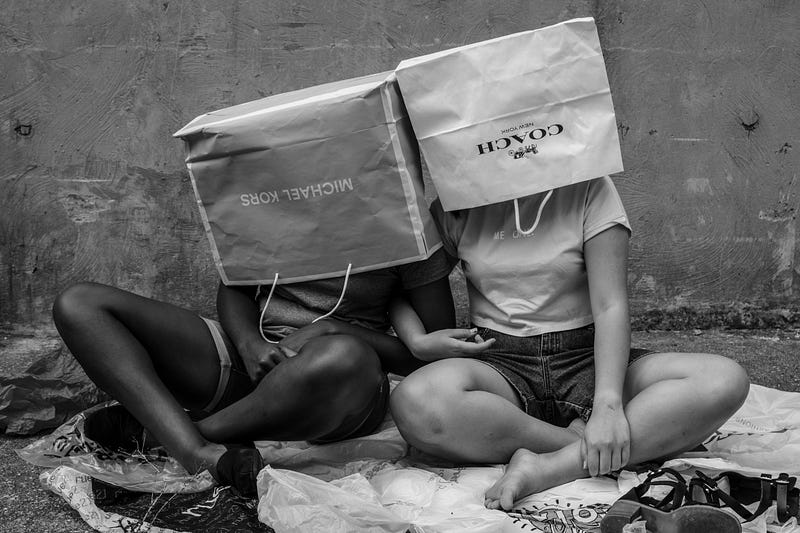
Imagine our society as a forest. In a forest there can be many different types of trees and other plants, animals exist and collectively they create a habitat that is livable for all. There are other outside conditions that the forest cannot control like storms, rain, sun, earthquakes, hurricanes that tear away and hurt the forest. Therefore, forests have to have a strong balance for maintenance and recovery to prevent animals and plants to die out. In the same way, we have to have a balance in our society.
What is society’s role in general and what is the role that it comes to in addictions?
Sheila thinks that in our society we all should be there to help when the person is ready to receive help, including having free resources. Similar to smoking where there are free patches available. Resources should be available for addiction.
Beth thinks bringing people together would help in our society, and she describes that this is very hard. Beth feels that our society is broken. It is just broken, there are pot stores on every block, one of the things she describes is not supporting pot stores. Maybe coming together and creating a whole new system for addiction. Creating a group for families and people who are dealing with addictions, something more modern. Beth also had mentioned creating a changing society, in a way that is not all about money. It is all about money now. She feels people do not care about others who are addicted to drugs, they just want to make money. It is a sad thing Beth said, it could be their brother. Maybe changing the society where people care about health like in Great Britain, they put health first and income last. That would help, we should all be united in that way. It is a disease Beth stated, and she was getting pretty mad about it. I saw many people who are mad, sad, and upset because they have family, friends and know people who are going through addictions and it is very emotional.
Mary describes that maybe one thing we can do is talk about addictions differently to remove the shame, talk about it, what is addiction. Educate people on what is addiction. Mary brought up a great point. There are communities where people’s livelihood is depending on making and selling drugs, providing hope for these communities that there can be other things that provide that income can be helpful in our society. Changing the conversation about how we talk about addiction.
Edward feels if addiction is viewed as an illness on a societal level, more assistance can be provided. In my conversation with Angel, she felt that people in our society, in general, don’t have great coping skills anymore. Additionally, she thinks that people are not being very comfortable about being uncomfortable. She feels that being uncomfortable “sucks” and people don’t have a lot of tenacity to go through it. While it is not a negative thing Angel feels that people start self-medicating because they want the uncomfortable feelings to go away. Instead of being open to the experience, no matter how it makes people feel. Go through it, feel it she recommends. Be in the moment. Learn from it, grow from it, which can be hard for people. Angel feels like the whole social media has been a huge contributing factor, especially for kids. There is a view that everybody’s life is so great which is false from reality. This can create an idea that if someone is struggling then there must be something wrong with them and their life. Angel said, no, we all struggle, this is part of living, growing, and maturing. She also feels that society today made it easy to be detached from each other. Angel sees kids at school who are struggling with drugs, alcohol, and other stuff. She feels that the kids are experiencing loss and don’t know how to cope with it. Angel was also talking about the idea that we just need to help each other and extend our hand toward others instead of being afraid that we might lose something if we do so. She brought up the example of immigration.
Kayla describes our responsibilities as having people who know how to work with mental health and addiction problems. We just do not have enough support Kayla feels and also mentioned that she is beating a dead horse here. Many people I talked to say the same thing, that there should be more support in mental health and addictions that are available.
More providers, more treatment, the list just goes on. It is difficult everywhere, and in small rural communities, there is a need for more support.
Rory feels like everything is very mixed, depending on who people talk to and what funding they have. He feels like most treatment facilities are phony, fake. Do a sloppy job at best. He wonders how anyone comes out of them sober. While are some great facilities out there, there are hundreds of what he calls mom and pop shops that just tack the shingles on and call themselves a treatment facility and do a bare minimum to get qualified. Nobody supervises this. He describes a treatment facility he worked at before, which is closed now, that that was a problem. Nobody supervised this. Nobody was supervised by the owners or the state and they get away with illegal stuff. I worked for one of these places, not for long left pretty quickly I could not bear what was going on. It was all about money, not the people. Even though I did not know what was going on in the background, it just felt wrong. Turnover of staff was crazy high. Nobody could take this long.
Many places try to treat addiction without looking at the mental health component. Rory laughs and tells me that this does not work.
Now, maybe someone is not addicted, and the mental health problem is still there. So, the cycle many times will begin again as the root cause was not addressed and dealt with. This is like putting a Band-Aid on something, but not treating the deep wound or injury. It might superficially heal for a while, and it will open up again with yellow or green pus coming out and creating a life-threatening infection. Need to treat the cause. Otherwise, it won’t work.
Just put the Band-Aid on? How many times?
He also talked about needle exchange programs, the need for safe injection sites. He feels a methadone clinic is not a solution. He describes his training and the goal to titrate people down, not to keep them on high doses of Methadone or Suboxone. He so far has not met someone using Suboxone who had been titrated down. It is just not done in the community. He feels this is not happening because of the lack of setup of doctors, nurses, case managers, and peer support.
Tracy feels like we are where we are in our society today because of addictions. She describes a conversation she had with someone recently about the homeless problem. She thinks that homelessness is also caused by addictions. We can also link this to mental health Tracy describes, and it is a full circle. Is it mental health or addiction first? In her job, she feels it comes down to addictions, homelessness, lack of housing, and resources. Tracy asserts that one of the problems is for people trying to keep sober is that: “There is more quantity of the addictive things out there than the supportive things to stay sober”. Very true. Tracy describes our societal responsibility as providing education for our kids and education that starts at a very early age. She describes kids’ education as similar to “stranger danger” and “bullying”, used to have the D.A.R.E. program for drugs.
She was wondering what the success rate for these educational efforts had been. Then she asserted that keep with the education, do not just do it when they are little, keep going into teen years. Also, don’t make bad things appealing to teens. Tracy wonders if our society is really in a worse place now than it’s ever been, or we are just more aware of it now than we ever been before. Tracy describes her not having the internet when growing up and not being aware of what is going on. The same thing happened growing up in her family, she lived with addiction and she did not know it. Tracy wishes she would have been educated as a child about addictions. She gives an example about the “pot shops” she is thinking about her kids now being raised and thinking it is normal to have a pot shop on every street corner.
What this will do to them? How this will affect them as adults? Also, everywhere people go there is alcohol. Diana feels that there is too much acceptance, not enough resources. Addiction goes on too long before people get help. People have trouble identifying what is going on. Leniency and acceptance of the social life that people have is not helpful. She thinks people are not careful enough and don’t think they can get sucked into addictions. More education about addiction would be helpful. Mental health and addictions intertwine, she adds. Teach kids to say no and recognize what could be a bad situation. Our conversation went in all kinds of directions, and we ended up talking about homelessness. There is a lot of connection between homelessness, mental health, and addiction problems.
Michelle describes that one of the societal responsibilities is to recognize that addiction is an illness. It is a disease; it is more than just someone’s decision to use whatever they are using. It is not a moral failing. Providing services for people is essential, creating an environment that does not push people toward addictions. She gives an example of alcohol and tobacco where they can be sold and how they can be sold. Providing a way for people to have a chance to be better fulfilled in life. She feels that a driving force behind addictions is that people do not have ways to cope with everyday things in their lives. She feels that society is set up to allow people to have lives that are not fulfilling when it comes to basic needs, jobs, and activities in their lives. As an example, she talks about postpartum depression. She feels part of this comes from pressures put on families including being alone when people have kids.
There is just no sense of community where everyone looks out for everyone’s kids and supports each other. It is just the individual and if anything goes wrong, it is their fault. It is how our society is structured. People move away from where they grew up, away from aunts, uncles, grandparents. To get the best job or whatever it is, and now people don’t have their families around. Missing a support system. She feels this is like a contributing factor. She feels this is a societal responsibility that we should pay attention to and try to take steps toward making it better.
Ron thinks that when the movement to help people with addiction went to therapy, treatment, counseling it is ok, that there was a miss of the root problem. Why is this happening? Why people are turning to drugs and alcohol? Ron feels that we don’t have the foundation of support, love, music, joy, and without this people turn where they can feel the support, music, joy and it is the deviant addictive cyclone. Even now in detox, it is a struggle to get people in, the place is far away and then after 5–7 days, the rehab is not available for 3–4 weeks so what will people do? They will go back from where they got there from the first place a homeless shelter, a friend’s place, and all the triggers are there again. The expectation of the community is now that they will somehow survive this return to the warzone and wait for a month then do residential rehab. It is a cycle. People Ron sees keep trying and failing and trying and failing.
We are trying to solve the symptoms he asserts and not the root cause.
Ron feels that our schools need to touch on sex and drug education, depression, and anxiety. In our community, there is a need to do more prevention not just trying to fix the problem. Ron feels families are disconnected and jobs don’t support the community and the community does not support the workforce. It’s just going to keep happening Ron stated. People want to escape; they want to feel they belong to feel better. We need to fix why people feel they don’t belong, and why they don’t feel good and want to feel better, otherwise this will just keep happening.
What can we do?
Do individuals feel they belong in this society?
Can we fix it?
Ron thinks we need to change politics to pull communities together not being divided and living in fear. Ron wishes he knew what the answer is, he would be writing a book too. All we can do is to put information out to others and see what the response is. Is anyone willing to do anything about this? Are there enough people to make a change or demand change? I asked Ron my magic wand question. He said: one unified government and one unified government for the world as well, all-inclusive for all races and cultures. His dream is to release patents that could save millions of lives, unify the world, take down walls instead of putting them up. It is all about money, resources, and land. We had a conversation about how much stuff we need in our life. Ron feels that stuff we have and buy is what drives money, greed, depression, anxiety, fear, and leads to addiction. The need to destress so we are not fearful and stressed. It is a societal problem. There is little mental health support. Ron also discusses politics and the need for a political climate change. We are all people on this earth. We are all in this together.
Why are we separating, dividing, and conquering?
Ron believes in a unified world. Decrease access.
We need a do-over he said. Why can’t everybody just get along Ron asks?
Can we make a switch where love, peace, and community are more important than greed, advancement, and power?
Joel feels like as a society we are doing a terrible job of supporting people, supporting each other. She feels that there is a great responsibility in our society to help with any situation, but we are doing a terrible job. She talks about isolation, living away from family, instead of growing up and taking care of people like the elders will take care of the children, the children will grow up and take care of elders and have a common situation, more focus on family. Joel feels that we have an obligation to help one other the best we can. Also, to recognize when we can’t. Joel feels that addiction is something that everybody is vulnerable. People don’t want to look at it and admit they could also get there.
Joel asserts that we need to care about each other to make it better. Offer education and support. Joel feels like there is so much judgment in our society about anything. Joel thinks that society is just broken right now, it is fractured and in it trying to get people to hear anything is very difficult. She feels that people do not want to look and see, they are clouded. Joel recommends talking about addictions and other issues, not hiding them, the more we can acknowledge it exists the less likely it will spin out of control. When we hide things, it is more likely to get out of control. Joel describes people worrying that something will be taken away from them.
She describes that: “it is not like if you feed the child the soldier does not get money”.
Joel feels that right now in our society there is a line of division between the people who have things and the people who do not have things. We talked about fault lines, fractures in our society that could be fixed if we spend money on families, housing, basic needs to make us healthier, stronger, happier. We discussed socialized medicine and first come first served options instead of making 15 minutes scheduled time appointments. We talked about taking care of children in length and Joel recalled that when she grew up, they got a vitamin and fluoride at school every morning.
I grew up in Hungary, we had doctors and nurses coming to the school for health checks, immunizations. In a rural county where I live some schools decided to give breakfast free for kids, they realized kids are not doing well because they are hungry.
Why do we have hungry children in America?
Janett feels like we should have universal healthcare that includes things like addiction counseling, support by people who are qualified to help.
Chelsea feels that more education would be helpful, she recalls when she grew up D.A.R.E. (Drug Abuse Resistance Education) was in schools it thought her to be very scared of drug use. She feels like it did not teach her how to have conversations about it, what resources are available, if for example if she would have decided to binge drink what would be her resources. Having more open conversations in schools or wherever the classroom is Chelsea suggests. To be more honest about it, addiction exists, and these are the things we can do about it. Albert feels that losing judgment is a big part, people are already ashamed of what they do when they use drugs and alcohol. He sees addiction issues through the court system. It is hard to get help. It is hard for people to pay for urine analysis, treatment, or counseling sessions.
People in recovery usually not making money he asserts maybe $1000 a month they can’t afford to do a lot of stuff they are required to do. The response they get is that they got to or they go to jail. He feels like if the court orders all these things for a person to do then we should offer more services to people to not have the barriers. Albert feels that there is a societal benefit to have people not using and healthy, contributing to society. It is not just for them but for everybody so we should be stepping up and helping people make things possible instead of creating financial barriers where people can get stuck on. Making drug and alcohol treatment no cost, making mental health treatment no cost.
Making all healthcare at no cost would be a good idea. It is a societal benefit; we should pay for it.
It is good for us, good for them, we want this it is much better than paying to keep people in jail. Other countries can do it Albert said, He does not know why we can’t. It is possible. We can’t save everybody he said, but at least we can try to do our part. Era feels like we need more love in our society. She feels parents kick out kids too early at age 18 from the homes. She feels human contact is very important especially to people who struggle with addiction. Not stay alone. Have friends, help, family to be close to them to help. Era feels like both alcohol and opiates are deadly for people.
Dr. Beatty feels that media and the political climate control society. Everything is influenced by the media, the news, politics. The issue of addiction needs to be supported by the media to get attention so society can embrace it. Be more open in TV shows, that is where the change comes. The social change is presented in a way that is visually accepted, open and liberal. It will take some time. Not every state is open. There are still many conservative places in the country. There are still places where being gay is not open people are not accepting and whispering about it. The media has to portray this in a positive way and over time gain acceptance.
Brenda feels that the cost of addiction is so high that society has a responsibility to help in prevention.
The biggest improvement would be helping people prevent becoming addicted instead of treating people after they become addicted. Prevention is the key. Bring prevention into the school system, Brenda feels like as a community we can do this. It is a complicated issue, no easy solution she asserts, we need bright ideas to help prevent it rather than help on the other hand by reacting to it. Susan feels like people in society could have more compassion toward people dealing with addiction.
She felt like people just “throw-away” people who are dealing with addiction. Be more understanding and supportive with helping people with addiction. She feels that a different perception is needed. She asserts that people dealing with addiction are “still a person”.
She feels that many people dehumanize addicts. Dolores feels that society does have some role in developing entertainment and things that people can do and places that are without addiction. More family-friendly and youth-friendly places. The grassroots movement pushes for substitutions for addiction, healthy things to do. Putting money into creating places and activities for youth without substances.
Fuchsia tells me that society hasn’t done a good job about the conflicting ideas about how normalized our drinking culture is and how pervasive an issue addiction is. She feels the individual is still blamed. She gives an example of the me-too movement. She tells me she has a unique perspective on this. She went to an all women’s college for a couple of years. She was around a lot of pretty aggressive left-wing feminists. The part that bothers her about the me-too movement is the whole expectation that there is a behavioral change that is needed without the recognition of the alcohol industry playing a huge role in it. She said we are talking about feeling safe going out and getting drunk we should not have to worry about that as women, but she asserts that she knows men who had been date-raped too.
That is another issue she said, let’s just include everyone, why are we separating men and women. She is saying that if both people are drinking and losing control how can we expect good behavior? She tells me everyone knows that when people are drunk, they cannot make a good decision.
Why is it shown that drinking is a fun thing and why is it accepted that being drunk is ok in our society? Fuchsia asks.
Being with someone who was in recovery made her realize how pervasive is the culture of drinking is and how it is everywhere. On every billboard, there is not a lot of fun things for young people to do outside of that.
As a young person who does not drink Fuchsia tells me she got a lot of grief and people saying:” about oh, you don’t go out you don’t party, oh let me show you how to be in your mid 20’s”. There was a lot of peer pressure.
She still has this at work. She has a board meeting at a brewery. She is a small person, if she has a beer in a local place she would get buzzed and she does not want to be like that in front of other colleagues. She gets grief for that. Her voice is upset about this and raised a little.
Why there is even a board meeting in a brewery?
She feels that now alcohol is such a part of our social network that it is hard for people to accept others who don’t want to participate. Hearing hears again just makes me feel sad and upset, here is a young woman who is choosing to do things right and she is getting grief about it. Very sad and annoying. She is asking me if I had experienced this too? Yes. Our house has no alcohol. I had people trying to bring alcohol to a summer cookout party we had. I told them they can take it back to their car. It is nothing personal. Once someone brought wine, I told them we will not drink it he can leave it and I will give it away or take it. He left it and I gave it to a friend who sometimes drinks some wine. Fuchsia brings up that she does not pressure people not to drink so why are they are pressuring people to drink. Fuchsia feels people might feel uncomfortable when she does not drink.
She is wondering if it makes people self-conscious or thinks that they cannot have fun without drinking. There is all this weird cultural pressure and people get uncomfortable when someone does not participate. Fuchsia feels we live in a country where we have a lot of privilege but also a lot of backward policy about things like health care and mental health acceptance. She feels the acceptance is growing and people are becoming more aware, but we still have a long way to go to break down judgments and pressures society puts on people.
Not enough funding.
When she brings up funding. I ask my magic wand question. She tells me it has to start before the behavior starts. She feels people work so hard and healthcare is so unaffordable. She feels that we think we have this great health care system and it is very terrible. Fuchsia gives me an example of a friend whose husband is from Senegal West Africa. It is a pretty poor country and her friend got sick when she was there, but their healthcare system is so much more affordable. They are saying they are not going to have another kid until they move back because they don’t want to have a child here. They have a daughter who was born in Senegal. She does not understand why socialized medicine is even an issue, she kind of laughs saying this it is frustrated laughter. She is asking why so many people are not in support of it. Fuchsia thinks we are technically a welfare state and compared to Sweden or Germany we have nothing to offer.
I ask her why she thinks that is? She says be because of capitalism.
It is all about money — we said this at the same time.
Then she tells me it is because we live in an individualistic culture, we don’t take care of each other. She tells me that the American dream is to support ourselves and our family, get our white picket fence. I ask her if she thinks this is the American dream of the people? It is her biggest fear, she feels a lot of people fall for it. Fuchsia does not want to become a soccer mom and does not think for herself. She tells me we are living in an individualistic society where the definition of success is being on our own and living on our own. She describes two of her best friends from college who are from Philippine families and it is a completely different expectation.
People are supposed to come home, take care of the family, live in an intergenerational household. Seeing that is easier, cheaper, people help each other. It is very materialistic she asserts; our culture and the way success is defined. I ask her if she thinks people are happier because they make more money. No, not at all she asserts. She feels a lot of people don’t know how to be happy. Fuchsia tells me about a certain Christian sect belief that depending on how much good people do on earth is how big of a mansion they get in heaven. She feels this is so materialistic and shows everything that is wrong with our culture and society.
She is laughing in disbelief. Are they kidding me she asks? She heard about this a couple of years ago.
Fuchsia tells me something she learned about 15% of the people who apply for military service in this country get rejected because their IQ is too low. It is a high number for people with a low IQ.
Bob tells me that our society should be more active when it comes to addictions. He feels there is not much being done about it on a large scale. I ask him what he thinks we can do about it? He tells me he does not know. A lot of things are prevalent, a lot of things are designed that way. I ask him like what? He tells me games, food, it is a product.
We talk about regulations and what kinds of things people could regulate. He tells me we can’t ban candy bars. Maybe we don’t need to ban them. Maybe we could use natural sugars or honey in them instead of corn syrup or sweeteners. Better education. Educate young moms.
Bob feels better education would help.
I just read an article this week on Iceland and how they decreased youth alcohol and drug problems. They changed their culture and added more activities for youth.
The article title is: “How Iceland fixed its teen substance abuse problem”.
Bob also tells me that he had seen a lot of people with family issues, not having a family structure, having an unreliable family, he thinks that not having a firm foundation compromises a lot of people.
Thank you for reading,
Gabriella
More addiction book chapters from Gabriella
If you like my writing please follow me here, Subscribe to the Medium platform here, Buy me a coffee here . My Books are available on my website here, Amazon here and on Barnes and Nobles here
This book is dedicated to the memory of Bagóczky József my uncle who died at age 19 — alcohol-related car accident and to everyone else who has been hurt or lost related to addiction
Many people had been supportive and inspiring to me so I could create this book. Both of my wonderful children told me, just write that book, mom. My mom. I could have not done this without all the stories provided and the encouragement love and caring from my family and friends, nurses, doctors, counselors, teachers, professors, friends who are dealing with addiction and staying sober; and children, wives, husbands, mothers, fathers, sisters, brothers of people who are dealing with addiction currently. Thank you for speaking up, sharing your stories and life experiences. Thank you to all the people who read this book while in progress to provide feedback, ideas, and encouragement for me to continue writing. I would like to say special thanks to my friends and family for believing me and encouraging me to go on.
Front cover acrylic painting created by Andrea Mihaly October 2019
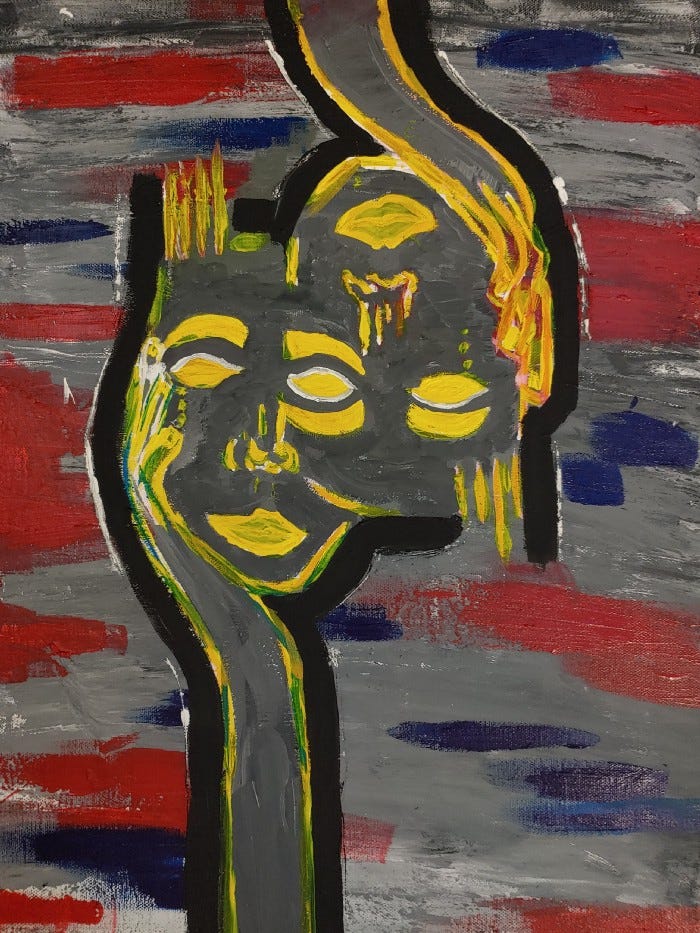
Book cover art by Andrea Mihaly — used with permission
Our Society: Addiction and More Uncovered. Hear the voices of everyday people — a collection of stories and experiences.
Copyright @ 2020. 1st addition on Amazon KDP. 2nd addition Jan 2021 Barnes & Noble. Gumroad December 2021. By Dr. Gabriella Kőrösi. All rights reserved. Dancing Elephants Press.


