avatarGabi Zinum

Free AI web copilot to create summaries, insights and extended knowledge, download it at here

2750

Abstract

n of a “living machine”, previously mentioned, incorporating prefabricated identical buildings in true industrial fashion. Highways is another key point, since cars, the symbol of a modern life back then, is the protagonist of this plan. Meanwhile, people’s desires and needs were heedlessly disregarded, translating into urban planning and architecture the authoritarian tone that gives shape to this time period, preceding World War II.</p><figure id="ba6d"><img src="https://cdn-images-1.readmedium.com/v2/resize:fit:800/1*nVXvgXweLrHsBOD9XlkTmQ.jpeg"><figcaption>Model of The Radient City. Copyright: <a href="https://www.archdaily.com.br/br/787030/classicos-da-arquitetura-ville-radieuse-le-corbusier">https://www.archdaily.com.br/br/787030/classicos-da-arquitetura-ville-radieuse-le-corbusier</a></figcaption></figure><p id="b6c2">The closest this plan came into reality was in the city of Brasília, in Brazil, where modern architects Lúcio Costa and Oscar Niemeyer, heavily influenced by Le Corbusier’s ideas, planned the city from scratch. But, as described in an article in <a href="https://www.archdaily.com/411878/ad-classics-ville-radieuse-le-corbusier">ArchDaily</a>, Brasília is hardly a utopia, instead it is brutally criticized for ignoring residents’ habits, desires and for not providing public spaces for urban encounters. In my point of view, Brasilia is beautiful to look at from afar, but it is just not functional for the people living in it. The enormous distances and big blocks makes it impossible to walk or bike anywhere and that negatively impacts the social aspect of the city.</p><figure id="bc46"><img src="https://cdn-images-1.readmedium.com/v2/resize:fit:800/1*CIH9V3F53060HjAgV2cn-w.jpeg"><figcaption>City of Brasília. Copyright: <a href="https://en.wikipedia.org/wiki/Bras%C3%ADlia">https://en.wikipedia.org/wiki/Bras%C3%ADlia</a></figcaption></figure><p id="e638">Traits of this type of modern city conception aren't exclusive to Brasília, rather it is present in almost every town to a lesser extent. And, to most, they are considered fundamental to the city's organization and logic. Once, I heard from a hotel employee in a hotel in New York City that she was proud of the Bronx for having neighborhoods that didn’t have mixed uses, which is one of the labels of modernism. For her that was progress. And, honestly, for some time, it was progress for me, too. However, after I came into contact with the perception of the city as a place “where people meet and exchange ideas, trade or simply relax and enjoy themselves”, as put by Richard Rogers, the idea of geometric order, car oriented spaces and separation of uses just didn’t reflect progress anymore, rather it felt like oppression.</p><p id="0eca" type=

Options

"7">Most of our cities lack human dimension, they lack life and the possibility to interact with other people that is so important to us as social beings.</p><p id="634f">The city depicted by Rogers is possible if we increase the concern for pedestrians, cyclists since city life is directly related to these activities. The human scale is another essential element that contributes to a rich experience while walking, thereby inviting people to experience the city. This scale encompasses, according to Jan Gehl, interesting facades, sensory impressions, small spaces, buildings closer together in combination with details, faces and activities.</p><p id="d386">While modern cities lack life, urban spaces that have people as its main focus, thrives upon life, encouraging human connections, spontaneous conversations, interesting walks and people watching.</p><figure id="806e"><img src="https://cdn-images-1.readmedium.com/v2/resize:fit:800/1*eR7V5LvDv9imT56-A9EIJA.png"><figcaption>This is a street in Frankfurt, Germany. It is an example of a place that invites people to stay and enjoy. Copyright: My own.</figcaption></figure><p id="9b89">Sidewalk cafes are a trademark of this type of planning, because this concept is built upon life in the city — what’s the point of a sidewalk cafe if there is nothing to see and no people around?</p><figure id="97d0"><img src="https://cdn-images-1.readmedium.com/v2/resize:fit:800/1*CXsKnBnyBjSyYDKHijxO5Q.png"><figcaption>Sidewalk cafes and restaurants facing active city life in Frankfurt, Germany. This is also an example of a facade that takes the human scale into consideration. Copyright: My own.</figcaption></figure><p id="be7d">In conclusion, it is clear that although cities should exist to support our needs as human beings, unarguably, modern planning took the social functions of the city completely out of the equation, by imposing an inappropriate Cartesian and industrial-like order to it. That way, most of our cities lack human dimension, they lack life and the possibility to interact with other people that is so important to us as social beings.</p><p id="f507">Therefore, it is urgent that we recognize it in order to demand, through petitions aimed at local authorities, more lively public spaces and changes in zoning restrictions. And, in a smaller scale, being aware of the human dimension while designing buildings is another way to bring life and the social dimension back to our cities.</p><p id="5609">Here are some more ideas of how you can improve your city through community participation:</p><p id="882d"><a href="https://parcitypatory.org/2020/05/08/4-ways-to-improve-your-city/">https://parcitypatory.org/2020/05/08/4-ways-to-improve-your-city/</a></p></article></body>

How Our Cities Aren’t Planned for People

As an Urban Planner, I am trained to notice how cities and urban spaces are organized and the history behind them. However, it doesn’t take an expert to realize that most spaces we live in disregard, almost entirely, the social functions of a city space, leaving us with lifeless, cold and uninviting places.

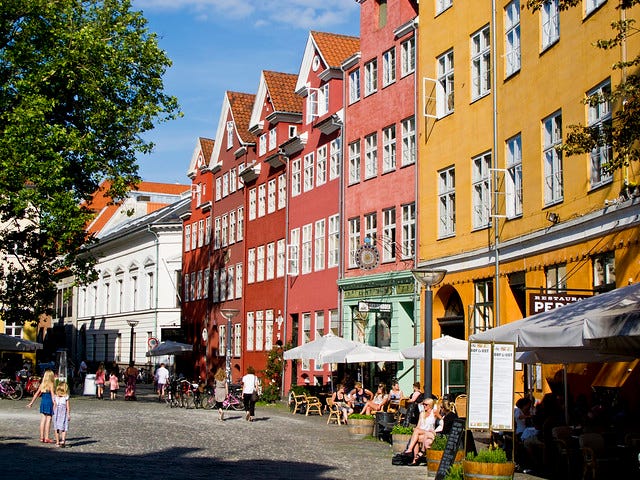
The difference between planning taking into account the social aspect of the city and otherwise is very clear and it can be felt and seen just by walking down a street. Take this example, for instance:

Which sidewalk would you rather walk on?
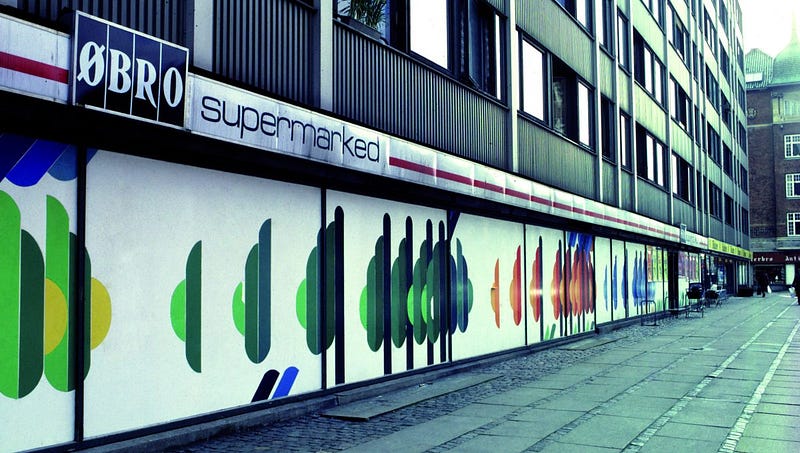
Image of a monotonous sidewalk. Copyright: https://thecityateyelevel.com/stories/close-encounters-with-buildings/
Image of a lively sidewalk. Copyright: https://flatironbike.com/2012/10/19/making-boulder-into-one-of-jan-gehls-cities-for-people/

But, why does the utter unconcern for the social functions have a place in urban planning?

The rise of the automobile industry and the rapid growth of cities in the late 1800s and early 1900s played an undeniable role in the planning of our cities today. It was in this context that the idea of mass production, unfortunately, caught on to city planning creating personalities, such as Le Corbusier, a French-Swiss architect who looked at cities as “living machines”. Le Corbusier is famous for the utopian masterplan of The Radiant City that was never realized, yet it can be used to symbolize the modernist movement that had and has so much influence on the planning of our lifeless cities.

In short, The Radiant City is a modernist masterplan presented in 1924 by Le Corbusier, that aimed to replace the preexisting European cities, introducing regularity, geometric form and order, in a way that completely annihilated tradition, for that was the idea of progress for modernists. At the basis of his design, was the concept of zoning, meaning the separation of uses, such as housing, commercial, business and entertainment, which is one of the main notions that rendered this project its conspicuous status in the modernist movement.

This new city would also follow his conception of a “living machine”, previously mentioned, incorporating prefabricated identical buildings in true industrial fashion. Highways is another key point, since cars, the symbol of a modern life back then, is the protagonist of this plan. Meanwhile, people’s desires and needs were heedlessly disregarded, translating into urban planning and architecture the authoritarian tone that gives shape to this time period, preceding World War II.
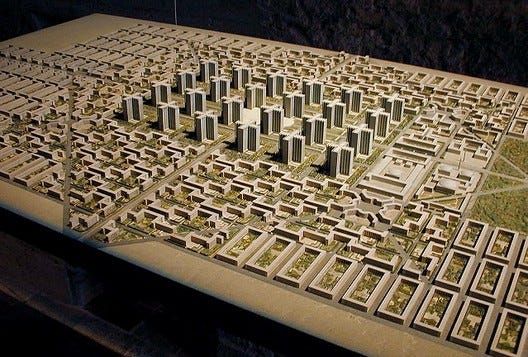
Model of The Radient City. Copyright: https://www.archdaily.com.br/br/787030/classicos-da-arquitetura-ville-radieuse-le-corbusier

The closest this plan came into reality was in the city of Brasília, in Brazil, where modern architects Lúcio Costa and Oscar Niemeyer, heavily influenced by Le Corbusier’s ideas, planned the city from scratch. But, as described in an article in ArchDaily, Brasília is hardly a utopia, instead it is brutally criticized for ignoring residents’ habits, desires and for not providing public spaces for urban encounters. In my point of view, Brasilia is beautiful to look at from afar, but it is just not functional for the people living in it. The enormous distances and big blocks makes it impossible to walk or bike anywhere and that negatively impacts the social aspect of the city.
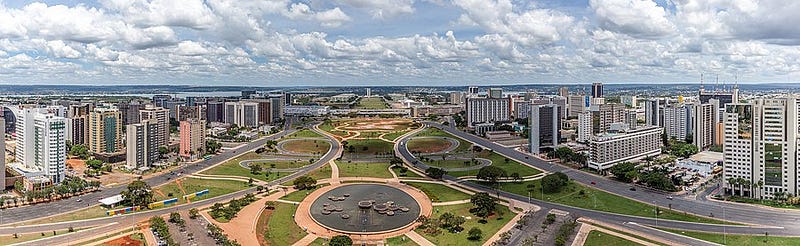
City of Brasília. Copyright: https://en.wikipedia.org/wiki/Bras%C3%ADlia

Traits of this type of modern city conception aren't exclusive to Brasília, rather it is present in almost every town to a lesser extent. And, to most, they are considered fundamental to the city's organization and logic. Once, I heard from a hotel employee in a hotel in New York City that she was proud of the Bronx for having neighborhoods that didn’t have mixed uses, which is one of the labels of modernism. For her that was progress. And, honestly, for some time, it was progress for me, too. However, after I came into contact with the perception of the city as a place “where people meet and exchange ideas, trade or simply relax and enjoy themselves”, as put by Richard Rogers, the idea of geometric order, car oriented spaces and separation of uses just didn’t reflect progress anymore, rather it felt like oppression.

Most of our cities lack human dimension, they lack life and the possibility to interact with other people that is so important to us as social beings.

The city depicted by Rogers is possible if we increase the concern for pedestrians, cyclists since city life is directly related to these activities. The human scale is another essential element that contributes to a rich experience while walking, thereby inviting people to experience the city. This scale encompasses, according to Jan Gehl, interesting facades, sensory impressions, small spaces, buildings closer together in combination with details, faces and activities.

While modern cities lack life, urban spaces that have people as its main focus, thrives upon life, encouraging human connections, spontaneous conversations, interesting walks and people watching.
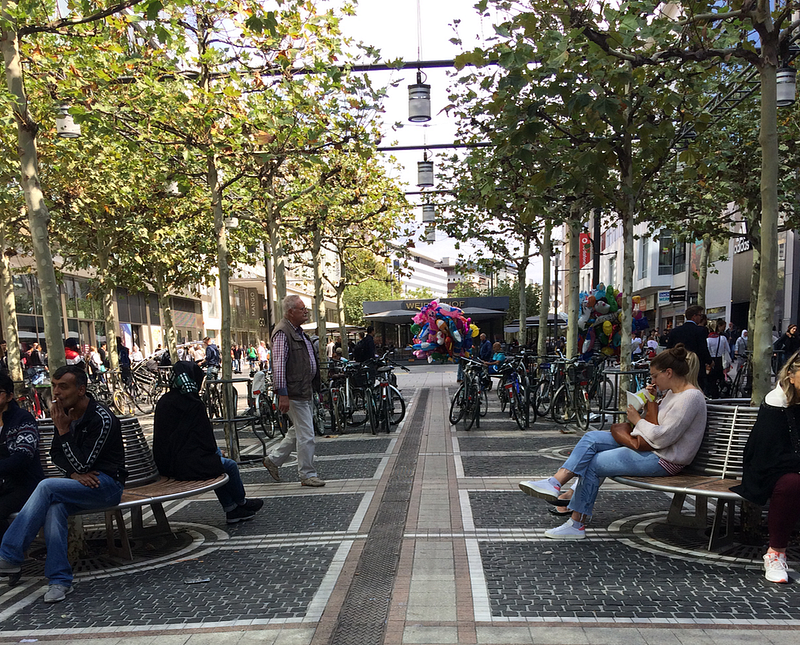
This is a street in Frankfurt, Germany. It is an example of a place that invites people to stay and enjoy. Copyright: My own.

Sidewalk cafes are a trademark of this type of planning, because this concept is built upon life in the city — what’s the point of a sidewalk cafe if there is nothing to see and no people around?
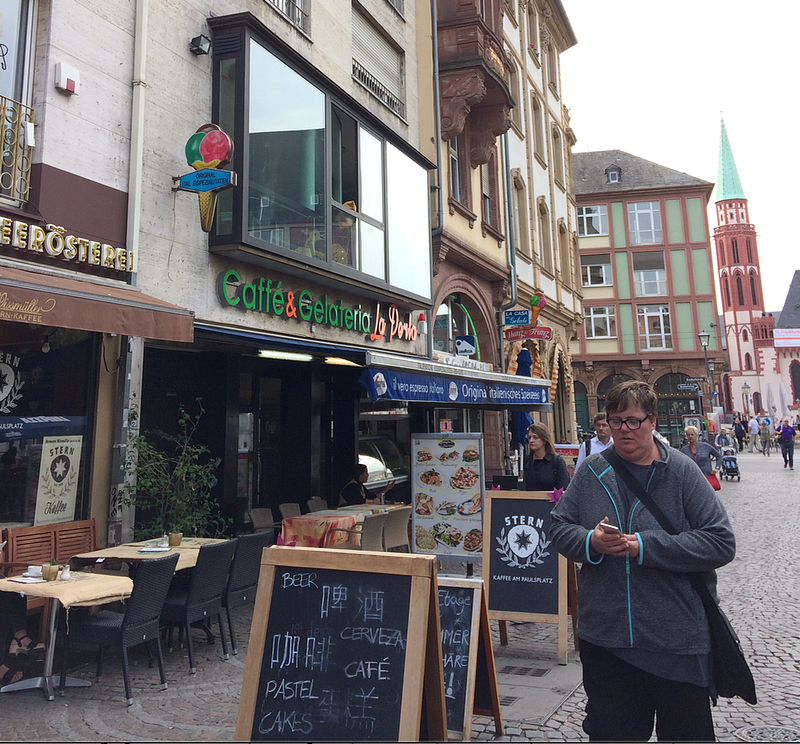
Sidewalk cafes and restaurants facing active city life in Frankfurt, Germany. This is also an example of a facade that takes the human scale into consideration. Copyright: My own.

In conclusion, it is clear that although cities should exist to support our needs as human beings, unarguably, modern planning took the social functions of the city completely out of the equation, by imposing an inappropriate Cartesian and industrial-like order to it. That way, most of our cities lack human dimension, they lack life and the possibility to interact with other people that is so important to us as social beings.

Therefore, it is urgent that we recognize it in order to demand, through petitions aimed at local authorities, more lively public spaces and changes in zoning restrictions. And, in a smaller scale, being aware of the human dimension while designing buildings is another way to bring life and the social dimension back to our cities.

Here are some more ideas of how you can improve your city through community participation:

https://parcitypatory.org/2020/05/08/4-ways-to-improve-your-city/

Urban
Urban Planning
Urbanism
City Living
City Planning
Recommended from ReadMedium