
How Optimistic Thinking Led To My Master’s Degree
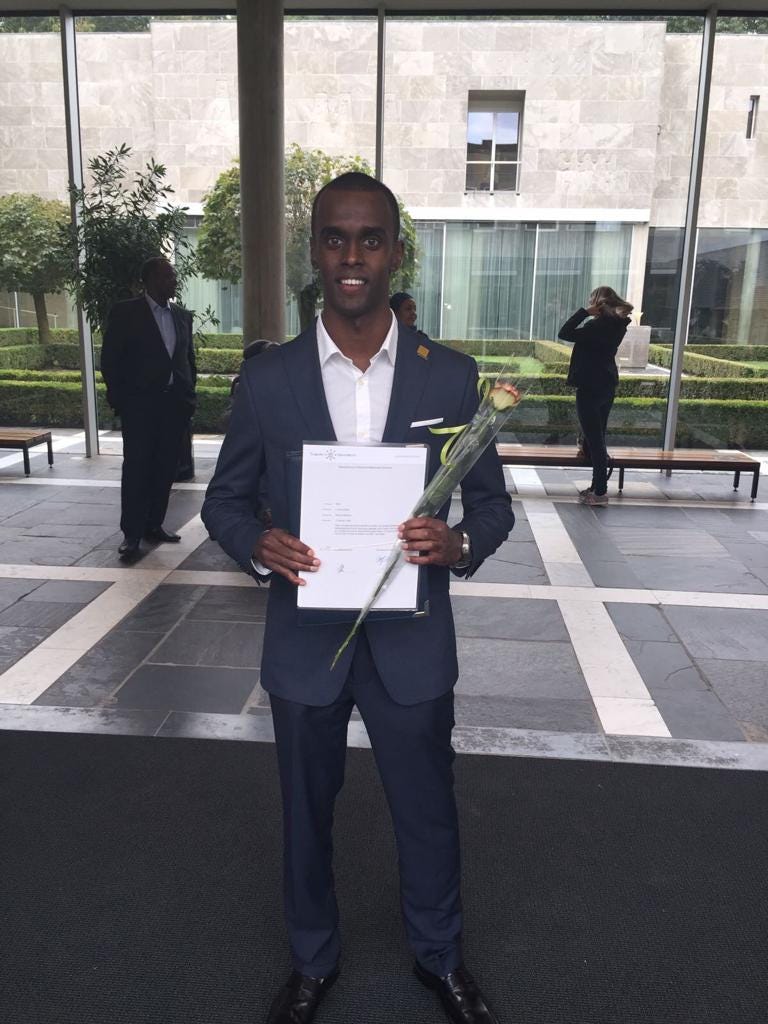
If someone asks me what I wish my future children to become, I would say optimistic. The frequent answers are about events in their lives such as which schools they would like them to attend, occupation and other things. But think about how optimism benefits you during life. Optimistic thinking has the following benefits.
- More likely to be resilient
- Less likely to give up when facing challenges
- More likely to interpret experiences in a way they can control as a coping strategy which leads to more confidence
We all experience good and bad moments in our lives, but having faith you will come better out of a situation makes it easier handling these moments.
Events are in the eye of the beholder Whatever happens in our lives, we experience it through our own perspective. When I was 13, I had to drop a level at high school. At that moment, I wasn’t happy because failing is never fun. But looking back, it was a good lesson for me. I had a talk with my parents and they told me; You can either feel sorry for yourself and let this define you or use this moment as motivation to improve yourself and come back next year. I chose the second option because I believe trying your best is something you owe yourself and the people who support you.
Succeeding and failure is a part of life. But you don’t want to fail because of a lack of effort. This leads to regret.
Locus of control affects how you cope with setbacks Everyone experiences setbacks in life. But every individual perceives events in another way because of their locus of control. Julian B. Rotter developed the concept of locus of control, which revolves around the degree of control individuals believe they have over the outcomes in their lives. An individual with an internal locus of control believes that outcomes in their life primarily depend on their actions where someone with an external locus of control believes the opposite.
For example, failing to reach a deadline is perceived by some people as a disaster that happens to them, while others look at why it happened in order to prevent it from happening again. The facts are the same, but the way of coping is different. Luckily, our reaction is something we can control and improve. Being optimistic with an internal locus of control helps with facing the future with confidence because you are more likely to tackle the obstacles you encounter. Therefore, you will find a way to A/B test what works and what doesn’t which is part of developing yourself.
Have a plan but stay flexible In my second year in high school, I made a plan to improve and my loved ones helped me along the way. They supported and helped me when facing difficulties. Having a support system is something that can spur you on. However, you are the one who has to go out and do it. There is a Somali proverb:
You can bring the cow to a bucket of water but you can’t force her to drink
When you are in high school, most students explore which direction they want to take and visit schools. You can have a certain picture in mind, but sometimes the reality differs. You can stick with your choice because of the cost you made so far or reevaluate if this is the best decision for you. This applies to many aspects of life because the longer you stick with something that is not right for you now, the harder it becomes to cut your losses. This is because of the sunk cost fallacy.
I finished my high school at 17 and a Master of Science in Economic Psychology at 23. If you would have told me at the age of 13 that this would happen, I would have laughed because it was too far away in the future and not a viable option at that moment. However, I have always been optimistic because it’s better to face the future with confidence than thinking constantly about possible pitfalls. Most of us need positive energy to achieve something and thinking about all the possible ways failing before actually doing something is unnecessary.
Takeaway Being optimistic is crucial to enhance your chances in life. You will enjoy moments of achievements and learn more from setbacks. This also happened to me when I was 13 and dropped a level at high school. I used that moment as motivation to improve and come back a year later. This worked out with the help of my loved ones and 10 years later, I received my Master’s degree. I will never forget the look of happiness on the faces of my loved ones. Learning that a setback is a passing moment helps me move on and could do the same for you.
When you keep looking for ways to improve yourself, you are more likely to overcome obstacles. Thinking about all the possible ways of failing costs energy, which most of us need for positive outcomes. Be optimistic, put in the work and learn from whatever happens. Never forget to be grateful to the people who support you along the way. They are part of the journey and remember that something beautiful can be in store for you. Let’s make it happen.
Thank you for reading and I wish you a nice day.


