
How null references became the “Billion Dollar Mistake”
and what’s been done about it
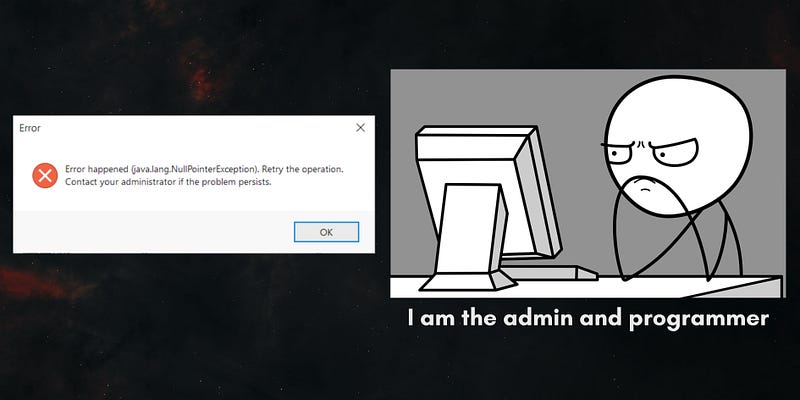
In 1965, the landscape of software development was forever altered by what seemed like a modest, logical, and perhaps even necessary introduction.
But as decades unfolded, this “small” addition would come to be known by a moniker that oozed regret: the “Billion Dollar Mistake”.
Coined by Sir Tony Hoare, the very inventor of the null reference, the term is not merely a self-deprecating quip but a stark reflection of the cumulative costs associated with unforeseen bugs, crashes, and the maddening hours developers worldwide have spent debugging a null pointer exception.
Yet, why such a profound regret for something that, on the surface, seems almost benign?
And why, after all these years, is it still essential for today’s developers to grapple with its implications?
The Origins of the Null Reference
Long before the advent of the sleek and sophisticated programming paradigms we’re familiar with today, the early realm of programming was a wild frontier.
Developers in the 1950s and 1960s were akin to digital pioneers, crafting foundational languages and concepts from scratch, and sometimes, by the literal soldering of transistors. While languages like FORTRAN and COBOL were making waves in the computational realm, there loomed a simple yet perplexing question: how do we represent the absence of a value in this new, binary world?
Enter Sir Tony Hoare, a name etched in the annals of computer science for both brilliance and the infamous admission. In the 1960s, while designing the ALGOL W language, Hoare introduced a seemingly elegant solution to the puzzle — the null reference.
His intention was sincere: provide developers a mechanism to denote an uninitialized or absent value, akin to the blank spaces in a mathematician’s ledger or the silent pauses in a maestro’s symphony. But as Hoare himself admitted, “I couldn’t resist the temptation to put in a null reference, simply because it was so easy to implement.”
Yet, the ease of implementation masked a complex web of implications.
Programming languages, by their very nature, aim to translate human thought into machine action. And just as humans occasionally need placeholders or symbols to represent a lack of information, so too did our computational tools. Imagine you’re orchestrating a digital symphony, weaving intricate patterns of code to, let’s say, fetch a user’s data.
But what if the user doesn’t exist in the database?
Or, in the sprawling land of e-commerce, how would you represent an item that has run out of stock?
The challenge was clear: a need to gracefully handle the absence of expected values in a system that always anticipates something.
Null was introduced as an elegant solution to this challenge.
The premise was simple: provide a standard representation for ‘no value’ or ‘unknown’.
This was especially crucial as systems grew in complexity, and the inevitability of encountering such ‘gaps’ became commonplace. Moreover, in the programming world, consistency is key. By introducing a standardized representation for absence, developers could now approach these ‘gaps’ with a uniform strategy.
But here’s where the philosophical intertwines with the practical.
The very idea of a value that denotes ‘no value’ is a paradox, akin to the ancient conundrum of the Ship of Theseus. If a ship is replaced part by part, when does it stop being the same ship?
Similarly, if a variable holds a value indicating the lack of value, is it truly empty?
The Unintended Consequences
The Semantics of Null 👉 Ambiguity
While envisioned as a representation of absence, its interpretation can be multifaceted.
Does it signify a genuine void, an error in data retrieval, or a yet-to-be-defined state?
Such uncertainty can lead to miscommunications in large teams, and when programmers decipher null differently, it becomes a breeding ground for bugs.
Operational Hazards 👉 Unexpected behavior and Null Pointer Exceptions (NPEs)
Like a volatile ingredient in an intricate recipe, null, when mishandled, can lead to a spectrum of issues. From crashing mission-critical applications to producing erroneous data, its presence often demands heightened caution.
In addition to this, NPEs are a developer’s bane and are infamous in programming circles. As per a study by OverOps, they found that Null Pointer Exceptions are among the top errors in production Java applications.
Debugging them can be an odyssey, navigating the labyrinthine passages of code to find that one elusive null causing havoc.
Complexity in Code Handling 👉Forced checks for null & Increase in code volume and decrease in readability
Developers often wrap operations with null checks, ensuring safety before proceeding. Languages like C# introduced the null-conditional operators to alleviate some of this pain, but the underlying challenge persists.
With every null check comes additional lines of code.
This seemingly minute addition, when scaled across vast codebases, translates to bloated files. More critically, it interrupts the narrative flow of the code, akin to a gripping novel marred by constant footnotes.
This affects maintainability and onboarding of new developers, who often find themselves wading through layers of precautionary code before reaching the core logic.
The “Billion Dollar” Impact
In the world of software development, errors aren’t just code-deep — they come with an attached price tag.
Often, the indirect costs of a seemingly small oversight can balloon into significant monetary burdens, and the null reference is the epitome of this.
Estimating the Financial Impact
For any software developer, time is a precious commodity. And unfortunately, a significant chunk of it has been invested in chasing down the elusive null references. According to a report by Stripe, debugging and maintenance eat up approximately 13.5 hours per developer each week. With null references being a frequent culprit, it’s conceivable that a sizable fraction of this time — and thus financial resources — is spent addressing them.
In the era of digital economies, a system crash can spell disaster. Beyond the immediate losses, the reputational damage can erode user trust, sometimes permanently. Unexpected null values have been the silent instigator behind numerous system failures. And with the average cost of a single hour of downtime reaching upwards of $100,000 for critical applications, the fiscal ramifications are quite dramatic.
The Cognitive Load on Developers
Developers, beyond being coders, are problem solvers and thinkers. But when their cognitive bandwidth is consumed by the constant vigilance required for null checks, their true potential can get stifled.
Dr. Gerald Weinberg, in his book Quality Software Management, stipulates that even a minor interruption in a developer’s flow can lead to a 20–25% loss in productivity. The mental overhead of constantly second-guessing every potential null reference is no minor interruption. It fragments attention, impedes creativity, and, over time, can lead to developer burnout.

Modern Approaches to the Null Problem
The legacy of null references lingers on, but the software development community isn’t resigned to its fate. New programming paradigms, tools, and methodologies are emerging, offering robust solutions to the “Billion Dollar Mistake.”
In the evolutionary timeline of code, these modern approaches are redefining how we handle the absence of value.
Optional/Maybe Types
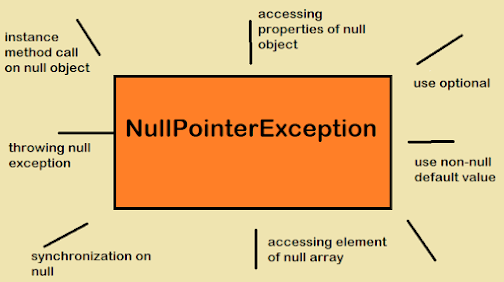
Imagine if instead of blindly stumbling upon a pit (null reference), we had a clear sign or a box hinting if there’s a pit or a treasure inside. That’s what Optionals and Maybe types offer.
Languages like Haskell have pioneered this approach with their Maybe monad, where a value can be Just something or Nothing at all.
Kotlin and Swift, meanwhile, have popularized this concept in the mobile app development realm. In Swift, for instance, the Optional type allows variables to be set either to a wrapped value or to nil, making nullability explicit and thereby reducing surprises.
By forcing developers to unwrap values and handle potential ‘nothingness’, these types make code safer and more predictable.
The Rise of Non-Nullable Types
Enter TypeScript — JavaScript’s more disciplined sibling.
By introducing non-nullable types, TypeScript provides developers with an efficient way to mitigate null reference errors right from the type-checking phase.
By default, with the strictNullChecks compiler option enabled, types don't accept null or undefined unless explicitly declared. This offers a level of safety, ensuring that developers handle potential null scenarios.
Yet, with all its benefits, this approach does introduce a level of rigidity. Some might argue that it complicates simple tasks, demanding explicit handling and type casting, which could dampen the dynamic spirit that many JavaScript developers cherish.
Automated Testing and Tooling
Beyond languages and their inherent features, tools have risen to the challenge, acting as the guardians at the gate, catching null reference blunders before they creep into production.
Linters like ESLint with plugins such as “no-null” have become indispensable in the developer toolkit. Additionally, testing libraries, like JUnit for Java, have incorporated null checks to prevent these pesky errors from proliferating.
Moreover, the rise of tools like Nullable showcases the community’s commitment to tackling the problem. By automatically detecting locations in code susceptible to null dereferences, they minimize the scope for human error.
Now What? The Broader Lesson for Developers and Language Designers
The tale of null references isn’t just a history lesson or a cautionary coding chronicle; it’s a poignant reminder about the long shadows that design decisions cast. Beneath the technical details and debugging nightmares lies a profound narrative on foresight, humility, and adaptability in the realm of software design.
As we stand at the intersection of past wisdom and future potential, we’re reminded of Robert Glass’s words: “For every 25% increase in problem complexity, there is a 100% increase in solution complexity.”
This aphorism resonates deeply when pondering the inception of null references. What seemed like a straightforward solution at the time rapidly spiraled into a complex web of challenges.
But therein lies the broader lesson: software design, much like any other form of creation, is inherently a voyage into the unknown. Solutions devised today, no matter how elegant or rudimentary, may ripple into tomorrow’s challenges or opportunities.
It beckons developers and designers alike to approach their craft with a blend of audacity and introspection. To innovate, but also to iterate; to be bold in creating, but humble in acknowledging that every line of code is but a step in an ever-evolving journey.


