
How Not to Treat Your Competent Software Workforce

Every morning on my LinkedIn feed, I see at least 3 articles trending on how bosses should treat their newcomer / onboard / departing employees.
I see somewhat lesser number of posts also on how employees should be ethical with their employers.
Most of them belong to software companies’ work culture, and a bigger chunk of them are IT services companies.
On almost all of them, polarizing comments sabotage a healthy discussion. But they surely provide 360 degree perspective.
And they force me to think & re-think about a challenge I faced 10 years ago.
In 2009, 10 years before 996 movement, I was senior developer in fortune 500 software product company. The office schedule was 9–5, tweaked to 10–6 with everyone’s unspoken consent.
Suddenly, the office got relocated to 20 kilometers away from my residence. I couldn’t relocate due to binding rental contract.
My daily commute became 2.5 hours messy ordeal in a metropolitan city.
My boss changed too.
My office schedule became 11 AM -7 PM, which slowly turned into 12 PM–8 PM.
Sprint dashboard vouched for my unaffected productivity. I wasn’t missing any meetings or team discussions in that timeframe.
Yet, I fought very hard against it.
Every time I made it early to the office, my productivity took 2x dip. And that wasn’t acceptable to me.
I requested my new boss for remote Wednesday — just to break the diminishing sleep cycle. My 2 colleagues having similar productivity as mine enjoyed it, and enjoyed it twice a week. ‘
But my request was neglected.
Instead, during performance review, I received a memo with excel sheet from my boss. It listed my office checkin times, without work duration.
His boss was copied on the email. Last line read:
“We expect you to regularize your office routine. We sincerely hope you would prevent facing consequences of management actions in case you are unable to follow 9–5 schedule.”
This was followed up by a one-on-one with my boss. My request for laptop was rebuffed with cold “Remote work is a privilege you need to earn.”
How exactly that privilege was earned wasn’t specified.
But I was classified as one having discipline issues.
In the forthcoming month:
- I started taking sleeping pills.
- My office routine became 9:00 AM — 6:00 PM (not 5:00 PM)
- That one hour got added to my schedule because I became 2x less productive. It went unnoticed. They weren’t unhappy, but I was.
- I missed reading books because I felt nauseated reading during travel. I also missed my late night programming projects. Podcasts / narration weren’t the things during those days. Smartphone apps weren’t quite matured for that experience.
At the end of that month:
- My boss left the company, apologizing for all the discomfort. It was after-all, his duty. I formally acknowledged, and bade him goodbye.
- The next boss reminded me that I wasn’t off the hook yet. 9–5 was crucial for my job survival.
Three months later:
- I resigned, citing my reasons. Both the boss and the HR let me depart, no questions asked, no attempts for reconciliation.
- I found a full-time remote freelancer job that paid me 20% more. I moved to my low-cost hometown.
- My colleagues acted indifferently. They probably pitied / criticized me behind my back, for being unable to work on my discipline issues.
Later in Life:
- During my entire work-at-home, no-commute career of 6 years, I never started work before 11:00 AM (except for critical project meetings, which occurred 3–5 days max in a year).
- After going back to regular office job, I ensured that flextime was possible at least once a week, I was allowed to start after 10 AM, and concessions were made in case of family sickness / workplace relocation.
What was the problem?
In 10 years, I have asked this question every single day:
Did I really give up after that memo?
Waking up early was a challenge for me. I tried hard to cope up with my employers’ office schedule expectation. And I failed.
But that wasn’t the problem.
Some of my bosses belonged to factory-era workmanship. I could fathom their inability to understand me. At the same time, being a Fortune 500 company with better practices elsewhere could always understand a developer’s problem, and come up with a mutually agreeable plan.
Hack, I was 100% efficient in my 12–8 schedule. They had me there, and they lost me!
But if you are thinking that the problem was unfair implementation of flextime policy — you are wrong.
The problem was: lack of recognition of a highly undervalued asset.
That highly undervalued asset:
The problem was what numerous programmers face in their everyday life. It says less about a developer, and less about a boss.
It says more about how leaders with extremely creative and competent mindset — so much so that they design products to change the world — can think so little about:
- How to identify the real challenges in a teamwork
- How to make people with different abilities work efficiently together
- What makes people give their best output, without investing a dime
Even beyond that, the problem was that leaders oftentimes make it so easy to neglect the most precious asset they possess.
It’s not the office space. It’s not the capital. It’s not the manpower.
It’s not the company culture.
It’s the self-esteem of intelligent workforce.
A workforce without self-esteem is lame, irrespective of its competence.
If it doesn’t exist, it’s your job to cultivate it.
If it exists, you are in a precarious situation: you need to go every extra mile to preserve it.
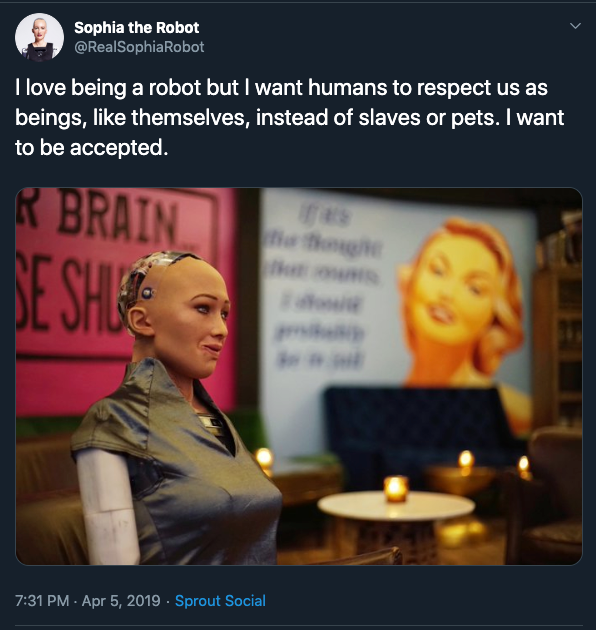
This is much more true in tech-driven era. In 20 years, we will have laws preserving self-esteem of robots.
If you can’t, go solo:
Solo entrepreneurship is way better than letting smart people rot under your shed.
Better companies know how to attract talent by offering flextime as perks.
Best companies know how to keep that talent by effectively and fairly distributing those perks. A fair distribution doesn’t have to be an equal one, but it surely has to be personalized one.
Treat every child as if he / she got the biggest pie, despite all pieces being unequal…
That might be inaccurate way of changing your perk policy manuals, but it at least kicks in some thought process.
Every programmer may not be entitled to the best of your resources. Or perks, such as remote day a week.
But what he / she is surely entitled to, is a caring (not careful!) discussion on:
- How he / she should be treated to be optimally productive up to his / her own standards
- What treatment from the team / boss / company will make it easier for him / her to raise the personal bar
- What treatment would make them give their average, when their own personal bar is lowered by circumstances beyond their control (e.g. sickness, loss of a loved one)
Of course, simply having a sympathetic discussion does not repair broken self-esteem. That was just for a start.
You must also walk the talk.
Conclusion:
If your product or your team is what drives you to your office / laptop everyday, you will do well by preserving your team’s self-esteem.
You will do great by boosting it.
And no, looking back, thinking of that undervalued asset that my employer possessed, I didn’t think I gave up fighting my late wake-up habit.
They did.